Tag Archives: Camille Martin

Recipes from the Red Planet: Meredith Quartermain’s Martian Feast

Recipes from the Red Planet by Meredith Quartermain
Susan Bee, illustrator
(Toronto: Book Thug, 2010)
order from Small Press Distribution
order from Book Thug

cover collage: Susan Bee


            Meredith Quartermain’s Recipes from the Red Planet pays homage in its title and inspiration to Jack Spicer’s notion of the poet as a conduit of language that seems to come from a source other than a consciously creating self, Martian signals being his memorable metaphor for this otherness of the poetic voice. But voice it is nonetheless, and whatever metaphor serves to describe the source of the poetic energy (Martians, radio signals, parasites, or invaders), the voices in Quartermain’s prose poems take center stage as they rant, apostrophize, soliloquize, surreal-ize, tell tall tales. Her stage is populated by a host of selves and others engaged in playful—often seriously playful—dialogue, and fittingly illustrated by six wonderfully quirky and surreal collages by Susan Bee.
            Book Thug appropriately placed this collection in its Department of Narrative Studies series: even when the speaking voices and time dimension of the stories seem most fractured, thing happen and voices talk about them. The narratives’ layered effect gives the illusion of alien languages and customs from different planets colliding to form new alien cultures that come into being in the act of reading. And the overlapping narratives create meaning that is in its own mysterious way decipherable yet also porous to allow variations of understanding and delight.
            Perhaps it’s apropos that poetry claiming, tongue in cheek, alien provenance doesn’t come across as traditional lyrical, meditative poetry. In Recipes from the Red Planet, there’s a wildness, often breathlessness, to the voices that broadcast dramatic and narrative speech celebrating the free, unfettered riffing of imagination.
            Unfettered isn’t synonymous, however, with disengaged. Although some poems in the collection revel in linguistic play for its own sake (not to say that such play isn’t politically engaged, at least not overtly), the playful stream of words more often than not swarms around and explores something of concern to her—a memory, a place, or social injustice, for example. Such concerns are what Spicer called the poet’s personal “furniture,” which the “Martians” work with, arrange, and invest with clues. For Spicer, the furniture—the poet’s language, memory, knowledge, idiosyncrasies as a human being—are not as relevant as his or her ability to clear the room of personal desire (“this is what I want the poem to say”) and allow the Martians to inhabit the furnished space and their voices to stream, as if through a neutral conduit, into the typing fingers.
            But the furniture is there nonetheless—Spicer never claimed that poetic dictation involved becoming a tabula rasa and letting go of one’s beliefs, but that in allowing an otherness to flow through, those beliefs might not come across the way one expected. If a poet wants to write about Vietnam, Spicer says, the Martians might end up talking about about ice-skating in Vermont (as Norman Mailer did when he exposed the horrors of the Vietnam War by telling the tale of an unsportsman-like bear hunt in Alaska).
            Quartermain’s perspectives on feminism, corporate misconduct, and the rescue of voices lost to the shadows of history come through clearly, and true to Spicer’s ideas about poetic dictation, these ideas are voiced by her “Martians” in wild tangents, unexpected flights, and strange juxtapositions. Personal opinion has not left the room, but a chorus of voices (and here the invasion metaphor seems apt) swarm into the room, rearranging the furniture as they please, creating surreal parables and buildings haunted with swirling voices. Agenda may seem secondary to the thrill of linguistic play, yet that ludic impulse is also intimately intertwined with the political. In the tradition of dystopian science fiction’s tactic of cognitive estrangement1, Quartermain’s Martians defamiliarize the inhumanity that is too often taken for granted, providing fresh perspectives on the troubled history of Earthlings.
            One poem that exemplifies such defamiliarization while also invoking Spicer’s Martian metaphor is the delightfully comical “A Disagreement over Lunch.” A woman asserts to a man over lunch that architecture is not only a human activity but a phenomenon of living beings—ants, for instance—that manipulate their environment under biological pressure: a decidedly anti-heroic point of view. But the man, firmly in the Ayn Rand camp, prefers to see the architecture of humans as heroically creative and uniquely above animal constructions.
            As they debate, however, a surreal drama unfolds: an eggplant-cum-football enters the room, hovers over a fruit bowl, lays eggs, and releases tiny creatures that roll their caravans and wagons over the peaches. The voice that narrates the surreal vision of the eggplant-blimp is ambiguous about the creatures and seems to debate itself: did the eggplant release ants or tiny humans? Thus the poem moves from the debate between the diners to a debate of the narrating voice at odds with itself, or at least unable to decide.
            This refusal of the narrating voice to take a position, to reason politically, and side with one or the other, is part of the subtle brilliance of Quartermain’s approach. The trope of the Martian’s bird’s-eye view allows the consideration of human behaviour from an alien perspective: a Martian anthropologist, presumably unfamiliar with the imposed hierarchy of life that humans often assume in their anthropocentric hubris, would likely have a broader perspective on the commonalities of living creatures. But the narrating voice, instead of simply siding with the woman (which is apparent, in any case), embraces the rhetoric of debate (ants? humans?) and ends on a note of undecidability, thus bringing ants and humans into the same realm, parading in lines and shaping their world.
            Like Spicer, Quartermain (or should I say, her Martians?) uses and rearranges the “furniture” of mythology, in her case to offer a feminist spin on patriarchal Greek myths. In “Sewing,” the aptly-named Mrs. Shears of Home-Ec is an unlikely but nonetheless quietly heroic feminist as she teaches her students to sew, all the while spinning yarns (so to speak) and debunking the partriarchal assumptions of ancient myths: it’s the women who kept home safe for the men, not the other way around; Andromeda was saved by a Minoan queen, not her future husband, Perseus. Thus Mrs. Shears teaches her students to stitch together their own stories without relying on prejudicial myths, and plants the idea that it is they who “piece reality together.”
            Quartermain’s collection revels in imaginative wordplay, and some poems, such as “Snow” just seem linguistically to shimmer for the pure joy of it:

“down steady down fall flake down by flake down round cloud-whirl tree by roof by frolicsome milk-wing flight-of-steps runaway runway quick lattice icicle faceted minikin clusters wittily mimical silica ventriloquy down by down by down doors porches by churches banks frosty postage to rustle and bluster downtown towers flour the tree-bark fringe the stones the hedges the wires the trellises tickle crystal thickety particle curriculum [. . .]”

I can add nothing that wouldn’t spoil the fun of the poem.
            And I could wax on about some of my favourites in Quartermain’s collection, such as “My City,” “Future Past,” “Fabulous Moderne,” “She would,” “The Plackener,” “Hotel Narrative.” But before I outstay the Martians’ welcome, I’ll end by briefly alluding to “The Sonic Boom” and returning to the idea, so important to Spicer’s poetics: sidestepping one’s own desires about the poem being written and allowing something else much stranger to speak through the poem and perhaps “say just exactly the opposite of what he wants himself, per se poet, to say” (Spicer 6). Quartermain’s “The Sonic Boom Catcher” hits the bull’s eye of the poet’s dilemma in implementing Spicer’s idea of writing as dictation. The paradox of the title beautifully sums up Spicer’s advice, quoted by Quartermain in her index: “You have to not really want not what you don’t want to say.” The trickiness of untangling that triple negative is like the trickiness of writing—you can’t fool the “Martians”; all you can do, says Spicer, is prepare the room and get rid of the personal.
            “The Sonic Boom Catcher” could also be read as a parable of the slipperiness of desire: once you have what you want, it ceases to be the object of desire, because the object of desire is desire itself. Readiness, patience, and a quieting of desire lure the Martians to the poet’s antennae.
            Recipes from the Red Planet is a paean to the imagination, sometimes madcap, sometimes pensive, but always generously liberating. Her description of the tree the speaker has given birth to in “Dear Mom,” is an apt mantra for the spirit of the book: “Merrythought. Willy nilly bodacious. Willy nilly lexiludic.” And imagination is just as often a celebration of its own play as an exploration of social and political engagement.
            It’s impossible to summarize the wealth of themes and the explosion of wordplay in this collection, and my review cannot do it justice. How to describe being a guest at Quartermain’s Martian banquet? You just have to be there.

collage: Susan Bee


1 See Darko Suvin’s work on science fiction.

Work Cited
Spicer, Jack. The House That Jack Built: The Collected Lectures of Jack Spicer. Ed. Peter Gizzi. Hanover, New Hampshire: University of New England, 1998.


Camille Martin

Saline: Kimberly Lyons’ Fleeting Continuum


(Click here to order from SPD.)

Please check out my review of Kimberly Lyons’ Saline in the new issue of Galatea Resurrects:

Kimberly Lyons’ Fleeting Continuum

The problem (and pleasure) of reviewing a book of poetry by Kimberly Lyons is that a review needs to generalize to an extent, yet my temptation is to pause at the details in the language, to become wrapped up in close readings of the images that flow in a continually morphing reverie . . . [click here to read the review]

Camille Martin

New upcoming events – poetry and collage

Just uploaded some new information into my Upcoming Events page:


COLLAGE EXHIBIT

Sunday, December 12 – Thursday, December 23, 2010
Toronto: Arta Gallery at The Distillery / 55 Mill Street
Three limited-edition collage prints on exhibit and available for purchase, such as this one:

The Birth of Newton


POETRY WORKSHOP

Five Tuesdays: March 15 – April 12, 2011, 6:30 – 8:30 pm
Toronto New School of Writing
click here for details & registration


POETRY READING

Wednesday, April 20, 2011
Toronto: The Pivot at The Press Club / 850 Dundas Street West


COLLAGE EXHIBIT

June 2011
Toronto Public Library, Woodside Square Branch
Twelve limited-edition collage prints on exhibit and available for purchase

Carol Dorf reviews Camille Martin’s Sonnets

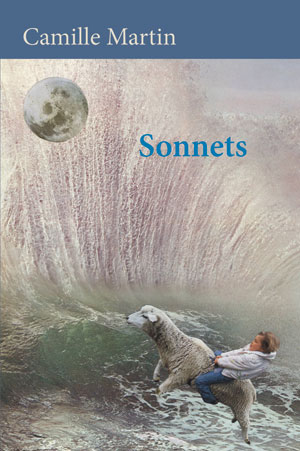
I just came across Carol Dorf’s terrific review of my recent poetry collection, Sonnets, at New Pages Book Reviews:

“Can you pour new wine into old bottles? Well, if you are Camille Martin and the bottles are sonnets, the answer is an emphatic, “Yes.” [click here to read the full review]


Camille Martin

Anniversary of Kristallnacht

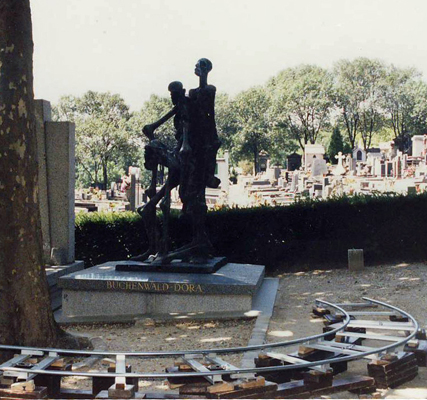
photo: Camille Martin


Buchenwald-Dora Memorial, Père Lachaise Cemetery, Paris

The day that I visited the memorial, a crew was laying camera tracks for a documentary film. The tracks, ending at the memorial, unintentionally added a layer of horrific realism to the scene.

I dedicate this photo to the relatives of my partner, Jiri, who were killed in the Holocaust, and to his mother, Lilly, and his daughter’s grandmother, Dolly, who survived.

Camille Martin
http://www.camillemartin.ca

Poetry’s 49th Parallel: Canadian/American Shibboleths

Is this a Canadian poet?

Is this Canadian poetry?

          I photo-shopped the above image of myself because I’ve never taken such a staged picture of myself. And I’ve never really experienced an identity crisis of nationality since immigrating from the United States to Canada. But I have been thinking about nationality lately. When I was living in the United States, I never described myself as an American poet. And these days, a full-fledged citizen of Canada and a resident for almost five years, I don’t generally refer to myself as a Canadian poet. I’ve long harboured a fantasy of belonging to a city-state, and when I was in the United States, I referred to myself as a New Orleans poet, just as now, in Canada, I call myself a Toronto poet.
          I’ve had a love-hate relationship with both the United States and Canada. Canada: health care system rocks, winter sucks. United States: Obama rocks (most of the time); Homeland Security, the Patriot Act, and Total Information Awareness (remember that short-lived megalomanic agency?) suck. In New Orleans, at the height of terrorist paranoia and duct tape frenzy, I was threatened with arrest for taking photographs, on public ground, of well-known monumental sculptures in front of a bank. That sucked.
          But my identity was never very dependent on nationality. Especially since Desert Storm, I haven’t self-identified as American, but I have always defined myself in part as Cajun. For me, the local or marginal identity, determined by patterns of settlement, wins out over the relatively artificial boundaries of nationhood. Even so, although I consider myself Cajun, not only by virtue of my father being Cajun but also because I was steeped in Cajun culture since birth, I was at the same time always looking over the shoulders of the culture, to an extent experiencing it vicariously. In Cajun country, I’m a Cajun and something of an alien. And now I live in Canada as a Canadian citizen.
          Canada’s identity has historically been shaped, in part, by its conscientious differentiation from the cultural behemoth south of the 49th parallel: to generalize, collectivism over individualism, peaceful resolution over escalation and violent enforcement, diplomacy and compromise over chauvinism and autocracy. However, even though I’m more sympathetic to such professed Canadian ideals, I don’t feel a strong desire to differentiate my poetry by nationality. In matters of culture (not so much pop culture, in which a certain amount of American hegemony is guaranteed by television, film, and commercial culture), I’m all for cross-pollination. I’ve been influenced by poets from the United States, Canada, the United Kingdom, Ireland, France, Japan, Hungary, Iran, Australia, Portugal, Ancient Greece, Finland . . . and the list goes on.
          Yet the reality is that Canadian government grants do not generally encourage reading venues to invite American poets (though this might be relaxing a little). Customs duties and taxes ensure that one is far less likely to find American poets on the shelves of Canadian bookstores. And vice versa, I hasten to add. Some American poets I knew were hard-pressed to name a single Canadian poet. I plead guilty to having been fairly ignorant, with some exceptions, of Canadian poetry before my move here. And I continue to bridge the knowledge and appreciation gap.
          Another reality is the anthology by nationhood. The anthology of Canadian poetry is a recurring staple in the poetry publishing world and a vexed one because of issues of inclusion and exclusion (a nature of the anthology beast) as these issues collide with issues of ethnicity and political borders. To see how complex the issue can become, read George Elliotte Clarke’s essay “Must All Blackness Be American?: Locating Canada in Borden’s ‘Tightrope Time,’ or Nationalizing Gilroy’s The Black Atlantic.”
          I’ve yet to see the hybrid American-Canadian anthology. Have I truly crossed the border poetically when I’m included in a Canadian anthology? I was recently featured in a Canadian online magazine, ditch, as a Canadian poet. There I was, in the inner circle along with the true-blooded Canadians, born under the loving gaze of Queen Elizabeth. Never having switched countries before, this was a new experience. I felt as though my mask of Canadian-ness might slip off at any moment and I would be revealed as a poser.
          So am I a Canadian poet? I remember the first grant that I got, two years after moving to Canada as a Permanent Resident—a Work-in-Progress grant from the Ontario Arts Council. A couple of my Canadian poet friends expressed surprise that I was officially qualified to apply for such a grant. Obviously, for granting purposes, I was as Canadian as the true children of the True North.
          What about my poetry – is there anything “Canadian” (however that might be defined) about it? A good deal of my poetry stems from my experience in the moment, wherever I happen to be: walking through downtown New Orleans, riding the Métro in Paris, or sitting in my Canadian apartment gazing at Canadian clouds drifting across the northern skies. As soon as I moved up here, my surroundings crept into my poems: ice and snow, especially, but also street scenes and people.
          As my new book, Sonnets, which was written entirely in Canada funded by a grant from the Ontario Arts Council, is collected in libraries in Canada and the United States, it’s interesting to note that Canadian libraries use the classification for a Canadian poet, and American libraries use the classification for an American poet. That’s fine by me—I’m happy to be claimed by both countries.
          And what do/should I call myself? Am I a hyphenated Canadian? I’ve read a bit about the dilemma of immigrants regarding whether or not to hyphenate the old and the new countries: Somali-Canadian, for example. And some bemoan perceived racial overtones in the tendency to hyphenating all but native-English-speaking immigrants of European descent. “British-Canadian” and “American-Canadian” are less frequently heard expressions than, say, Pakistani-Canadian. And “American expat” is heard more frequently than “Chinese expat.” I hyphenated myself once recently—American-Canadian—for a bio, just to try it on for size. It felt odd. First, to me the hyphenation implies that one is retaining a connection to the cultural heritage from the country of origin, which doesn’t ring true to me. Maybe Cajun-Canadian would be more accurate. Also, there’s a part of me—the part that made me want to move here—that wanted to be just “Canadian.”
          I don’t think that I can give a straight or easy answer to the question of whether or not am—or feel—Canadian. “Canadian” to an immigrant might not be a fact so much as an assumed identity. Facts: I was born in El Dorado, Arkansas; I’ve lived most of my life in Louisiana; I came to Canada as a Permanent Resident in October 2005; I’ve lived in Toronto for almost five years; I’m now a Canadian citizen as well as an American citizen; my ancestors were Acadians in present-day Nova Scotia, then Acadie (and, interesting sidenote, until a generation or so ago, there were still older Cajun folk in Louisiana who referred—not without a tinge of disdain—to “les Américains” and who retained a distant memory of the Mi’kmaqs).
          I’m ambivalent regarding a sense of national belonging as an American or a Canadian. No doubt part of that lack of nationalistic pride or fervour stems from my friendship with anarchists in New Orleans and France for many years and my interest in anarchist critique, historically, of the nation-state. I’ve never been the patriotic type.
          But I do identify ethnically as a Cajun. And since making my recent “pilgrimages” to Nova Scotia, the land of my French ancestors, I’ve come to feel a sense of closeness to the people living in the remaining Acadian towns and villages of southwestern Nova Scotia, such as West Pubnico and Church Point. Talking with the Acadian descendants in Nova Scotia, I sometimes had the eerie feeling that I had been teleported to rural south-central Louisiana. It wasn’t only the French names and language, it was the gregariousness, the unreserved joking, the welcoming of strangers, the nicknames, the proclivity for satirical mimicry and for storytelling, the close-knit community.
          I suppose I am something of a poser. I pose as a Canadian poet for grants because I can legitimately do so—I have for several years now qualified for grants issued by the governments of Canada, Ontario, and Toronto. And I’m extremely grateful for the privilege to live in a country where the government actually encourages the arts. When I first moved to Canada, I was fascinated by the new currency (loonies and toonies: cool) and by something in very small print on the twenty-dollar bill that still jolts me into an awareness of Canadian difference. I was accustomed to symbols of authority, monotheism, and divine providence on American paper currency. On the Canadian twenty-dollar bill, I saw images of sculptures by Bill Reid, a Canadian artist depicting aspects of the Haida culture of Canada’s northwest coast and, in tiny print, the words of French-Canadian poet Gabrielle Roy: “Could we ever know each other in the slightest without the arts?”


Some might shrug and say, “lip service”—especially considering recent budget cuts to the arts in Canada. Nonetheless, that statement as well as the generous granting system (generous especially when compared to comparable government funding in the United States) tends to create an atmosphere in which the arts are valued.
          So as far as the government is concerned, I’m Canadian. And I pose as a Canadian poet for anthologies with the rationale that most of the poetry that I’m writing is born in Canada (does that make my poetic progeny second-generation Canadian?).
          I also pose as an American poet because, after all, my poetic lineage is largely and undeniably American since I wasn’t exposed to much Canadian poetry when I started writing poetry in earnest. And besides, my American/Southern accent is hard to hide. Try as I might to switch to “zed” and to learn the subtleties of interjecting “eh” in conversation, I’m not sure I’ll ever pass the Canadian shibboleth.
          And aware as I am of subtle (and sometimes not-so-subtle) manifestations of anti-Americanism, I trust that most people involved in the arts are enlightened enough not to harbour irrational prejudices against those Americans who have decided, for whatever reason, to leave the United States and embrace Canada. Surely attitudes have changed since the time when a Czech-Canadian painter was denied a grant by the Canada Council of the Arts because, as he was told by the panel, his work wasn’t “Canadian” enough. Following that rejection, he didn’t change his style but if you look closely, he has subtly worked into some of his paintings a maple leaf, as if to say with wry humour, ok, now is my work Canadian enough? Nonetheless, a Canadian press not long ago turned down a manuscript of mine because it was deemed to be “too American.” Is there a lingering bias against Canadian poets born in the United States? Does this reflect cultural protectionism, and if so, is there any place for this in decisions about grants and publications?
          The 49th parallel isn’t meaningless—of course, Canadian poetry has its own heritage, lineages, traditions, schools, tendencies, and so on. I’ve noticed a more prevalent concern with political issues—ecology, feminism, poverty, diversity—in both mainstream and avant verse. And there is an ongoing fascination among many Canadian poets, especially of the experimental persuasion, with conceptual poetry: oulipian gestures seem to thrive here among certain poets and readers. Molly Peacock, in her forward to Open Field: 30 Contemporary Canadian Poets, notes another difference and gives the following advice for Americans reading that anthology:

“Don’t panic if each poem doesn’t start with a bang. While American poets train for the high-diving board, jackknifing into the deep end of the pool, Canadian poets presume that readers will let them wade out until their feet no longer touch bottom. So if you are used to the fast splash of the American poem, a Canadian poem may seem as interminable as a raga is to the listeners of a pop song. In other words, you may feel yourself wondering when these poets will get to their points. In fact, there will probably be several points; Canadian time is time unwinding, not time in a flash.” (xiv)

I could say something similar (though probably not as eloquently as Molly) about some American poetry. Nonetheless, broad strokes are useful for conceptualizing cultural difference. And Sina Queyras has some trenchant observations, in her introduction to that anthology, of some of the characteristics and tendencies in Canadian poetry, especially regarding attitudes toward nature. Such anthologies, designed to introduce Americans to Canadian work that deserves to be appreciated, are needed to bridge the gap of ignorance on the part of American readers. That kind of cultural exchange can only be a healthy thing.
          The cultural differences between Canada and the United States are also reflected in daily life, and I can’t write an essay about being an American poet in Canada without commenting on such differences that I immediately became aware of when I set foot in Toronto in February 2004 to get a feel for the city where I wanted to relocate. Observing the advertising in the streets and subways, I noticed that the atmosphere of crass commercialism and materialism to which I was accustomed was a little toned down, and public service billboards were more frequent. The lack of racial tension on the streets was a refreshing change from the charged and often angry atmosphere in New Orleans, a city that still carries the baggage of historical racism. The rude, sexist comments by men in urban American streets were simply non-existent here. Once, as I was emerging from a Toronto subway station, a young man called out to me, smiling, “Looking good tonight!” It was sweetly appreciative; I smiled back.
          And I felt relatively safe in Toronto. I remember walking after dark with another woman to a poetry reading soon after I moved here. She decided to take a short cut through a park. I was terrified. “Are you sure it’s safe?” I asked. She just laughed and kept walking. I followed, looking around warily. I don’t think she realized the extent to which people in New Orleans are regularly mugged and even killed in parks. Tourists wandering into New Orleans’ famous parks and cemeteries are easy targets. “Another tourist shot in Armstrong Park” became an unfortunate cliche. New Orleans remains the murder capital of the United States—an extreme example, perhaps, but all major American cities struggle with similar kinds of problems—poverty, crime, racism, poor education, extreme divisions of wealth and poverty, and the ill-effects of decades of unaffordable or unavailable health care and other social services. Canadian cities struggle with some of these issues as well, but generally speaking, the problems are not as extreme as in the United States.
          I’m thrilled to be living in Canada, and I have come to love Toronto. I live downtown, in the heart of Old Toronto, in a cooperative apartment complex. The building is owned by a non-profit corporation; thus there is no landlord charging exorbitant rent while neglecting repairs. When I first moved here, I felt like Mary Tyler Moore in Minneapolis, ecstatically tossing her hat into the air (if you’ll pardon the American pop culture reference). After experiencing the demoralization of life in New Orleans, pre- and post-Katrina, I was elated to live in a city and a country with a different social ethos.
          As happy as I am to be here, I suppose I will continue to side-step the issue of Canadian-ness by simply saying that I’m a Toronto poet or to be even more neutral that I’m a poet based in Toronto. But I will also say that living in Canada has been extraordinarily good for me, and I wish I’d moved here years ago. I love many aspects of this country like I never loved the United States. I’ve come to admire many Canadian poets whose work I was never exposed to before I moved here. I’m here to stay.
          Am I masking, through my ambivalence, a secret desire to be Canadian, cut and dried, strong and free? No doubt. Part of me likes the idea of being Canadian. But I also know that the issues of nationality, ethnicity, and identity are a lot more complicated, for those born in Canada as well.
          My eyes are blue-green. Some days I see them as blue, other days as green. I can talk about the genetics of the colour, the lineage of ancestors from whom I inherited either colour, the factors that influence the colour that I perceive on a given day (such as the clothes I’m wearing, or my lover describing them as blue). I can talk a lot about those things. But deciding which side of the colour fence I’m on is just not something I’m very passionate about.

1 http://www2.athabascau.ca/cll/writers/english/writers/geclarke/locating_canada.php


Camille Martin

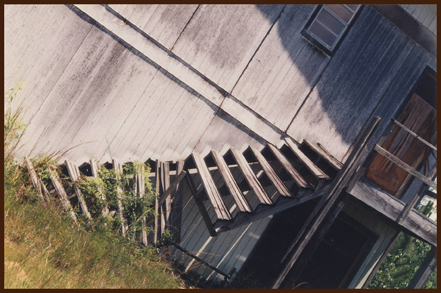
Stairs

Photo: Camille Martin

Photo: Camille Martin


death’s head redux

bounty from the sea


I posted a collage for the anthropomorphic category in Poemicstrip. Check out the fantastic work there!

Continuing a recent post about my breast cancer, this collage is another of the death’s heads that started popping up in my collages and some of the poems in Sonnets following my diagnosis four years ago. I didn’t think until after the collage was finished about the significance of the two masks under the wings: breasts, either cleansed of the disease or drained of life.

Thanks to Piotr Szreniawski for sharing Poemicstrip.
“bounty from the sea” first appeared on the cover of Fell Swoop 86.


Camille Martin

“not all slopes are tragic . . .”


Anny Ballardini kindly posted a poem of mine from “Looms,” a work-in-progress, to update her Fieralingue / Poet’s Corner website:


from “Looms”

*

not all slopes
are tragic. . . .

Click on the poem to read the rest of it.


Camille Martin

on the anniversary of my healing from breast cancer


In September 2006, a little less than a year after I moved to Toronto from New Orleans, I was diagnosed with breast cancer. This month marks the four-year anniversary of the beginning of my healing: surgery followed by several months of chemo and radiation therapy.

During that time, I was haunted by thoughts of mortality. Sometimes collage and poetry gave me a way to explore my feelings as I was confronted with the possibility that I might not survive. Death’s heads crept into several of my collages, such as the sinister stone frieze in the background of the collage above. And I can see that haunting in the dark tone of some of the poems in Sonnets.

I’ve never written publicly about my breast cancer, and though I don’t often delve into personal matters in this blog, I wanted to finally be open about it. Maybe someday I’ll write more about the experience. But for now I just want to say that I’m grateful to my caring doctors and nurses at St. Micheal’s and Princess Margaret Hospitals in Toronto (without whom I’d no doubt not be alive today), my loving partner, Jiri, and my amazing family and friends who rallied to help me through that difficult time.

Every year reduces the likelihood of recurrence. And every day of life is a blessing.

Camille

* “R” was first published by experiment-o, an online poetry and visual arts magazine published by Amanda Earl’s AngelHousePress in Ottawa.

Looms in Talking Writing

Three poems from “Looms” (a work in progress) and a collage (Divers Remember the Naming of Gifts) recently appeared in Talking Writing: A Literary Magazine.


Camille Martin

shell bud (for Hanna)


Camille Martin
http://www.camillemartin.ca

Poemicstrips

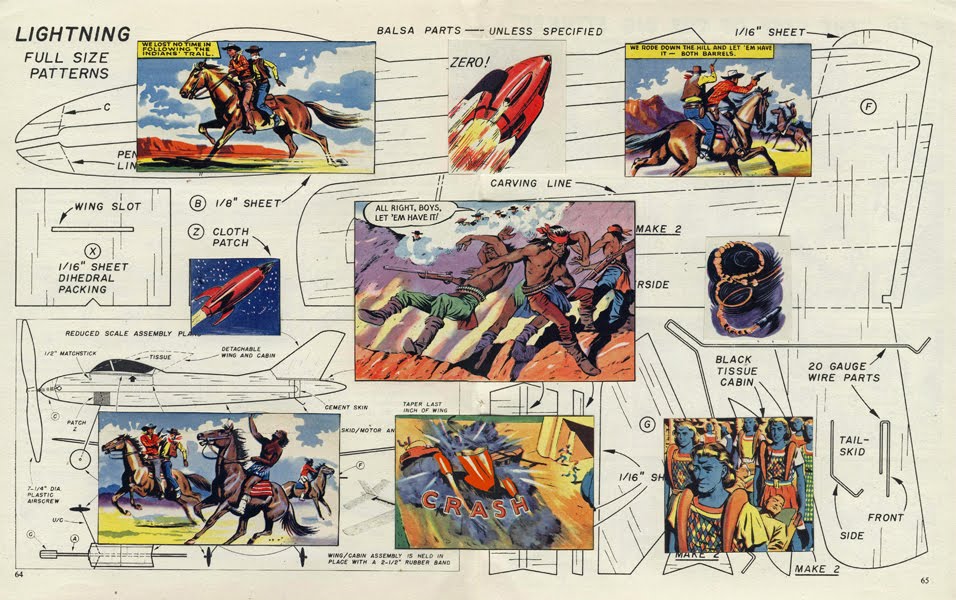
I just posted a comic strip collage, “Full Size Patterns,” at Piotr Szreniawski’s Poemicstrip blog – contributions also by Gary Barwin, Sven Staelens, Rappel, and others. I think Piotr is looking for other contributors, so check it out!

About Full Size Patterns:
I alternated frames of “cowboy and Indian” and sci-fi comic strips from 1950s British Boy Scout magazines, narratives that play out the idea of the “other” in society. In one narrative, the cowboys kill the Indian “others,” a failure of their civilization to recognize the humanity of the native people. In the other narrative, the earthmen’s rocket fails and crashes, but instead of the alien “others” killing the earthmen, they help them.


Camille Martin

The Lowly Eye: Samuel Greenberg’s Platonic Argument

         Shortly after my previous post about American poet Samuel Greenberg (1893 – 1917), Mark Woods gave a link to it from his website wood s lot: the fitful tracing of a portal along with a poem by Greenberg that I hadn’t mentioned. I love the idea of people having a favourite Greenberg poem, and Michael’s post brought to my attention one that I hadn’t yet read, “Memory” (64), which begins with the startling line “Gluttonous helium of thought’s endowment.”
          I had mentioned irony in Greenberg’s poems, which first occurred to me as I read “Immortality” (62), a poem that owes its own immortality in part to Hart Crane’s appropriation of some of its lines in “Emblems of Conduct.” Because of his lack of formal education, Greenberg is sometimes viewed as a naive poet whose rather purplish style implies an uncritical and rapturous praise of the powers of poetry to describe nature and express emotions. But in my further readings of Greenberg’s poems, I found that his tone is more ironic than previous critics have noted. For example, L. S. Dembo’s comparison of Hart Crane’s “Emblems of Conduct” (which is mostly a pastiche of lines from various poems by Greenberg) and Greenberg’s original lines is an admirably sustained and insightful analysis whose purpose is to demonstrate that Crane “has changed the whole tone of Greenberg’s work from romantic enthusiasm to irony” (320).
          However, in the following I want to show that many of Greenberg’s poems investigate the problematic duality of perception’s illusion and an ungraspable reality through argumentation that sometimes relies on irony. Greenberg’s philosophical and aesthetic stance, which is in essence a version of Platonism, sometimes ironically attributes authority to poetry and the senses and then dethrones them to show the necessarily mediated reality that arises from human attempts to experience and describe the world.
          I’d like to preface my analysis by stating that the ambiguity of Greenberg’s punctuation and syntax make interpretations speculative to an extent, and because of the difficulty of reading his work and to explain how I arrived at my interpretation, I’ll attempt “translations” of his lines. Prosaic and faulty as these glosses may be, I nonetheless hope that they show his deliberately ironic tone in working out a philosophical problem.
          For example, “The Laureate” (57) might at first blush seem to be unadulterated praise of the poet’s powers, but on closer study Greenberg’s argument comes through clearly. The first clue to the poem’s irony is in the title’s rather pompous reference to the poet. Greenberg’s opening apostrophe poses the central question of his sonnet:

                    Poet O soul! hast thou within thy wing the raise
                    That nature doth disown with complete color,
                    The enlightening beat of Heaven’s plausive royalty?—

          The question mark is an addition of the 1947 collection, a plausible assumption of the intended syntax, perhaps something like the following: Poet, does the flight of your inspiration fall short of nature, with its complete range of colour (as opposed to the limited human palette with which you describe nature)? Does your poetry contain the enlightening rhythms of heavenly authority?
          In the lines that follow, Greenberg extols the poet’s inspired vision of nature by contrasting clouds and earth:

                    As the clouds in their nudity softly sensate,
                    Uplift the sordid earth from dark slumber
                    And deviate spirits mystic woob,
                    Create animations about the hidden angels,
                    Regulate love in lofty nobles’ helm.
                    Conquer, but to unconquer self’s tomb,
                    Knight the command of universal thought,
                    Thou who art the stream of souls’ flow.

In other words, just as the softly perceptible clouds uplift the base earth from its dark sleep and womb of strange spirits, so does the poet animate hidden angels, give meaning to love, conquer mortality (but also embrace it), and express universal thoughts and feelings. These lines seem to praise the “laureate’s” divine powers.
          But it is the last three lines that reveal the irony behind his adulation of poetry:

                    O Lyre, ne’er can’st thou forgive praise,
                    For joy hides its stupendous coverings;
                    The quality of senses create and overthrow.

To Greenberg, poetry should not become conceited by such praise because its joys conceal its own “stupendous coverings,” its illusory colouring and symbolizing of reality. Our very senses create the qualities that poetry ascribes to reality. However, in the last word of the poem, “overthrow,” perhaps he metapoetically conveys the idea that the poet’s senses are also capable of revealing those qualities for the illusions that they are, thus justifying his own poem.
          It’s possible that I’m over-reading with my thoughts on “overthrow,” but I hope that the above offers a general idea of his sonnet’s argument regarding human perception and expression: poetry and the senses give pleasure, but these are illusory expressions of a reality that cannot be grasped by limited human means. The senses can experience, and poetry can describe, but the strong, unmediated light of reality lies beyond the ability of mere mortals to see.
          In “Enigmas” (49), Greenberg describes this dichotomy as “the beam / Of fire from the sun” versus his own “slumber in imagination of spheres . . . and moon-like shapes.” In “Nature’s Cover” (10), reality has a “[s]mooth, tangible, accessible skin / That gives its sensual, carnal kin,” unlike the unknowable “glossy smoke” and “spongy blue” of the “heavens.” In “The Cloud” (12), the poet’s power is mere “gilt” compared with the cloud that is “far from our souls.” And in “Daylight” (50), he addresses reality’s light as the “[g]leam” that with its “all-power[ful]” rays (“strings”) assists the poet’s “muse” to express “desire”:

                    The horizon hues give vent
                    To thousand lofty thoughts of poetry.
                    The floating marble-like clouds
                    Form incomprehensive molds;
                    But the lowly eye views this all
                    And, from within, peals its classic melancholy folds.

The clouds and horizon, in Greenberg’s symbolism, imply the unknowable realm. On the other hand, Greenberg often uses forms and colours to signify limited (“incomprehensive”) human apprehension of nature through imperfect faculties. Thus the poet’s limited perception sees only the colours of the horizon, inspiring poetry, and perceives only shapes from the clouds, whose resemblance to marble contributes to their aura of permanence and perfection. Perception’s “lowly eye” views an ultimately unknowable nature, attributes qualities and symbols to it, and creates cognitive images that are inherently limited. The reality beyond human grasp is transformed by the poet’s “melancholy folds” into poor representations of what the mind and senses cannot directly apprehend.
          In fact, a fairly consistent set of symbols attesting to these concerns can be traced throughout Greenberg’s oeuvre: the unknowable is figured as divinity, heaven, eternity, truth, scepters, immersion, essence, nature, clouds, strong light, or the unseen realm beyond the horizon. On the other hand, the relatively frail human perception is figured as a world of dreams, memories, reflections, echoes, veils, webs, specks, vapours, hues, shapes, or shadows; base earth; or the illusory charms of beauty and language.
          The religious implications of this symbolism are obvious, and I’ll address the influence of Jewish spiritual tradition below in my discussion of Greenberg’s image of a “spiritual gate.” As well, his aesthetic stance follows the Renaissance recapitulation of Platonic philosophy and is similar to Michelangelo’s succinct statement: “The true work of art is but a shadow of the divine perfection.” This idea permeates Greenberg’s poetry and is at the heart of the irony in many of his poems, notably in “Immortality,” which I’ll quote here in full and try to untangle Greenberg’s gnarled syntax:

                    But only to be memories of spiritual gate,
                    Letting us feel the difference from the real;
                    Are not limits the sooth to formulate
                    Theories thereof, simply our ruler to feel?

This passage is especially tricky, but inverting the syntax helps to sort things out: Art is a limited human expression of a truth or divine reality, a kind of theory that we formulate in order to feel close to the divine. Isn’t the limitation of artistic expression, which allows us to sense our separation from an ungraspable reality, actually a memory of a spiritual gate to the divine?
          The next few lines give examples of the apparent power of artistic expression:

                    Basques of statuettes of eruptions long ago,
                    Of power in symmetry, marvel of thought
                    The crafts attempt, showing rare aspiration;
                    The museums of the ancient fine stones
                    For bowls and cups, found historians
                    Sacred adorations, the numismatist hath shown,

Here Greenberg states that the arts are ambitious: they create bodices of statuettes, and they show advancements in the power of human thought. The numismatist shows the love of historians for bowls and cups of precious stones in museums of ancient art.
          In this passage, Greenberg ironically praises the mimetic powers of art. That irony consists partly in the artistic objects that he chooses to invoke: not Michelangelo’s David, but statuettes, bowls, and cups. Even these more humble works of art (which he ironically describes as “showing rare aspiration” and expressing “marvel of thought”) show our attempt to recreate something of an unreachable divine reality. And the term “numismatist” contributes to Greenberg’s exploration of this duality, for the coin collector emphasizes the idea of the utilitarian and commercial side of human creative expression, further lending an ironic tone to his praise of art. And to emphasize his original question, Greenberg ends with the opening four lines, thus framing his examples of artworks with the idea of their “spiritual gate” to the divine.
          I’d like to dwell for a moment on Greenberg’s image of the “spiritual gate,” which might have roots in his Jewish faith. Marc Simon points out that “[p]robably much of what might be termed the Jewish experience had permeated Greenberg’s life, despite relatively little religious training in a schoolroom” (7). From 1901 until 1907, when he had to leave school at grade seven to work in a leather factory, he attended a public school, not a cheder. In his autobiography, he remembers, tongue in cheek, the “fancy problems,” “polished desks,” and “abnormal cheer” of his classrooms, where he describes himself as a “reaper of hard fact and geographical bliss,” “material” that nonetheless “served as an unconscious guide in my spiritual labors.” He would have absorbed Jewish faith and traditions at home, for his parents were observant Jews. And indeed, Greenberg’s poetry contains many references to his faith.
          In Jewish symbolism, a gate can refer to the gates of the Temple or the gates of heaven; open gates imply a closeness to God. The service that ends Yom Kippur is called “Ne’ilah,” which refers to the closing of the gates of prayer. According to Milton Steinberg in the Machzor Hadash, on Yom Kippur “the Jew saw a spiritual gate, an entranceway to a new relationship with God, an opportunity to change, to begin again” (761).
          Thus the spiritual gate in “Immortality,” an idea that infuses Greenberg’s poetics, may bear a relation to Jewish tradition. And although sometimes Greenberg seems to admire the power of poetry as a medium with which enter the “spiritual gates” and transport the mind to inspired heights, he also points out that after all, it is but a shadow of a divine reality.
          Greenberg’s work does present difficulties to the reader because of its effusive style and ambiguous syntax. But as several of his admirers have shown, careful readings of the poetry demonstrate him to be more sophisticated in his choices than it might at first appear. For example, Marc Simon’s study of the influence of Greenberg on Crane takes a positive tack in his revelation of Crane’s use and honing of Greenberg’s “techniques of repetition” (52).
          Likewise, Evalyn Shapiro, in her 1947 review of the collection edited by Holden and McManis, attributes originality to Greenberg’s work when she concludes that although Greenberg may have borrowed certain types of images from such sources as Palgrave’s Golden Treasury of the Best Songs and Lyrical Poems in the English Language, nonetheless during “the brief five-year period of his creative life he managed to evolve a poetic style of his own, including an idiom, a metric, and a symbolism” (160-61).
          And although John Berryman agrees with Allen Tate’s assessment of Greenberg’s work as “turgid and bathetic,” he also asserts that while Greenberg may have been “inexperienced” in his editing of his work, “he was not naïve.” Berryman also points out that because Greenberg “has been thought of so far, when thought of at all, as mad or simple . . . insistence is necessary upon the deliberate sane craft visible, at least by intention, all throughout [the 1947] volume” (505-506).
          As I mentioned in my previous post, Charles Bernstein appreciates Greenberg’s syntactical acrobatics and ambiguities as characteristics of a “radically modernist dimension”: “His swerve from syntax as a principal of clausal subordination and hierarchy opens up the field of serial apostrophe that pushes to liberate itself from the confines of ‘literary diction.’”
          In keeping with these positive assessments, I hope that my analysis shows that Greenberg’s poetic tone is not so simply a case of overblown Romantic enthusiasm, and that through a sometimes ironic tone he is working out a philosophical and spiritual problem in his awareness of the limitations of human perception.


* There is debate as to whether (or to what extent) editors should alter Greenberg’s spelling and punctuation to clarify meaning. For the sake of consistency, I’m presenting the versions in Poems by Samuel Greenberg: A Selection from the Manuscripts, the 1947 collection edited by Harold Holden and Jack McManis. Readers might want to refer to Michael Smith’s website Samuel Greenberg: American Poet, which presents less edited versions of some of the poems that I discuss.


Works Cited

Bernstein, Charles. “Samuel Greenberg & Grammatic Truth.” Sibila: Poesia e Cultura.

Berryman, John. “Review: Young Poets Dead.” The Sewanee Review 55.3 (1947): 504-514.

Dembo, L. S. “Hart Crane and Samuel Greenberg: What Is Plagiarism?” American Literature 32.3 (1960): 319-21.

Deutsch, Gotthard, Cyrus Adler, and Francis L. Cohen. “Ne’ilah.” Jewish Encyclopedia.

Greenberg, Samuel. Poems by Samuel Greenberg: A Selection from the Manuscripts. Eds. Harold Holden and Jack McManis. New York: Henry Holt, 1947.

Hirsch, Emil G. “Gate.” Jewish Encyclopedia.

Shapiro, Evalyn. “Review: From Nowhere.” Poetry 71.3 (1947): 158-62.

Simon, Marc. Samuel Greenberg, Hart Crane and the Lost Manuscripts. Atlantic Highlands, NJ: Humanities Press, 1978.

Smith, Michael, ed. Samuel Greenberg: American Poet.

Steinberg, Milton. Machzor Hadash.

Woods, Mark, ed. wood s lot: the fitful tracing of a portal.


Camille Martin

Passion Flowers, Gulf Fritillary Butterflies, and Cultural Exoticism

          A friend of mine, born and raised in Toronto, commented that my growing up Cajun seemed to her exotic, colourful—the unique food, music, and language of the Cajuns, whose population is mostly concentrated in a relatively small area in south-central Louisiana, sets their culture apart from any other in the world.
          True – the Cajun appetite for gumbo, jambalaya, and boiled, spicy crawfish is legendary. Accordian- and fiddle-playing are avidly learned by young people who form the Cajun and Zydeco bands that remain a staple of popular culture in Louisiana. The lyrics of their songs, often still sung in the Cajun patois, speak not only of unrequited love but also of alligators and Mardi Gras. And the spoken language is peppered with Cajunisms like boudez (to pout), veiller (to visit and chat) and couillon (idiotic).
          I responded that some aspects of the culture in which I was born and raised seemed exotic to me as well—not only now, viewing the culture through eyes that have seen many other places in the world and studied the Cajun culture in historical context—but then, too, growing up in the midst of its difference from any other place in the country. Then, I viscerally felt the difference of my culture; I felt it to be something exotic, even though I was living within it.
          As I pondered the idea of cultural uniqueness, an image of passion flowers crowded with Gulf fritillary butterflies surfaced in my mind—the most exotic image that I could think of from my childhood in Lafayette, Louisiana, the hub of Cajun culture. There was something about this image of otherness that reminded me of the way that it felt growing up within a culture that was self-conscious of its exotic status within the more mainstream American culture.

Passion flowers
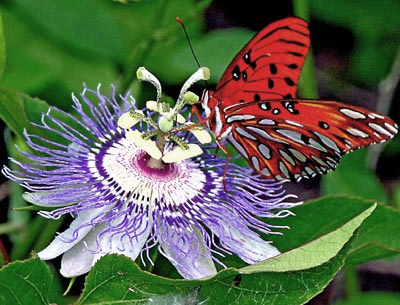
          When I was a child, my mother lined one side of our carport with chicken wire and planted passion flowers alongside it, allowing the vine to climb. By the zenith of our subtropical summer, the creeping tendrils had formed a wall of green lavished with purple blossoms that seemed impossibly, exquisitely exotic.

Photo: Norman G. Flaigg

          Passiflora grew luxuriantly in the rich soil and semi-tropical climate of Louisiana. My father explained to me that the vine had originated in South America. True, but researching the plant now tells me that it was also indigenous to North America; some Native American tribes used parts of it to make medicine and tea. Nevertheless, I grew up believing that it was a foreign plant, and to me it certainly had that “exotic” look—wildly different, introduced from somewhere in tropical South America where, my child’s imagination suggested to me, the saturated colours of the clothes that people wore and the rich flavours of the fruits they ate emerged from the very soil under their feet. There, I thought, the passion flower must be something ordinary—still lovely, but possessing a beauty that one would take for granted, an old friend blossoming along roadsides or in pastures, blending into the fabric of life’s more joyful offerings.
          But here, the passion flower appeared to me an exotic other among the weedy dandelions and white “springflowers” that emerged from the St. Augustine grass, and even the colourful but domesticated zinnias that I grew in neat rows in my little garden plot bordered with red bricks. The passion flower was a colonizing vine, impossible to confine, that thrived in its “new” environment. It added an element of exotic difference to the lawn’s more quotidian flora.
          For one thing, the multi-layered flowers were so complex that their structure couldn’t be taken in all at once but had to be visually dissected. The blossom’s base was composed of rather mundane daisy-like petals. But radiating above these petals was a myriad of delicate tendrils, curly at their ends and patterned with concentric rings of colour: these were the tresses of Medusa the Beautiful.
          From the center of this bizarre splendor grew a little tree trunk with umbrella spokes of five spotted branches; at the tip of each branch was attached a little oblong platelet. As if nature weren’t satisfied with all that weird magnificence, the whole was topped with a tiny orb from which sprang three little trumpets. This flower knew exactly how to flaunt its reproductive organs.
          The fruit of the passion flower was also a sensual feast for the eyes, if not my childish palate. Moreover, these odd blooms grew on wild, luxuriant vines whose vigorous life force enabled them to smother whole trees. There seemed an element of menace to this plant, which I regarded as an invasive but welcome species.
          In short, the passion flower looked like an alien from another planet or perhaps one of those otherworldly species that flourished during the Cambrian explosion.

Gulf fritillary butterflies

Photo: Dominick Martino

          Every summer, Gulf fritillary butterflies migrated from the tropics of Florida, over the Gulf of Mexico, to areas along the subtropical stretch of the Gulf coast, including my hometown of Lafayette, Louisiana. There, the passion flower provided the butterfly’s favourite nectar and the vine’s leaves the caterpillar’s preferred food. Swarms of these butterflies, drenched in warm equatorial colours, perched on flowers as fantastical as any Royal Ascot hat, surely couldn’t be the visionary brainchild of the local Mother Nature.
          One summer, as the butterfly’s eggs hatched, my mother placed one of the tiny caterpillars in a large jar full of passion flower leaves attached to a length of vine she’d cut. I watched as the caterpillar munched on the leaves, moulted its outer skin a few times times to allow growth, suspended itself from a twig with its own adhesive silk, formed its chrysalis, and appeared to be dormant. I waited anxiously, but at last the outer shell of the chrysalis, which resembled a curled up dried leaf, stirred and cracked, and a coltishly awkward butterfly emerged with crumpled wings. Gradually it stretched out its wings until their full pattern emerged: tawny orange laced with black and splashed with silver dots and streaks.
          Of course, many things seem fresh and exotic to the eyes of a child. But like the passion flower that I believed was introduced from South America, migratory creatures were in a different category. It was one thing to observe, up close, the concentric circles and striking colours of buckeyes and swallowtails, which were endlessly fascinating but very common fluttering around in the pastures behind our house. Those native butterflies were as prolific as the mushrooms that we called the “devil’s powderpuff” and as common a sight as the towering anvil-shaped cloud formations that roamed like sharks across the wide Louisiana sky and dumped rain so furiously that cars stopped under bridges to ride out the deluge. These things were special, but still part of the fabric of life.
          However, the migration of the Gulf fritillary butterflies was something precious and unique—as the summer heated up, we knew they were coming, and we waited, and whoever spotted the first one ran inside excitedly to announce the news. Then, these butterflies stole the spotlight from the more ordinary butterflies. There was something rare about them, though they were far from being an endangered species. And they were utterly gorgeous.
          But if they were so exotic, I thought, why was the word “Gulf” part of their name? The Gulf of Mexico was familiar, ordinary, always there, defining one boundary of Louisiana, providing a fishing ground for my father and a breeding ground for hurricanes. “Fritillary” at least sounded exotic—the tongue, teeth, and lips made unfamiliar movements pronouncing the word that sounded like no other and that conjured an image of delicate, unfamiliar beauty, eagerly anticipated and welcomed. Gulf fritillaries were transitory visitors enriching dailiness with their striking colours and refined appetite for the nectar of foreign flowers.
          The convergence of these two otherworldly beings—the passion flower and the Gulf fritillary—yielded in my mind the essence of exoticism. But in reality the passion flower is native to many areas of North America. I’m not sure whether the species that my mother planted was Louisianian or Brazilian; it would take a botanist to sort out that question. But the genus was no stranger to the subtropics of the Deep South.
          As for the Gulf fritillary butterfly, its migratory arrival and departure made it seem otherly. However, migratory patterns in birds and butterflies take shape over eons, and the Gulf fritillary butterfly had for a long, long time made its temporary home in Louisiana during the summer and traveled in large flocks across the Gulf to winter over in the tropics of south Florida. It was native, all right.
          My perception of exoticism in the passion flower and Gulf fritillary butterfly was just that—an attitude conditioned by notions about native and other. By extension from flowers and insects to people and culture, exoticism is a state of mind about self and other. If I had lived a few decades earlier, the Cajun culture in which I lived would not have seemed so self-consciously tinged with exoticism. Since the early part of the twentieth century, my community of Lafayette, Louisiana, was in transition due in large part to the federal project of assimilation of the French Cajuns into mainstream American society. It was a project distressingly familiar to many ethnic groups in Canada and the United States. If I had lived before that homogenizing process—however one envisions the metamorphosis toward modernized, commercialized, consumerized, suburbanized, American blandness—life, more isolated from the country’s mainstream, might have seemed less self-consciously different.
          But growing up in the sixties and seventies, I knew how different my culture was—the inroads of superhighways, television, and billboards had for decades facilitated the intrusion of mainstream, popular culture into south-central Louisiana. I thought of the Cajun culture as exotic because it had become self-aware as otherly. Since the 1960s, the Cajuns regained a sense of pride in their culture. CODOFIL (Council for the Development of French in Louisiana) was formed to protect the vestiges of the Cajun culture and encourage a return to its cultural heritage, including the French language. It was, and is, a noble attempt to revitalize a dying culture. The new-found pride also fostered a sense of protectionism. A friend once half-jokingly said that he would only marry a woman born south of the I-10, an east-west interstate highway below which the majority of Cajuns made their home in Louisiana. But in spite of recent attempts to protect the vestiges of the original culture, full retreat into the past was of course no longer possible.
          We were passion flowers, indigenous but seen as exotic in our own homeland, by ourselves and by others. And the idea of exoticism implies a degree of purity. For a culture to be exotic is to possess a degree of difference that sets it apart. But the fact is that we were never “purely” Cajun—neither purely native nor purely exotic. Our culture may have been predominantly French and Catholic. And as I now understand having visited some of the remaining Acadian villages in Nova Scotia, there is a strong cultural bond between contemporary Acadians and Cajuns that demonstrates that both cultures possess many survivals from their common historical roots in seventeenth- and eighteenth-century Acadie. But diaspora brings with it the assimilation and adaptation of cultural elements from many others along the way.
          To take music as one example, Cajun and Zydeco music isn’t something “pure” historically, but a mixture of old Acadian songs influenced by Texas swing, jazz, country, and blues. Although at any given moment in time a culture might seem to be purely “itself,” diachronically speaking it is inevitably mongrel.
          I thought of the Gulf fritillaries as exotic others. But in fact they were native creatures despite their migratory patterns. The Cajuns, who originally migrated from France and later were expelled by the British from Nova Scotia, moved around quite a bit during the two centuries of their immigration and diaspora. South Louisiana, with its giant live oaks dripping with moss and its humid, decaying swamps, must have seemed exotic to the newly-arrived Acadians, compared to the rocky coasts and salty tidal flows of the Bay of Fundy. But in each place that their voyages had taken them, the Acadians became naturalized and absorbed something from the soil on which they made their homes. The Cajuns’ roots were undeniable and their perceived exoticism was only relative compared to the larger culture of les Américains—as the older Cajuns still called them not so long ago—who surrounded them.
          A few years ago, during a visit to friends in Montpellier, France, I was delighted to find the vines of passion flowers laden with fruit, which brought back memories from my childhood. I was a little surprised to find these vines in the South of France. Although I wasn’t sure whether they were native or introduced, they still seemed exotic here, just as they had seemed to me growing up in Louisiana.
          To my child’s mind, it was important to distinguish between the familiar and the unfamiliar, between the autocthonous and the introduced. But rigid and naive distinctions are illusory. I watched caterpillars fattened on the leaves of passion flowers transform into Gulf fritillary butterflies, a beautiful lesson in metamorphosis. That image of their transformation seems to me to aptly describe the natural condition of cultural flux. To paraphrase Hamlet, there’s nothing either purely exotic or native but thinking makes it so.

Photo: Camille Martin

Photo: Camille Martin—Passion Fruit in Montpellier, France


Camille Martin

Blue Tulip Tree Leaf, Bayou LaTerre

Photo: Camille Martin

Photo: Camille Martin


I took this picture of a tulip tree leaf in a sandy creek in Mississippi called “Bayou LaTerre,” which is unlike any Louisiana bayou I’ve ever seen – they’re normally muddy and stagnant. It must have been something about the light or water that made the leaf appear bluish.

Camille Martin

Sonnets

Codes of Public Sleep

Remembering remembering Leslie Scalapino

          It’s still hard to believe that Leslie Scalapino is gone. Although I was saddened by the news, the enormousness of the loss is only now starting to sink in. Over the years, she’s had a profound influence on my own writing. It was through her that I became interested in Buddhist thought, and in particular the writings of Nagarjuna.
          I also admired her philosophical explorations of public and private spaces and actions, and her focus on stripping phenomena down to get as close as possible to the level of perception, to peel back the cultural, personal and political biases with which we habitually infuse events. This helped me to to have a more intense awareness of the deeply ingrained assumptions of our cognition. Her influence on my work is especially apparent (or so I’ve been told) in the title poem of Codes of Public Sleep, an exploration, in part, of private and public space and behaviour in downtown New Orleans.
          The reading that I organized for her in April 2002 at Cafe Brasil in New Orleans was one of the most memorable I have ever experienced. She read, among other things, from The Tango, and the rhythm of her delivery was more than mesmerizing—it seemed to reveal the inner sense of the words and phrases in relation to the Buddhist thought in which she was so immersed. It revealed a splaying of consciousness with an intense awareness of the myriad perspectives that perception and cognition bring to phenomena—including the phenomenon of one’s own awareness. I will always treasure the copy of that book that she gave me and her description of Buddhist masters that she had witnessed in Tibet questioning the seated clusters of disciples in lightning-quick fashion, sometimes snapping their fingers for a response.

          The workshop that she facilitated around my kitchen table for the privileged few who showed up was an eye- and mind-opener. One of the exercises was in three parts. First, we were to take a few minutes to pay close attention to what was happening in our minds, without trying to impose an agenda of topic or emotion, just to listen closely and write. As I remember, mine was pretty disjunctive, words and phrases that happened to surface into consciousness interspersed with what I can only describe as onomatopoeic noises, hummings and interjections.
          For the second part, she asked us to describe an event that we had witnessed, one that made an impression on us, but to describe it as far as possible without imputing emotions or opinions about it, simply to describe, for example, the motion of someone’s leg kicking a chair. The event might have been laden with assumptions and biases at the time, but she instructed us to think about the event as being a phenomenon stripped of mental attributions—to the extent that this is possible—to get to the roots of the phenomenon itself.
          What immediately came to my mind was a fight over a computer that I had recently witnessed in the New Orleans Public Library, where I was working at a reference desk. I remembered one man pushing the other man over a table, the grimaces on their faces, and so forth. I remember that it was revealing to see the event in my mind’s eye as an observer, not to focus on my own anxiety and revulsion at the time, but to focus on the event as event—not to react, but to see and not to impute.
          The first writing was a subjective inner flow of consciousness; the second was a recording of the out-there, stripped as much as possible of the constant commentary of the little evaluator and interpreter inside our head.
          The third part of the experiment was to combine the two writings, to alternate between the inner consciousness and the event-phenomenon. I thought my attempt at the combination awkward, jarring, but Leslie reacted enthusiastically to it, and I then understood more about the point of the exercise. It wasn’t that what I had written was publishable or anything, but through the experiment I was made to think in ways that made me feel slightly uncomfortable, to show me something about habits of thought. And it helped me to understand better her own poetic project. And the more that I read of Nagarjuna, the more her writing experiment at the workshop made sense to me.
          In my next post, I’ll reproduce an essay that was published in HOW2 a few years ago in a special critical feature on Leslie Scalapino. Alert: it’s on the longish side, but I hope that some parts of it are rewarding.


Camille Martin

two collages

a double exposure remembers


full circle


Camille Martin
http://www.shearsman.com/pages/books/catalog/2010/martin.html

The Fledgling Book Flies the Nest

          This post is more meditative and personal than most of my literary musings, but I’ve been thinking about various reactions to some of the poems in Sonnets.
          As I was putting together the final manuscript of Sonnets, naturally I made certain decisions about which to include and which to put on the back burner, perhaps for future revisions. As well, in the final, published, version, there are some sonnets that I feel closer to than others.
          But once my book goes out into the world, I have no control over which poems, to quote Dickinson, make readers feel physically as if the top of their head is coming off, and which, not so much.
          For example, one friend named a sonnet that he particularly enjoyed. It was one that in the editing stage I had seriously considered tossing. This has happened often enough to bring home the point that after a work is released into the world, the author becomes largely irrelevant, unless biographical information contributes to the meaning of a poem (my Katrina poems, for example)—and even then. Unmoored from the intentions and contextual significance in the mind of the poet, readers become, to use Barthes’ term, writerly. I might not share a certain predilection for or interpretation of a poem, but who am I to say? And it’s a pleasure for me to know how others are reading my work.
          At a reading, I sometimes find myself about to start talking about what the poem means to me and then catch myself, so as not to impose a set of significations to the poem.
          And in the editing stage, when I had trusted friends help me to edit the manuscript, one editor felt that a certain sonnet should be dropped, while another felt it absolutely must be included. I hated to be the one to break the tie, but more often than not, iI decided to include it, since at least one seasoned poet felt strongly about it, and I didn’t want to deny the little sonnet its chance to shine, even if only for a minority of readers.
          It can be illuminating and broadening to read other’s interpretations of particular poems. Not long ago, Bill Knott wrote a sensitive and insightful analysis of one of the sonnets, “comatose in paradise,” in which he gave it a depth of meaning and pointed out interconnected ideas that I hadn’t noticed before. As much pleasure and satisfaction as I derive from writing, it’s at least as gratifying to hear others’ take on the poetry. Perhaps it’s true that poets are the worst interpreters of their own poetry.
          I’m wondering what others think when they hear such unexpected feedback from others.

Camille Martin
http://www.shearsman.com/pages/books/catalog/2010/martin.html

Old Stove

Photo: Camille Martin

Photo: Camille Martin