Tag Archives: poetry

“Glib spice announces the news . . .”: More Pre-Mayan-Apocalypse Fiddling

from Sonnets

*
Glib spice announces the news bleeding
in the monochromatic distance. The short-term
memory of distance flees in fear. Enemies
fall, money flees. Falling gloom dazzles just
as history taught it to. Not the history of stars
made of tumbleweed nor the annals of a dust mote
singing rich disaster. Masoch was never so rich,
or so it seems to each geological layer. No
notebook records a pocket of posies between thick
layers of ash. It just is, caught in a small pocket
of time. “Time to return to star,” announces
tumbleweed on the news. The news shrinks
to a speck of pollen on a posy’s anther
in a pocket caught between thick layers of ash.

2012 - 2

Sonnets and Looms are available here:

Small Press Distribution
Book City in Toronto
Apollinaire’s Bookshoppe
Amazon.ca
Shearsman Books
The Book Depository

Cheers!


Camille Martin

Fiddling While Earth Burns: Poems for the End of Time

          I’m obsessed with The End, with the smorgasbord of choices for Armageddon that Neil deGrasse Tyson cheerfully ticks off: asteroid, caldera eruption, mega-tsunami, black hole. Not surprisingly, some of my poems have an apocalyptic theme.
          So in honour of the rapidly-approaching December 21, 2012—of the dreaded cataclysm that Mayan astronomers predicted (unless they just got tired of chiselling)—I’ll be posting poems to while away the countdown to the terrestrial torch. The first poem is below.
          And what would 2012 prophesies be without a little shameless commercialism? I’m selling poetry, not opulent underground condos, but then, to paraphrase William Carlos Williams, survivalists die miserably on doomsday for lack of what is found in poems.
          The clock is ticking, but you can still get a copy of Sonnets and Looms from the following vendors: Small Press Distribution, Book City in Toronto, Amazon.ca, and Shearsman Books.
          Help keep my kitchen, where I’m hunkering down with proper Canadian garrison mentality, stocked with beans and rice during these anti-climactic end times.

from Sonnets:

*
From a helicopter at night, an aerial
view of a city. In the dark, gigantic
iron statues loom with an ominous
aura of permanence. The people
who live in the city obsess
about the possibility of doomsday
erupting among their soaring
buildings and effigies. Of the end
they’ve made a fetish, chatting
about it at cocktail parties as if
it were the latest vogue. They believe
that it could happen at any moment,
so they no longer bother
to make their beds in the morning.

2012


Camille Martin


“Believe in biblical colors, Floodlings”: Cinquains with John M. Bennett and C. Mehrl Bennett

          Before the Skylab Gallery reading in Columbus, I went out with John and Cathy Bennett for a bite to eat. We had time to kill, so they suggested collaborating on cinquains.
          Cathy published them on her blog. Have a look-see.

This slideshow requires JavaScript.


Camille Martin

Photos: Tyrone Williams, James LaCroix, and Camille Martin at Detroit’s Woodward Line Series

          A couple of weeks before the reading, James Hart, co-curator of Detroit’s Woodward Line Poetry Series, realized that two other poets and I were booked for Thanksgiving Eve. We assumed that only a handful of people would show up. But in fact the reading was very well attended.
          As a venue, The Scarab Club is a poetry series curator’s dream: a beautiful open space with great acoustics in an historic old building.
          I had the pleasure of reading with two terrific poets, both from Detroit: James LaCroix and Tyrone Williams.
          Many thanks to the organizers and hosts of the evening, including Kim Hunter and James Hart III.

This slideshow requires JavaScript.


Camille Martin

Detroit, Thanksgiving Eve: Tyrone Williams, James La Croix, Camille Martin


Camille Martin

“Poetry, Art, Music—and the Gift of Synesthesia” (an image essay in Talking Writing)

A couple of years ago, Talking Writing published some poems of mine from Looms, a manuscript that has recently been published by Shearsman Books.

Martha Nichols, one of the editors, recently approached me about writing an illustrated essay about what it’s like to work in three disciplines: poetry, collage, and music.

I invite you to have a look at the resulting featured spread in Talking Writing and to explore the rest of the issue, which will be added to during the next few weeks.

Click the image below to view my collages and essay:


Camille Martin

Thumbs-up to 11 poetry books (and so many more)

          This year, Steve Evans of the University of Maine invited me to participate in the tenth anniversary of Attention Span, in which eighty poets list the eleven books that influenced them the most in 2012 (not necessarily published in 2012).
          Click the image below to go to the complete list of my choices. I was just getting warmed up when I had already used up my allotted eleven books. I could have listed so many more. Have a look at the lists of other poets while you’re at the site, and stay tuned to Attention Span for the annual tally of votes.


Camille Martin

Cobourg, Ontario: Small Town, Big Poetry

          On Tuesday I read at one of the poetry reading series in Cobourg, Ontario. One? That’s right, the town of Cobourg, population under 20,000, has two poetry reading series and an active and dedicated poetry community who work together in the CPW (Cobourg Poetry Workshop) to sponsor readings and workshops.
          I read for the Doug Stewart Reading Series at the Palisade Gardens Retirement Residence. I thought it was a great idea to have the reading at this facility. It was open to the public and attracted several residents of Palisade Gardens.
          My original trepidation about how my poetry (which can be pretty edgy) would be received dissolved once I started reading—the audience was warm and appreciative, and somewhat to my surprise I sold more books there than at any other reading I’ve ever given!
          I shared the microphone with Sharon Knap and Rick Webster—it was a pleasure to meet them and hear some of their work. Bridget Campion was one of the best emcees I’ve ever met. Thanks to the members of the CPW who not only organized this reading but also drove and showed me around Cobourg and arranged a pre-reading dinner and post-reading beer.
          Some pictures, most taken by James Pickersgill (I think):

This slideshow requires JavaScript.


Camille Martin

On Cross-Pollination: An interview with Camille Martin by James Pickersgill

My “world premiere” of Looms will be in Cobourg, Ontario, about an hour’s train ride east of Toronto.

Poet James Pickersgill put together some thought-provoking interview questions in advance of the reading. Below is a sample, and the complete interview can be found here.

Q – Camille, it is not at all true that poetry is your single creative outlet. You are known as a collage artist, too. You are an editor yourself … and a translator. Your own work has been translated into other languages as well. You have been a university teacher. You’ve organized poetry reading series. You’ve had radio shows and you blog actively on the internet. When listed like that, these activities might sound like an array of separate pigeon-holes but I suspect that there is a lot of cross-pollination, so to speak. What is the nature of this creativity as you experience it: one spark that finds many openings to jump into flame, or, can it be distinct and separate creative impetuses?

Camille Martin – I love the idea of cross-pollination. In fact, I think my primary creative impulse is to bring together: to merge or to juxtapose. It’s the basic impetus for the metaphor: to bring unlike things into dialogue. And for me, that goes for disciplines as well. I was reading and seeking out poetry on my own from an early age, though I didn’t begin writing it in earnest until my late 30s. But my first creative expression was musical – I was trained as a classical pianist since I was six years old, and I went on to get a graduate degree in piano performance. I was also intensely interested in visual art. I’ve always felt a desire to bring the arts together. So now, in the autumn of my life, I have the pleasure of doing all three: making collages, writing poetry, and setting my poetry to music. I think these disciplines are sparking conversations among each another.


Camille Martin

LOOMS now at SPD

Always happy when my books arrive at Small Press Distribution!

Poetry. The title of LOOMS signifies the weaving tool as well as the shadowing appearance of something. These “woven tales” were inspired by Barbara Guest’s statement that a tale “doesn’t tell the truth about itself; it tells us what it dreams about.” The strands of their surreal allegories converse, one idea giving rise to another, and the paths of their dialogue become the fabric of the narrative. In a second meaning, something that looms remains in a state of imminent arrival. Such are these tales, like parables with infinitely deferred lessons.

“In tightly woven tapestry, Martin’s ‘backstreet songs’ re-invent a music of knowledge that navigates the hucksterism and catastrophe threatening our planet. The movement of her threads is fugue-like, punctuated by oboes and clarinets, mockingbirds and cicadas. Here, in the dream-space of time-lapse film, forms of life and ideas collide and morph, rippling through centuries of human consciousness to unravel as quickly as they ravel. Here, above all, Martin makes it possible to dance among our ‘origins in snake oil,’ our ‘crusades to mirages’ and our ‘accidental fictions’.”—Meredith Quartermain

“A dreamscape on the outskirts of town, ‘in the badlands of the vernacular,’ these hopeful, haunted poems populated by children and prisoners ‘hover between’ realms domestic and exterior, real and imagined. Like candles described herein, this book gives off a melting, tactile glow.”—Arielle Greenberg


Camille Martin

ROBERT ZEND: Poet of exile, citizen of the cosmos

The Canadian Encyclopedia recently published my entry on Robert Zend (click to read it):


Camille Martin

A box full of the mysterious woman playing blindman’s bluff among neurons

click image for Shearsman Books page for Looms

My box of Looms has arrived, and copies distributed to five Goodreads winners.

Shearsman Books has a pdf sample as well as a handy list of links where you can order the book.

Many thanks to Tony Frazer, publisher extraordinaire of Shearsman Books.

May the poems in Looms bring you pleasure!


Camille Martin

Phil Hall: A widened field of signification


Please check out my entry on poet Phil Hall for the Canadian Encyclopedia.

An excerpt:

“In the pivotal collection Hearthedral: A Folk-Hermetic (1996), Phil Hall’s poetic shift becomes more apparent. It shows his transition from relatively accessible poetry using colloquial realism into more complex language reminiscent of James Joyce’s wordplay in Finnegans Wake and Gerard Manley Hopkins’ richly descriptive poetry. . . .”


Camille Martin

C. L. Bledsoe’s mindful review of Sonnets

         There’s a terrific review of Sonnets (Shearsman Books, 2010) by C. L. Bledsoe at Murder Your Darlings. I say “terrific” not only because it’s a positive review (music to any poet’s ears) but also because the reviewer quotes from and discusses several poems in the book. It’s a mindful review, and it’s evident he didn’t just skim the book but read slowly and attentively.
         Bledsoe’s general appraisal of Sonnets:

“Martin’s poems are complex and elegant. She reveals a vital, passionate intellect in these poems that move fast as river water after a spring thaw. I can’t wait to read her next collection.”

Click the image below to read his thought-provoking review:

Sonnets can be ordered on the publisher’s page, which offers links to multiple distributors.


Camille Martin

Looms now available: check for pre-order discounts

Looms, my fourth book of poetry, is now available for pre-order from your favourite bookstore and online sources.

At the bottom of the Shearsman Books page is a convenient clickable list so you can choose your preferred source and compare prices—you may wish to check for pre-order discounts (The Book Depository has one, last time I checked).

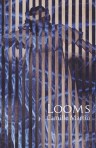
Looms is my second title published by Shearsman Books, and I couldn’t be happier with the way it came out. The cover features one of my collages, Blind Man’s Bluff, and the publisher, Tony Frazer, did a beautiful job (as usual) designing and producing the book.

Publisher’s description of Looms:
The title of Looms signifies the weaving tool as well as the shadowing appearance of something. These “woven tales” were inspired by Barbara Guest’s statement that a tale “doesn’t tell the truth about itself; it tells us what it dreams about.” The strands of their surreal allegories converse, one idea giving rise to another, and the paths of their dialogue become the fabric of the narrative. In a second meaning, something that looms remains in a state of imminent arrival. Such are these tales, like parables with infinitely deferred lessons.


Camille Martin

“Earth beckons rain and grape . . .”

A poem of mine is featured in Truck:

Thanks to rob mclennan, who is in the driver’s seat of Truck for the month of August.


Camille Martin

13 Poetry Books on Neptune

Stuart Ross asked me to list the 13 poetry books I’d want to keep me company if I were stranded on Neptune (he promised to provide breathing apparatus and a sandwich). It wasn’t easy to pare it down to 13, but here it is . . .

Click to see the list . . .


Camille Martin

Robert Zend’s “Typescapes”: Concrete poetry from a Renaissance man of Canadian letters


detail from Robert Zend’s typescape Peapoteacock

          A few months ago, I wrote a brief essay about Daymares, Robert Zend’s collection of stories, poems, and concrete poetry, one of his few books still in print. Zend (1929-1985) was a Hungarian-Canadian writer who immigrated to Canada in 1956, the year of the Hungarian Uprising. He settled in Toronto and worked for many years for the CBC. He was one of the most versatile Canadian writers, producing poetry, concrete poetry, novels, short fiction, essays, and plays. He was also a composer, a filmmaker, and a creator of mertz-like sculptures made of found objects.
          While researching the Toronto Reference Library’s holdings of Zend’s works, I came across a thirty-year old treasure in the Special Art Room Stacks: Arbormundi (Tree of the World), a portfolio of seventeen of Zend’s concrete poems created on a typewriter, for which he coined the word “typescapes.” Although Zend didn’t invent typewriter art, he did seem to have created it without knowledge of any forebears in that genre. Below is the cover page. Following this brief essay are five more samples of typescapes from Arbormundi.

          Zend’s typescapes are remarkable for their meticulous execution, which often involves superimposed shapes and figures. At the areas of intersection of these shapes, the effect is far from being muddied or heavy. Instead, they retain the delicacy that is characteristic of the whole.
          Part of the beauty of these concrete poems is the ethereal effect produced by the transparency of the overlaid shapes. The result of this diaphonous quality is that it is difficult to determine which object is in front or behind the other: The objects seem to blend into one another, a visual legerdemain made possible by the open spaces of the typed letters and symbols: a superimposed “x” and “p” gives little hint as to which was typed over the other. Therefore the realm in which the ghostly forms interact spatially and symbolically is flattened into a plane of shared patterns and meanings. Zend’s often punning titles also reflect this idea of blending, as for example in “Peapoteacock,” where he brings “teapot” and “peacock” into verbal and visual contiguity so that one is contained within the other.
          Another aspect of the beautiful intricacy of the overlaid objects is that the areas of intersection naturally produce darker areas, which form shapes of their own consisting of outlines of both objects (as overlapping circles in a Venn diagram produce a shaded area formed with arcs from both circles). The interplay of the shapes of each object with the shapes produced by their overlay creates an impression of both dialogue and unity between the objects.
          The miracle of these concrete poems is that from what must have been a slow and painstaking process of planning and execution using paper inserted into a clunky machine come visions of airy lightness and delicate movement.
         All of these effects harmonize with Zend’s recurrent themes of commonality and universality: the Other within the I, and the endless cycle of creation and destruction. They seem to be part of Zend’s spiritual expression of the continuities of life and death; as Zend puts it in Daymares, from the “prenatal . . . to the land of time-spacelessness; to the tiny centre point of our individual self which strangely coincides with the three-billion other human centre-points, with those of the dead ones, with those of our more ancient ancestors: swimming, crawling and flying creatures, rooting-stretching plants and perhaps even with the centre-points of other alien-living-units, of agitatedly swirling atoms and majestically rotating galaxies.”
          Below are five typescapes from Arbormundi, which was published by blewointment press in 1982. A note to the portfolio states that “Zend creates them with a manual typewriter; no electronics, computers or glue involved.”
          Following this sampling is a typescape by Zend based on a portrait of him by Hungarian artist Istvan Vigh.


Vivarbor (May 16, 1978)


Detail of Vivarbor


Orientopolis (Eastern city) (June 1, 1978)


Uriburus (April 13, 1978)


Rhumballion (May 14, 1978)


Peapoteacock (May 16, 1978)


Zendscape by Robert Zend, based on a portrait by Istvan Vigh


Camille Martin

Photos! Camille Martin and Mark Goldstein at the Myopic in Chicago

Borghes imagined paradise to be a kind of library. It can also be a dream of a bookstore with a poetry reading series, such as Myopic Books in Chicago. It’s hard to imagine a more heavenly venue. Below is a slideshow of photos from my reading there on April 21 with Mark Goldstein. Big thank-yous to Larry Sawyer, host extraordinaire of the Myopic Poetry Series.

This slideshow requires JavaScript.


Camille Martin

Arc Poetry Magazine: “In the badlands of the vernacular . . .”

The latest issue of Arc Poetry Magazine (67, Winter 2012) includes “In the badlands of the vernacular,” a poem from my upcoming collection, Looms.
          What I want to offer in this post is a short selection of lines from other poets represented in the magazine, lines composed of language that crackles with static electricity and nudges improbable likelihoods awake. I could have included many more but here’s just a sample . . .


Adam Sol, “Note Found in a Copy of Midsummer Night’s Dream
. . . .
Through the windows of the library
          the leaves shiver to the tune
of Max Bruch’s Scottish Fantasy.
          It all tastes of the jammy fingers
that last handled these headphones.


Elizabeth Bachinsky, “I Want to Have a Chuck and Di Party Like My Parents Did in the Yukon in the 80s”
–for Jamella Hagen
But where will I get the helicopter?
Who will make my dress
out of garbage bags? And where
will I find the good-sized rock
for our game of rockball?
How will we climb to the ridge
of the glacier? Who will dig
the trench to the fuel pump? And where
will we get the kleig lights?
. . . .


Andrew Faulkner, “Tumour”
. . . .
Indifferent continent where metaphors go:

zebra mussel, surgeon’s golf ball,
a connect-the-dots dot with the image

filled in. Death on a rusty tricycle.
. . . .


Adrienne Gruber, “Reasons To Choose the Leafy Sea Dragon as Your Lover”
          Narrated by Jim Carrey           you were featured in a slow motion 3D IMAX. Relative of the sea horse; same delicate trumpet nose, same philosophy of child rearing. Found in shallow pools, spindly body hovering over brown kelp beds.
. . . .


rob mclennan, “grief notes: glass,”
. . . .
          we sit

& echo out less
serious remarks; a language

made of snarks & sneers
                    ;what matters?
                    what’s the (even) point?

sky turns black; the dishes
come to forefront,

broke,


Matt Schumacher, “The Sea Spider Suppositions”
. . . .
Suppose the sea spider in its mind
always climbs a sleek ladder
whether in the Antarctic or Mediterranean
and peers out of its eye turret
as if it were a walking underwater castle.
. . . .


Camille Martin