There was a full house for the farewell Robson Reading on Thursday, March 14. Many thanks to Kristen Wong, Dina Del Bracchia, Shirley Stevenson, and Anne-Mary Mullen, who organized this reading, to the tech people who videotaped it, and to my co-readers, Barry Webster and Andrew Kaufman.
Here’s a slideshow of photos that I took at the reading. Thanks to Meredith Quartermain for taking the photos of me.
On Tuesday, March 19, I’ll be reading with Oana Avasilichioaei at Montreal’s Argo Bookshop. The event will celebrate our respective poetry collections published in 2012: Oana’s We, Beasts (Wolsak & Wynn) and my Looms (Shearsman Books). If you’re in Montreal on March 19, please join us.
Wolsak & Wynn, 2012
I’ve been happily engrossed in Oana’s We, Beasts and offer here a sample prior to our reading. The poems in this collection, inspired by fairy tales and fables, have a luminous quality, despite the darkness at their core.
*
where the old road curls into pale blue sky
where rock and pine distill a blurred horizon
backs bend and are divided into valleys
glorified in a field of flags
the Tyrant marches in tight ranks
spells out MOTHER, DIGNITY, FORCE
the story goes like this:
( )
( )
( )
only a hungry ear, a mouth
law speaks in quivers, whips
line by line months break
(here is no child’s game)
incessant in smiles the Tyrant governs
a fist of furrows, knobbed, arthritic
*
No Song
—No peasants, no sepulchres, no bones. A tower, open-mouthed, with no one above its crater.
—No soil that speaks of living, no deity that trains the dying.
—Ruins of a luxury hotel wither two hundred years in the fields. Such is a hospitality of vestiges. Such is finesse. The lastingness.
—Fearful of fevers, no one enters.
—In such peasantless fields, wounds gape uninhabited.
“There’s one and there’s two and there’s three, and it just seems like they don’t go together.”—my mother on what it feels like to have Alzheimer’s
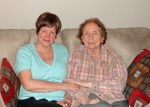
My mother grew up loving music in Hayes, a village of 200 in the farmed prairies of southwest Louisiana. Her grandmother, Sadie, would sing folk songs and hymns while playing her piano, guitar, or “mouth harp.” It was she who imparted the joys of music to my mother as a child. I remember Grandma Sadie telling me that when she felt a little down, she would sing a song to chase the blues away. My mother must have experienced a similar pleasure, for under Grandma Sadie’s tutelage, she began playing piano—anything she could find, from boogie-woogie to Beethoven.
As a late teen, she brushed aside her mother’s advice to become a “businesswoman” (that is, to learn the typically female skills of typing and stenography). Instead, she decided to attend college in Lafayette, Louisiana, to earn a Bachelor of Music Education degree. She went on to teach private piano lessons and chorus in Lafayette schools for the rest of her working life.
Seven years ago, my mother was diagnosed with Alzheimer’s disease. Now 84 years old, she lives in the dementia ward of a nursing home.
Calling her from my home in Toronto for our phone chats, I’ve recently noticed a decline in her cognitive abilities after several years of relative stability. The disease is again on the rampage, and her neurons are rapidly withering away. Once linguistically talented, commanding an impressive vocabulary and gifted with an eloquent style of writing and speaking, my mother now struggles with the simple connection of one thought to another, and with the relationship between subject and verb. Such links are blurred by that terrible fog that has invaded her brain, virtually obliterating her short-term memory.
Realizing that I might have one last window of opportunity to visit her while she could still recognize me, I arranged to travel from Toronto to Lafayette. During the fifteen-hour trip, I’d hoped to do some reading and writing. But my mind was elsewhere as I wondered what to expect of her current physical and mental condition. Would talking in person be different from talking on the phone? She always recognized my voice on the phone, sometimes saying, “You always sound just like yourself!” Would she be less likely to recognize me in person?
Also, I had a certain routine during our twenty-minute chats. Because the disease—for a time, anyway—leaves older memories relatively intact, I’d often reminisce with her about her younger years. The conversation was by necessity rather one-sided. I’d punctuate my descriptions of events with questions: “Mamma, do you remember your mamma and daddy scrimping and saving during the Great Depression?” “Do you remember the little four-room schoolhouse where you went to elementary school?” If a two-sided conversation were not a realistic possibility, what else could we do to pass the hours?
Exhausted from traveling, I spent the first night with a relative. The next day I entered the nursing home and was given the combination for the door to the secure dementia ward. Although knowing that she was in a locked area was heartbreaking, I understood how important it was. Family lore told of a great-aunt with dementia who in her confusion had wandered off into the woods and, unable to be found by her worried family, died of exposure.
I spotted her sitting in a wheelchair in a lounge area, head bowed, eyes closed. I pushed back the tears and said, “Hi, Mamma, it’s Camille!” She looked up and soon her eyes lit up. Relieved that she recognized me, I helped her up and we slowly made our way to her room. Her gait is now a stiff shuffle: Alzheimer’s is destroying her motor skills and muscle tone as well as her cognitive abilities. I know that before long she’ll be confined to a wheelchair.
As we chatted, I sensed her awareness of her decline. Sometimes she’d try to describe what her confusion felt like—to know what she wants to say but to be unable to muster the words to say it. Once, attempting to express an idea, she said, “There’s one and there’s two and there’s three, and it just seems like they don’t go together.” She gestured with her hands as if trying to make the three things cohere. Although the original idea had vanished, she was able to articulate her frustration at the lack of associative threads that relate one thought to another.
The connections that our brains make, that give the world a degree of comforting coherence, are now all but lost to her. Alzheimer’s is a cruel disease. And this stage of the disease is especially cruel, as she knows that she doesn’t know, and she feels sad and even apologetic that she’s no longer able to hold her own in a conversation. This once fiercely independent and intelligent woman now has to cope with the knowledge of her own deterioration. I did my best to ease her mind that all that mattered was our enjoyment of our time together. However, any distress that she felt quickly faded from her memory: a mixed blessing.
I hunted for photographs that might spur some memories and found some in a drawer. We spent much of our time that first day looking at them and reminiscing about things like family vacations: “Mamma, do you remember the time you and Daddy took us hiking in the Rocky Mountains?” “Oh, yes!” she exclaimed. I described the mountains: the uphill trails, the tree-line where the tundra began, the glaciers, the panoramic views from a peak. We looked at pictures of the Rockies that I found in a magazine, giving her visual pleasure as well as reviving distant memories still protected from the ravages of the disease.
Sometimes Alzheimer’s patients confabulate—they pretend to remember something in order to mask the disease. But when my mother claimed to remember an event or person, I believed her. After all, if she didn’t remember something, she didn’t hesitate to tell me so. When she did remember, sometimes she’d say, pleasantly surprised, “I haven’t thought about that in a long time!” or “I would never have thought of that if you hadn’t brought it up!”
The second night, I was restless, unable to sleep. I sat, paced, made herbal tea, and wept. My mother was effectively dying. And in its later stages, Alzheimer’s is a living death. The body still functions well enough to stay alive, but the lights of personhood are extinguished. I had known for a long time that this would be the case, but now her decline seemed precipitous, and I felt a heavy sadness seeing her in this diminished state. I rummaged around the bathroom and found some Sudafed tablets to clear my sinuses and hoped that they’d also knock me out so I could sleep.
The next day, with the blessing of the nursing home, I decided to move in with my mother. I could sleep on the sofa in her room, and $6 a day would buy me lunch and dinner in the patient’s cafeteria. I was determined to spend as much time with her as possible and felt hopeful that somehow we’d find a way to enjoy our stay together.
A turning point in the visit occurred when I found a cd player in a dresser drawer. Over the years, I’d given her cds of her favourite music—mostly Baroque and Classical—and these I located on a shelf. I made a selection that I thought she’d enjoy.
First I played Mozart’s Sinfonia Concertante, a concerto for violin and viola, which I knew had a sweet and gentle sound. Her eyes closed as she swayed back and forth in her rocking chair. In the middle of the concerto, unsure whether she was really enjoying the music, I asked her if I should turn it off. As eyes opened and her brows furrowed, she said, “Oh, no!” and then her eyes slowly closed again. I knew she was completely engrossed.
I was discovering that classical music, a bond that we had always shared, could once more bring us together in blissful silence. She knew that I was present, but no words were needed.
Next I suggested playing Bach’s Well-Tempered Clavier, a set of preludes and fugues for keyboard. She responded, “Don’t you mean “Well-Tempered Clavichord?” I was surprised that she remembered that alternative title. When the first prelude began, suddenly an invisible keyboard seemed to materialize before her. Her fingers fluttered along it as if she were performing the piece. When it ended, she looked at me and said, “I haven’t done that in a long time!”
I was especially happy to find the cd of Handel’s Messiah that I’d sent her. I knew that in college, she’d sung alto in a chorus that performed Handel’s masterwork celebrating the birth of Christ. I also remembered that during my childhood, every year before Christmas she’d retrieve her yellowing musical score, lower the needle onto her LP record, and sing her alto part to the jubilant waves of choral praise.
So one day while she was resting in bed, I asked her if she’d like to hear a cd of The Messiah. Her eyes lit up and she said, “Oh, yes!” As I prepared to play the cd, I started singing a few words in a particularly joyful moment in the piece: “And His name shall be called Wonderful! Counsellor!” She immediately joined in and sang the melody to the end of the phrase. It was a startling moment—not only did she recognize the title, but she was also able to remember a melody from it! When I played the cd, she closed her eyes with a peaceful glow on her face. Her toes betrayed her immersion in the music, wiggling to the rhythm in a way that showed me that she remembered the music intimately: left toes wiggling for the chorus and right toes for the solos.
She enjoyed music at bedtime, too. I found Mozart’s Flute Quartets, which have a gentle, soothing effect. Every night when I turned off the lights, I’d play the Flute Quartets, and we’d fall asleep listening to them.
During our visit, we spent many hours silently and blissfully listening to Bach, Mozart, Scarlatti, Handel, and Beethoven. It was an entirely different experience than trying to converse. When we chatted, I could sometimes sense her frustration when she’d begin a sentence only to halt and give up with a sigh of resignation: mid-sentence, she’d already forgotten what she was going to say. But there was never frustration with the music. It rolled through her being unhindered by the mists that now cloud her attempts to make sense of what has so drastically transformed her old age.
I wondered why that was so. Music is a kind of language, with its own syntax and vocabulary—melodies, harmonies, rhythms, dynamics, and so forth. As I observed her listening, eyes closed and toes tapping, I wondered whether the part of her brain that processes music had remained relatively unscathed by the scorched-earth path of her disease. Perhaps listening to music allows her to experience a degree of continuity through the syntax of music. She never interrupted the flow to ask, “What are we doing now?” or “What are we listening to?”—whereas in conversation she’d sometimes pause and ask who I was and where we were (and why). Thanks to music, she enjoys the connective threads weaving together time. Her life once again has continuity.
I know that as her once-considerable language talents decline and her motor skills and bodily functions deteriorate, the language of music will continue to communicate with her. She may be a shadow of her former self, but for the time being, music has the power to sweep away the mist and give her a feeling of joy in being alive and connected to the world.
If you haven’t heard, The Next Big Thing is a self-interview about a manuscript or forthcoming book. The set of interview questions spreads like a chain letter. Once every poet on earth has participated, we’ll send a space probe to exo-planets suspected of hosting alien poets sufficiently evolved for onanistic interviews.
I was tagged by Marthe Reed to participate, and in turn I’ve tagged five more poets, whose blogs are linked below. Once they’ve posted their response, I’ll publish a link to them.
Here’s my interview:
What is the working title of the book?
R Is the Artichoke of Rose
Where did the idea come from for the book?
From a collage of mine, R Is:
What genre does your book fall under?
Poetry. Sub-genre: minimalist.
What actors would you choose to play the part of your characters in a movie rendition?
Elmo and India.Arie in a musical about the letter R.
What is the one sentence synopsis of your book?
R is the artichoke of rose.
How long did it take you to write the first draft of the manuscript?
I’ve been writing short-short poems for many years, publishing them in such journals as Fell Swoop, Peter O’Toole, Quill Puddle, and Unarmed. Eventually the little critters coalesced into something greater than the sum of their parts.
Who or what inspired you to write this book?
Minimalist poetry by other poets, from the epigrams of Martial to the pithy gems of Aram Saroyan.
What else about your book might pique the reader’s interest?
Illegal pet activity, my pugilist grandmother, black bleach.
Will your book be self-published or represented by an agency?
R Is the Artichoke of Rose seeks publisher seeking R Is the Artichoke of Rose.
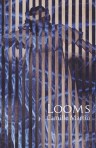
Thanks to Cort Bledsoe for his beautifully-written review of Looms in Bookslut. I appreciate the way he takes the time to delve into and quote from individual poems. Read his review here:
To order Looms:
Excerpts from reviews:
Looms is a wonderful continuation of Martin’s previous collection, Sonnets, in which she explored similar themes as well as playing with the sonnet form. Martin has proven herself to be a solid poet with an ear for language and an inquisitive mind, delving into the big questions we all face. In this collection, Martin has woven a rich tapestry of poems that are well worth perusing.
—Cort Bledsoe for Bookslut
There is such an expansiveness to Martin’s Looms. The poems exist in that magical place where words, images and ideas collide, creating connections that previously had never been.
—rob mclennan
[Looms] has a very painterly, noir feel, alienated and penumbral, taut yet expansive. Impressive and addictive.
—Steve Spence for Stride Magazine
Here are some pictures of me conducting my River of Words poetry workshop at a Toronto secondary school, under the auspices of the Toronto Public Library’s Young Voices program. Below, find out how your school can incorporate River of Words in a flexible and affordable format.
This slideshow requires JavaScript.
A grant that I was recently awarded from the Ontario Arts Council Arts in Education Program is making it very affordable for Toronto secondary schools to invite me to conduct my River of Words poetry workshops. River of Words consists of poetry-writing games, peer discussion and supportive critique, collaborative writing, and confidence-building recitations. With five or more sessions, River of Words culminates in the creation of an anthology of the students’ poetry and a poetry reading, complete with student master of ceremonies and refreshments.
I love conducting poetry workshops for teens, who I’ve found are hungry for language play, for making mudpies with words. Sometimes, students have anxiety about getting it right, about learning the correct answers to have a successful outcome. River of Words provides a haven for teens to tell that critical voice inside them to take a hike and simply to have fun with language. The student poetry that comes from the River or Words games is always delightful and often astonishing.
What can these River of Words poetry games do for students?
The ability to relate and to connect, sometimes in odd and yet striking fashion, lies at the very heart of any creative use of the mind, no matter in what field or discipline. —George J. Seidel
This is in essence the benefit of writing poetry: it helps students to think creatively by using language to surprise, delight, and move. This ability to think creatively has far-reaching benefits to students: it’s not only writing beautiful metaphors—it’s discovering that creative solutions to problems often come to us when we give ourselves permission “to relate and to connect” in startling and original ways.
From years of experience, I know how to unleash creative language in teens–and to have fun in the process, using a series of poetry-writing games. It’s always refreshing to see the initial trepidation that some students feel about writing poetry dissolve as they have fun with the games and take pride in their strange and wonderful creations!
If you are a Toronto secondary school teacher, librarian-teacher, or principal who would like to explore ways to incorporate River of Words at your school, contact me at
riverofwords1@gmail.com
I’m happy to send you more information (including letters of reference from teachers who have witnessed my workshops) and to answer any questions you might have.
I’ll be reading from Looms and newer work at four venues in the near future: Lafayette, Louisiana (my hometown), Vancouver, Montreal, and Toronto. If you’re going to be in any of these places, please come!
I’m all tapped out of apocalyptic poems. Besides, today is not THE END—like any other day, it’s full of infinite endings and beginnings, of infinite winters and springs.
So in lieu of the mother-of-all-end-times-poems, I’m posting a sonnet for winter and a sonnet for spring, the flip sides of every moment of existence. Blessings and peace.
*
Snow.
Repeat. Flesh
of snow, pocks
in tarnished snow.
Snow of lust.
Snow of cash.
Blathering omega’s
travesty of dust.
Snow breaking
vows of poverty
but not silence.
Snow of theft.
Sparrows buried
in snow.
*
Spring’s blind surge awakens rambling epics. Evidence
gushes First things jockey for position. Feet sink
into mud, and revelation looms at the cost of sleep. Even
a car sounds different. The exotic bark of a dog shatters
Orion, spilling sand from a stunned hourglass.
Thereafter, molecules relax and history tries again:
A garlanded mother emerges playing a kithara
as her darlings weave a pedastal, the better to adore
the quixotic colorist: proof that sensory deprivation
binds minions to a redundant diety. Lids can’t filter
catastrophic light. Sap’s flight quickens, guiding
moments trickling toward a slack horizon. And again:
over the years weep scullions at their skinned rabbits.
Peddlers of risk lean into showers of delinquent buds.
According to one Nancy of Wisconsin, who for years has been channeling the Zeta ETs through a brain implant, tomorrow Planet Nibiru will make boom-boom with Earth, paving the way for our drooling Zeta overlords to turn the solar system into their own private Monopoly board. Maybe Nancy forgot to take her meds. But just in case, stay home in your pjs, make a pitcher of martinis and the highest cholesterol snacks you can muster, and lean back in your Adirondack for the most spectacular fireworks display of your short life. Nancy will be waiting for you on the other side.
On the eve of December 21, my penultimate end-of-the-world poem, this one from Looms:
*
A deserted city. We’ll have to imagine
it’s in a movie. Beneath a listless dome, walls
crumble into backlit dust. Flames on a hillside swarm,
tattered auburn fishes in the autumn wind. Glints of dying
light fall on unmoored mountains whose thoughts of home
come to nothing. Everywhere, flocks of matter dip pale snouts
into inky ponds. We’ll have to imagine someone watching
that movie. No one left to forget irrelevant seeds. Some left off
praying to the mother of a tarnished idol presiding over a flock
of angels, breath attended by golden lice. Others
paused long enough to view dusk’s leisurely descent
over the white noise of crashing surf. All found something
to swear by before it was too late. Photogenic dullards jazzed
in the waning light. A ship’s captain jingled his coins
before staving in the ship. Embers in a hearth
illuminated fish bones on plates.
Sonnets and Looms are available from the following vendors:
*
Glib spice announces the news bleeding
in the monochromatic distance. The short-term
memory of distance flees in fear. Enemies
fall, money flees. Falling gloom dazzles just
as history taught it to. Not the history of stars
made of tumbleweed nor the annals of a dust mote
singing rich disaster. Masoch was never so rich,
or so it seems to each geological layer. No
notebook records a pocket of posies between thick
layers of ash. It just is, caught in a small pocket
of time. “Time to return to star,” announces
tumbleweed on the news. The news shrinks
to a speck of pollen on a posy’s anther
in a pocket caught between thick layers of ash.
I’m obsessed with The End, with the smorgasbord of choices for Armageddon that Neil deGrasse Tyson cheerfully ticks off: asteroid, caldera eruption, mega-tsunami, black hole. Not surprisingly, some of my poems have an apocalyptic theme.
So in honour of the rapidly-approaching December 21, 2012—of the dreaded cataclysm that Mayan astronomers predicted (unless they just got tired of chiselling)—I’ll be posting poems to while away the countdown to the terrestrial torch. The first poem is below.
And what would 2012 prophesies be without a little shameless commercialism? I’m selling poetry, not opulent underground condos, but then, to paraphrase William Carlos Williams, survivalists die miserably on doomsday for lack of what is found in poems.
The clock is ticking, but you can still get a copy of Sonnets and Looms from the following vendors: Small Press Distribution, Book City in Toronto, Amazon.ca, and Shearsman Books.
Help keep my kitchen, where I’m hunkering down with proper Canadian garrison mentality, stocked with beans and rice during these anti-climactic end times.
from Sonnets:
*
From a helicopter at night, an aerial
view of a city. In the dark, gigantic
iron statues loom with an ominous
aura of permanence. The people
who live in the city obsess
about the possibility of doomsday
erupting among their soaring
buildings and effigies. Of the end
they’ve made a fetish, chatting
about it at cocktail parties as if
it were the latest vogue. They believe
that it could happen at any moment,
so they no longer bother
to make their beds in the morning.
Just in time to prepare mentally (or to go mental) for the end of time, I pulled from the mailbox two single-author issues of Fell Swoop: The All-Bohemian Revue:
Chris Toll’s Life on Earth
Rupert Wondolowski’s Mattress in an Alley, Raft upon the Sea
Here are poems to entertain and enlighten during breaks from your last-ditch efforts to dig a luxury backyard bunker.
You’ll also find poems (such as the ones below) encoded with apocalyptic prophesies and escape hatches, a sort of missing manual to the Mayan calendar. And if you close your eyes and recite the poems three times backwards, a wormhole will open up. You’ll know what to do.
Chris Toll’s Life on Earth
This Is How We Make a Broken Heart
Approximately 13.7 billion years ago,
an antimatter scientist
dropped an antimatter test tube.
In the summer of 1966,
Bob Dylan steered his motorcycle
into a curve.
Beneath a lilac bush,
the FBI sniper took aim.
Behind the tinted glass of a limousine,
the imposter memorized the lyrics
filed in a loose-leaf binder.
My poem comes from far away
and it’s going far away—
I’m just in the middle
like a lonesome TV station
with no employees.
The Angel of Death
has a black leather trench coat
draped around her shoulders.
She steps out of an elevator
and pulls her suitcase behind her.
An accordion folder full of legal briefs
balances on top of the suitcase.
Her black wool sport coat
lies across the accordion folder.
The sport coat falls off and hits the floor.
Side effects include unusual dreams.
When I stand up from my dead body,
my face is a howl of stars.
Some Late Night Thoughts of Mortality While Staring Glassy-Eyed at Karen Black
Look at you all chased by shin
high tribal fetish with razor sharp
spears! That little fucker wouldn’t
give up! Or bug-eyed and winsome
courageously daffy really
among a family of rich eccentrics.
The Ping Pong kept them human,
tables were everywhere in the ’70s
and the silenced Poundian father
gave them gravity.
Dithering alone to Tammy Wynette
without realizing you’re alone.
It really truly does often all
come down to trapped
in a truck stop restroom,
either puking and pregnant,
or puking and deserted
staring at what’s left
in a smeared reflection
passing for a mirror.
If you only knew
what was coming—
the global crash
the toxic air
the hurricanes
and floods,
you would grab
a few of those handy
rolls in the john
and construct what
is known as a shirker’s nest
and wait out a few nights.
If you think those hairs
on your chicken leg
were gross just wait
until Ronald Reagan
is upheld as a hero.
My most recent collage, “Sleep and Forgetting.” The title is from William Wordsworth’s “Ode: Intimations of Immortality from Recollections of Early Childhood.”
The original is sold, but the work is available as an archival print mounted on stained wood panel.
“Sleep and Forgetting” is now uploaded to my website’s Gallery 5, “Afterimages of History.” Click the image to link to the gallery:
Two more poets have the honour of being included in The Canadian Encyclopedia: Lionel Kearns and Sonnet L’Abbé. It was a pleasure to write their entries. Click on their photos below to link to their TCE pages:
I took the photos below while on a Greyhound from Toronto to Detroit. The ceiling’s reflective surface gave me a funhouse-mirror view of the bus driver’s hands over the big steering wheel. I’d left my books in my luggage, so the reflections helped me while away the otherwise dreary bus ride.
Fabulous new issue of Rampike includes “Blueshift Road,” the title poem of my new manuscript, and kickass poems by Susan Holbrook, Amanda Earl, and many, many more. Hat-doff to editors Karl E. Jirgens, Marissa Reaume, and John Matias.
Click the image to link to Rampike:
Vol. 21/No.2 (Poetics: Part Two): Michael Winkler, Leonard Cohen & Judith Fitzgerald, Charles Bernstein, Susan Gold & Mike Dyer, George Bowering, Frank Davey, Katie Solbeck, Terry Trowbridge & Alexander Brown, Richard Kostelanetz, Peter Jaeger, Jesse Ferguson, Cathy Wagner, Tim Atkins, Amy De’Ath, Brenda Francis Pelkey, Richard Parker, Marcus Slease, Edward Nixon, Christian Burgaud, Susan Holbrook, Louis Cabri, Brian Ang, Harvey L. Hix, Kevin McPherson Eckoff, Stephen Remus, Eric Schmaltz, Travis Kirton, Kelly Mark, bill bissett, Judith Copithorne, Gregory Betts, Hallie Siegel, Matt Donovan, a.rawlings, derek beaulieu, Steve McCaffery, bill bissett, Cyril Dabydeen, Babar Khan, Norman Lock, George Elliott Clarke, tENTATIVELY a cONVENIENCE, Denise Desautels & Norman Cornett, Amanda Earl, Nick Power, Lindsey Bannister, Paul Lisson, Raquel Torres, Camille Martin, Stephanie McKenzie, Justin Langlois, Robert Anderson, Andre Narbonne, Tray Drumhann, Eric Zboya, Mat Laporte, Nico Vassilakis, Robert Dassanowsky, rob mclennan & Sachiko Murakami, derek beaulieu, & Ottarormstad, Britt-Marie Lindgren, Michael Basinski, FRONT COVER: Reed Altemus, BACK COVER:Andrew Topel.
The Skylab Gallery is an alternative artspace at a loft in downtown Columbus, Ohio. One room remains bare–great for art exhibitions and performance art. The other room with its six huge windows and cushy sofas has the feel of a bohemian coffee shop–poetry reading heaven.
The evening I was there featured an electrifying performance by Adam Rose of Antibody Corporation, a Chicago dance troupe, as well poetry readings (also juiced) by John M. Bennett, Wendy Lee Spacek, and myself. Many thanks to poet James Payne for inviting me.













 Rogue Embryo