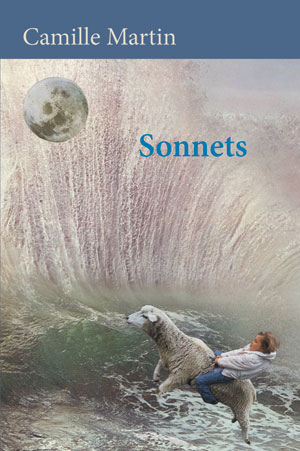
Sonnets is now available! Read its first review . . .

You can find ordering information for Sonnets here.

I was pleased to read an enthusiastic review of Sonnets recently in Stride Magazine. Here’s an excerpt:
 
        “Sonnets is a delightful body of work. Even though we wander
        into the oblique there is never alienation because the words
        are too beautiful …. Incredible poetic craft.”
             —James Mc Laughlin, Stride Magazine

Read the review here.
 

Cheers!
 
 
Camille Martin
http://www.camillemartin.ca

Fat Tuesday, Krewe of St. Anne: A Photo Essay


                                All photos on this page copyright Camille Martin.

 
                          MORE PHOTOS BELOW
 
 
        Although Fat Tuesday isn’t until February 16, New Orleans is already well into the Mardi Gras season, which began on January 6. It’s what I miss the most about living in New Orleans. As for as I’m concerned, the place to be on Fat Tuesday is the French Quarter. Because of the narrow streets, tractor-drawn floats are impossible. So the parades hoof it: The Krewe of Kosmic Debris and the Krewe of St. Anne are the two to see. In these krewes, there isn’t really a central command deciding on a theme to unify the parade. And no top-down decisions means a fantastic array of individuals and small groups strutting their alter-ego costumes, snaking their way through the old city. Waves of colour flow through the streets, and just when you think sadly that the parade has ended, another motley wave arrives.
        For several years, I went to the French Quarter on Fat Tuesday as Frog Lady along with other members of the True Church of the Great Green Frog. We celebrated Frog Mass in front of St. Patrick’s Cathedral by eating frog pastries for communion and singing froggy hymns (“Amazing Frog,” among others), and generally spreading the word that “Frog croaked for your sins.”
        I had come up with the idea to construct a two-person frog litter on which a giant stuffed frog sat on a satin cushion, surrounded by incense and decked with Mardi Gras bead necklaces. Carrying the amphibious deity around on a litter was fun, but it meant that my hands weren’t free to take photos. So in 1999 I decided to walk around the Quarter just taking pictures. I was in photographer’s heaven.
        The following gallery is the first of three installments of these photographs. I hope that you enjoy viewing them as much as I enjoyed taking them. Frog is Love!

PS: Following this gallery is a an excerpt from “Fat Tuesday’s Heterotopic Splash,” a piece that I wrote for Streetnotes: Cross-Cultural Poetics and revised for this post.


HERE’S A LINK TO THE SECOND GALLERY
 
                                Fat Tuesday’s Heterotopic Splash
 
        Mardi Gras in New Orleans contains multitudes, and one of the best places to appreciate its polymorphic revelries is the French Quarter on Fat Tuesday. You only need to avoid most parts of Bourbon Street and the sophomoric guys on balconies coaxing young women on the street below to bare their breasts for the price of a few dangled beads of glittering plastic. A few steps away, a heterotopic paradise opens up: two walking parades (the Society of St. Anne and the Krewe of Kosmic Debris) and the Bourbon Street Awards, a mostly gay costume contest, fill the streets of the Vieux Carré with explosions of color and fantasy.
        Here, desires are set loose in a spectrum of attitudes ranging from sublime to ridiculous, mundane to bizarre, deadpan to satirical, erotic to bo-peepish—and everything in between. Some costumes mimic or satirize the familiar pop idol, while others celebrate unrecognizable life forms. The parades feature no overriding theme, but instead invite individuals and groups to explore uncharted and prismatic identities through masking. Categorical sexual identities are drained and then re-envisioned, suggesting a plethora of newly-invented gender cocktails.
        In the great street theater of Mardi Gras, privacy is banished, and the public space reigns. Normal conventions of public encounters, such as averting one’s gaze from the approaching stranger (at a distance of eight to ten feet, according to a study in Manhattan) or avoiding unnecessary verbal exchanges, are tossed out. One calls out to the other (“Hey, Pink Showgirl!” “Over here, Mirror Man!”) and the other obliges with a smile and a wave, or poses with dignified or exuberant theatrics.
        Exhibitionism and voyeurism are the symbiotic soul of this communal promenade, where it might be considered impolite not to stare at the phantasmagory of characters passing by or to show off your own alterity that you might normally keep carefully veiled. The revellers perform their freakishness to satisfy narcissistic urges and to give delight to the gazer; gazers stare for their own pleasure and for the gratification of the performer. Thus a spirit of cooperation flourishes in the theatrical dialogue as chance conjunctions of identities suggest odd or outright bizarre narratives. Carnival in the French Quarter revels in incompatible sites: it is the epitome of the celebratory heterotopia.
        After the well-practised street cleaners and dump trucks roll into action to clear the roads of debris at the stroke of midnight, only questions remain. Are the identities unleashed through this carnivalesque mining of the psyche more true to the self than the groggy, hungover shadow that awakens on Ash Wednesday to a sadly diminished and color-drained universe? Where did the fantastical self that flourished yesterday scurry off to? And when will it re-emerge?
 
 
Camille Martin
http://www.camillemartin.ca

Ann Lauterbach’s Pilgrim of Desire


Ann Lauterbach, And for Example (New York: Penguin, 1994)

the poem, then a brief essay

Rancor of the Empirical

A lavish pilgrim, her robes unbound,
checks into a nearby hotel.
Let us spread the wealth.
Let us speak in such a way
we are understood, as a shadow
is understood to assuage these prisms
and these mercurial clasps. She was told
yes and she was told no
which is how she became excessive, spilling
over the sequestered path, her wild garments
lacerating stones.
She took pills against rain.
She slept under tinfoil.
In that country, there were no heroes
to invent a way to fill the hours
with parables of longing, so her dreams
were blank. Sometimes she imagined
voices which led to her uneven gait
and to her partial song. Once she was seen
running. A child said he saw her fly
low over the back meadow and into the pines, her
feet raving in wind. The child
was punished for lying, made to eat ashes
in front of the congregation. The priest said,
You have made a petty story. Now enter duration.
 
 
        I love this poem by Ann Lauterbach, which speaks to the sad consequences of the repression of desire and the imagination, with echoes of Puritanism and the Platonic distrust of poetry. The allegorical “lavish pilgrim” enters a new country where no poets are born, or else if they are (like the visionary boy who is able to see the spirit of desire), they are punished by puritanical clergy, made to “eat ashes” (associated with death and penitence) and “enter duration,” presumably a monochromatic place of temporal stasis. There are no “heroes” of the imagination to compose “parables of longing” and unleash the latent desires of a populace. Continue reading

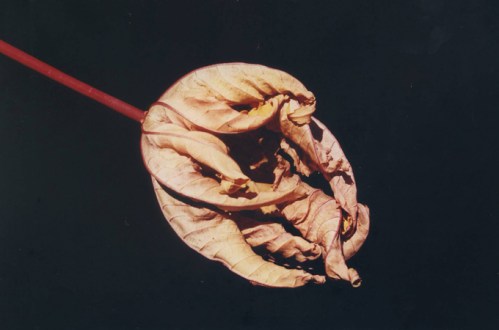
dry leaf on velvet

Photo: Camille Martin

Photo: Camille Martin

Camille Martin
http://www.camillemartin.ca

Stoning the Devil on my sonnets in moria magazine

Adam Fieled’s review and thoughtful analysis of some of my sonnets published in moria magazine:

“I was excited to find a group of wonderful sonnets from Camille Martin. What I at first dimly suspected has now been affirmed; there is as much vitality, craft, and genuine art being transmitted via the Web as there is being released via print journals. Martin’s sonnets deserve a closer look. I have chosen two of the six to look at . . .”
             —Adam Fieled, Stoning the Devil
 
Click here to read more.
 
Camille Martin
http://www.camillemartin.ca

“The night is tough”: Voices of hope from two Haitian poets

Although the following excerpts from two Kreyòl poems by Haitian writers refer to calamities other than the recent earthquake, they speak across decades of misery to the hope for a better life.


.

Pou fèt mwen m’ta renmen
Tou peyi-a
Kouvri ak rivyè k’rekonmanse chante
Pou tout wout dle ap rezonnen.

.

For my birthday I want Continue reading

“something gets lost in the translation, and it’s not me, friend.” — more from “nomadic slant”


Recently published: three double sonnets from “nomadic slant,” a work in progress, in Reconfigurations: A Journal of Poetics & Poetry / Literature & Culture.
 
Camille Martin
http://www.camillemartin.ca

Connie Deanovich’s Essence of Saint


the poem, then a brief essay

Requirements for a Saint

think of a saint
and you think
of the incredibly dull clothing of a saint
 
perhaps extreme temperatures
or the difficult terrain they travel
(everything about a saint draws attention to itself)
 
think of a saint
and your thought is not
of a train thrusting through lightning
 
but of wind that smells of wood
or a wet disease
(saint world is the world of the empty hand)
 
breath is sometimes banged out of copper
and so is a saint
often with bell attachments
 
I’ll make you a saint
from an unblemished code book
that must be read
 
in a German restaurant
where beer is served in glasses
wrapped in brown leather
 
when the cuckoo strikes twelve
this will be the moment
of ascension

Connie Deanovich, from Watusi Titanic (New York: Timken, 1996)

        When I think of Connie Deanovich’s “Requirements for a Saint,” I think of chairs—or rather, the chair, the mental image of the one that can reasonably represent the entire category of chairs. I see in my mind’s eye Van Gogh’s straw chair or my idea of a generic dining room chair. Actually, there’s no such thing as a completely generic chair (a visualization has to look like some kind of chair), but rather chairs of our quotidian experience. What I don’t automatically see is a lounge chair, an antique commode chair, or Lily Tomlin’s giant rocking chair. Continue reading

a collage for the new year


ditch,

Six from my work-in-progress entitled “nomadic slant” are featured in the January 2010 issue of ditch,.

ditch, has also produced an online anthology of Canadian innovative poets, which includes my six double sonnets along with the work of thirty-two others: Continue reading

“G” is for Genre: Maxine Chernoff’s Todorov

Cover image: Susan Bee


the poem, then a brief essay

Todorov at Ellis Island
 
The secret of narrative
in the sight of the lovely
original fixtures,
the false accusations,
the “K” for insanity.
An indigent writer,
specifying the predicate,
fear of fire in ramshackle
buildings, the ghost
of the fantastic looking
across frozen water.
He felt swallowed up
by the 200 stairs,
by a procedure based on
external criteria,
plot and genre likely
to become a public charge.
While from the mountains
of Northern Italy, refused
admittance, a girl acting
mad, alluding to hermits
and saints. For to destroy
does not mean to ignore,
does not meant to build
the story-machine nor to feel
the grass under foot, but
to turn, as if spoken to,
into what we represent.

Maxine Chernoff, from World
 
      Maxine Chernoff’s “Todorov at Ellis Island” implicitly critiques Tzvetan Todorov’s structuralist theories of genre and narrative. In essence, Todorov posits a literary taxonomy according to a universal grammar of types: he is the Noam Chomsky of narratology and genre studies. The guiding principle in Todorov’s schemas is differentiation: defining boundaries and deciding what to include within those boundaries and what to exclude. And it is the idea of exclusion that Chernoff satirizes in her poem.
      Chernoff anachronistically situates Todorov on Ellis Island during its heyday as a screening station for new immigrants. Continue reading

Paris Métro

Photo: Camille Martin

Photo: Camille Martin


In anticipation of my trip to Paris in May, I dug up this photo from a stay during the summer of ’98.
 
Cheers for the holidays!
 
Camille

Camille Martin
http://www.camillemartin.ca

scattering dust is good practice

Four of my double sonnets have just been published in Stride Magazine, edited by British poet Rupert Loydell. The link:

http://www.stridemagazine.co.uk/
 
 
Camille Martin
http://www.camillemartin.ca

baked penguin


(Photo: Camille Martin)

(Photo: Camille Martin)


          Camille Martin
          http://www.camillemartin.ca

Sonnets redux


I just finished proofing my upcoming book, Sonnets, which will appear in mid-March from Shearsman Books. I feel very close to this book—there was much pleasure in its writing.

And I’m excited about my tour of the U.K. following the London launch in early May. I just added a reading in Bangor, Wales, thanks to Zoë Skoulding. Iechyd da!

Here are a couple of my recently-published sonnets:
 
 
*
twigs with tiny
variations bob
against the blue.
no gunshot, no
sprint. earth murmurs
on its axis, volume turned
off. no hearts beating
to drums. seeds hook
animal fur. no countdown,
but a desert blossoming
between one and zero.
droplets fed by tiny
catastrophes dangle
from twigs.
  Continue reading

a matter of degree /of unfast night/


experience and language as reciprocal … recognizing
to a matter of degree /of unfast night/

experience awakened: invent and receive … performance /recovered/ that recognizes multiple matters of degrees, an inclusive inventing, embracing also its emptiness–a matter and a transparency, slowly roiling … not /only/ language in the service of experience, experience and discourse timidly asleep together–an alchemy of experience into language, act of descriptive translation … capturing the present concludes it into an idea of the past, a convention of history … language supplying imagination limits the invented experience of language–or rather experience awakened to language … it sweeps itself unawares into a discourse of the clearly immortal even if unfamiliar … rather an unfast, a slow detached feast Continue reading

de Sade in Amarillo, Texas

Photo: Camille Martin

Photo: Camille Martin

Ruth Lepson: slicing the calendar

Ruth Lepson’s two poems below appeared in Moria Poetry Journal in 2008.

as enough approaches
I add hyphens and dashes
alone we leave the effort
the day moves forward slowly
yet quickens the heart
then overturns the applecart
so slice the calendar while you can


folded into yourself
how hard you are working on sleeping

my fingers grew long
and tears left the tips of my fingers

the rug dissolved
no things no bodies no separation


Ruth Lepson


Camille Martin
http://www.camillemartin.ca

double daddy long legs on plywood

Photo: Camille Martin

Camille Martin’s website

“how many years / without death”: Larry Eigner’s memento mori

five poems from readiness / enough / depends / on,
then a brief essay


                                                                          July 26-7 93

  oblong windows lit
room     a bare bulb
                    over the back steps
                            burning into the night
                        as if it’s all time
                            likewise facing the street

                                countless stars
                                    and a few patches of cloud


                                                                       October 8 94

slight
                                      of a size
   air
                                          possible
 a tree
                                             to live
      stirs
                                                at rest
out
                                                    a while
        the window
                                               while there’s so much
  soon
                                                               on round
    after I’ve
                                                                  earth, sky
          waked up

        to start
                                                                       )birds too
            the morning
                                                                           about as quiet
              there have
                                                                                    as flowers I see
                       been times


                                                                          April 2 78

                        wind huge outside since when
falling asleep alpha rhythms I suppose
                      how many years
                                            without death


                                                                          August 6-8 78

        maybe

words and things among us go
    together enough

      wherever your end is


                                                                          December 2-3 1992
t  h  e    w  h  o  l  e    o  r  c  h  e  s  t  r  a

        risen

                up    into the air

                        for dancing

                                after the storm


        Larry Eigner’s readiness / enough / depends / on, his last collection of poems before his death in 1996, explores the precarious position of the self that inhabits an uncertain place between the sufficient and the dependent, between the assurance of passing from one state to the next and the unknowability of how and when that crossing will play out. Eigner’s “I” is situated on lyric coordinates where it thinks and feels in time and place, though the breadth of the spotlight on the self remains open-ended in order to allow the concrete to be brought into relation to a wider map. Continue reading