Category Archives: photography

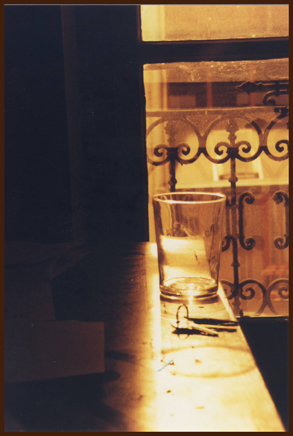
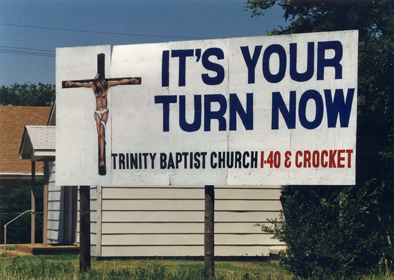
de Sade in Amarillo, Texas

Photo: Camille Martin

Photo: Camille Martin

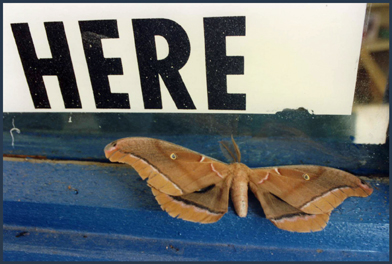
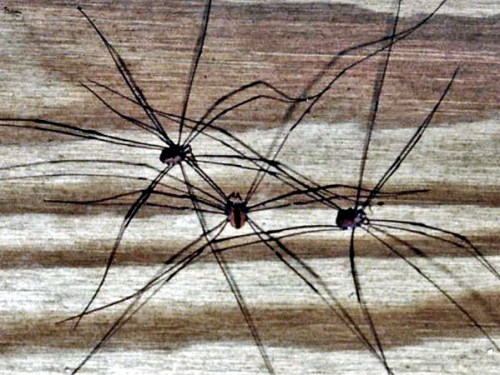
double daddy long legs on plywood

Photo: Camille Martin

Camille Martin’s website

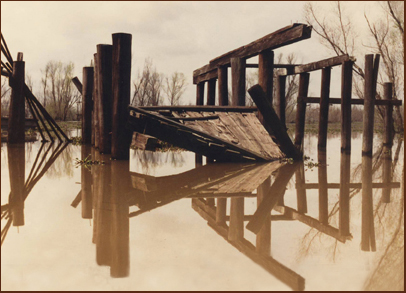
Ruins, Henderson Swamp

Photo: Camille Martin


final act

Photo: Camille Martin


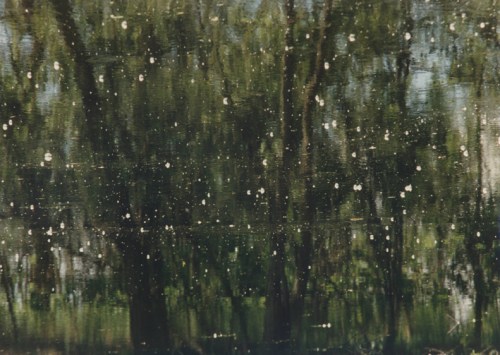
Early Autumn, Henderson Swamp

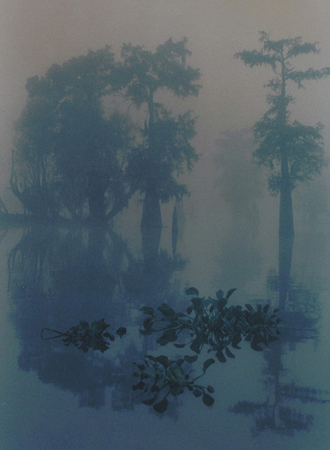
Fog,-Henderson-Swamp

Photo: Camille Martin


Camille Martin
http://www.camillemartin.ca

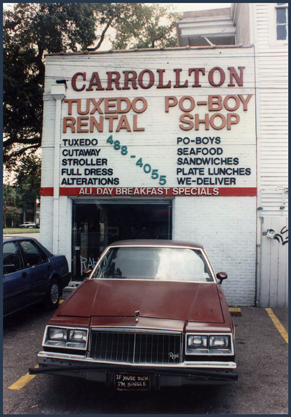
One-Stop Shopping: Tuxedos and Po-Boys

Photo: Camille Martin

Photo: Camille Martin


        Along the road that leads from the Louis Armstrong International Airport to the City of New Orleans is an official sign welcoming visitors to “The World’s Most Interesting City.” That wording must have been composed by a committee of City Hall hacks who, after hours of posturing and heated debate, compromised with the bland descriptor “interesting.” Or maybe it was fifteen minutes and nobody really cared. Whatever. The sign is a wonder of pithy bureaucratic understatement in a city that regularly marries surreal flamboyance and insouciance—just not in City Hall.
        I would still nominate the sign for the Eccentric New Orleans Hall of Fame along with coordinates of surreal mergings and logic-defying oddities. Such sites have been known to render tourists into a prolonged catatonic state of befuddlement. But there they are in their laid-back glory for anyone to see. Cases in point: the Saturn Bar, with its mummy hanging from the solar system, and the Aztec tomb in a Metairie cemetery.
        One of my favourites among such “interesting” places is a psychic convergence of formal wear and fried seafood sandwich, the Carrollton Tuxedo Rental and Po-Boy Shop. It’s like something out of A Confederacy of Dunces. Imagine: with every fifth po-boy you got an extra day of rental. Their grease stain policy must have been lenient.
        Alas, this unassuming landmark of quintessential New Orleans sensibility has gone to eccentric retail heaven, along with the Used Car and Jello Shot Junction. But in its heyday it graced Carrollton Avenue in Mid-City, my old neighbourhood. R.I.P.


Camille Martin
http://www.camillemartin.ca

Green Anole, Daddy Long-Legs

Photo: Camille Martin

Photo: Camille Martin


Camille Martin
http://www.camillemartin.ca

Houston giraffe topiary

Photo: Camille Martin

Photo: Camille Martin


Camille Martin
http://www.camillemartin.ca

Paris Dusk

Photo: Camille Martin

Photo: Camille Martin


Photo: Camille Martin

Photo: Camille Martin


Camille Martin
http://www.camillemartin.ca

Kiln, Mississippi

Photo: Camille Martin

Photo: Camille Martin

suppose flatness. what then? suppose even surface is made up. what then?

Photo: Camille Martin

Photo: Camille Martin


Camille Martin
http://www.camillemartin.ca

Parallel Universes Redux – St. Joseph’s Altar in New Orleans, a Hybrid Feast

(photo: Camille Martin)

(photo: Camille Martin)


(photo: Camille Martin)

(photo: Camille Martin)


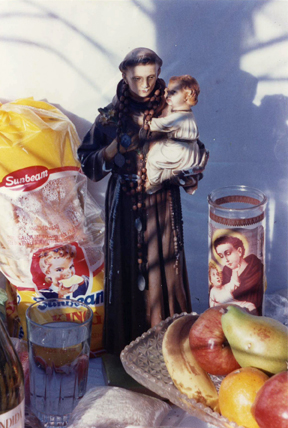
Another time warp in my Louisiana series: a St. Joseph’s Altar created in 2003 on the front porch of a house in Carrollton, the New Orleans neighbourhood where I used to live. The tradition of creating and decorating altars devoted to St. Joseph every year on March 19 was brought to New Orleans by Sicilians and adopted by some African-American devotees of the popular saint in the Catholic pantheon.

Non-meat food offerings embellish the altars and are usually given to the poor at the end of the celebration. Bread offerings are often baked into shapes of carpenters’ tools such as ladders or saws, but this altar keeps it simple and efficient with a loaf of Sunbeam bread. The beads of moisture condensed inside the plastic bag are a typical phenomenon in subtropical New Orleans, which can be warm and muggy even in mid-March.

During the day, people knelt at the altar and prayed. In the second picture, the woman might appear to be reverently bowing her head, but she was actually dismantling the altar at the end of the day: many of the food offerings have been removed, but the rows of candles remain.

The adoption of Sicilian traditions by African Americans in New Orleans is not an unusual type of cultural phenomenon: the blurring of cultural and religious boundaries is the rule rather than the exception in southern Louisiana, which has historically attracted settlers from all over the world looking for opportunities in spite of the prevalence of diseases and natural disasters, and forcibly brought people from Africa as slaves. For many, survival meant mutual aid within their ethnic communities and interdependence among their diverse neighbours.

Louisiana’s “cultural gumbo” is not a cliché for nothing. Louisiana, especially along the Mississippi Delta, was—and is—a mixture of Spanish, French, African-American, Irish, Italian, Native American, Croatian, Cajun, Creole, German, Czech, Hungarian, British, Isleño (from the Canary Islands), Filipino, Mexican, Cuban, Guatemalan, Chinese, Vietnamese, Laotian, Thai, and more.

As a result of intermingling among ethnic and national groups in Louisiana, Germans along the Côte des Allemands, for example, became more French, translating their names from Zweig to Labranche, and from Troxler to Trosclair. Many of the original Louisiana Germans came from the Alsace region, which partly accounts for the ease with which they shared customs with Louisiana’s French. Some Louisiana Germans have become so distanced over time from their origins that they believe their ancestry to be Cajun or French Creole.

African-Americans intermingled and intermarried with French Creoles, Cajuns, Italians, and Native Americans, among others, and survivals of these blends among blacks can be seen in the French Creole language, St. Joseph’s Day altars, Zydeco music, and the customs of the Mardi Gras Indians.

It would be hard to find a group not influenced by black African and Caribbean culture in Louisiana. And the whole world, late in the twentieth century, tried to become Cajun by eating crawfish and dancing to Beausoleil.

Some groups in Louisiana seem to have had more permeable boundaries than others. Croatians, many of whom developed the oyster industry, created relatively close-knit communities with a tendency to preserve their own cultural heritage and not to mingle their customs with those of other groups.

And generally speaking, in the early settlement of North America, French colonists were more likely than British to intermingle their customs and blood with other groups. When I was researching Acadian culture in Nova Scotia, I discovered the extent to which the Acadians and the Mi’kmaqs, for example, had developed a close and interdependent relationship. One manifestation of the friendship between the two groups was of course their not-infrequent intermarriage. Another striking example of the degree to which both groups let down their boundaries was the syncretistic nature of a spring celebration that evolved: the return of the geese came to be celebrated in a hybrid feast blending Easter rituals with the Mi’kmaq Festival of Dreams and Riddles. I can imagine the consternation of the priests.

From the beginning of their settlement in Louisiana, the Cajuns continued to synthesize the customs that they brought from Acadia with the customs they found in their adopted land. A study of Cajun music, for example, shows influences from hillbilly music, blues, and Texas swing. If the Cajuns were viewed by the rest of the United States as unique and isolated, it was only by comparison with that amorphous category called the “mainstream.”

Throughout much of the first half of the twentieth century, the United States government instituted a policy of assimilation of the Cajuns in Louisiana, and until the late 1960s, many aspects of their culture were finally succumbing to decades of this unenlightened approach. Without a boost from the schools, the French language in Louisiana would probably soon have died out, for mine was the first generation of Cajuns, generally speaking, whose first language wasn’t French and who were increasingly unable to speak in the mother tongue of their parents and grandparents. With the advent of CODOFIL (Council for the Development of French in Louisiana), a more enlightened view of Cajun culture and heritage has permeated the curricula of primary and secondary schools of Acadiana, where Francophone teachers from France and Quebec have been hired to teach children the language of their parents.

Ironically, the movement for the preservation of the Cajun heritage threatened to turn a living culture into ossified museum artifacts. Cajun historical villages such as Vermillionville and Acadian Village recreated for visitors “typical” life in nineteenth- and early-twentieth-century Cajun communities, and people flocked to south Louisiana to experience “authentic” Cajun culture. Some forms of historical reflection, however informed or uninformed or misinformed, however laden with stereotypes or invested in historical accuracy, can contribute to the dying of a culture if there is an impetus to petrify it into some notion of its past–especially a past purified of other influences–instead of allowing it to grow, breath, change, and, most importantly, transform and renew itself from contact with other cultures.

One of the consequences of the policy of assimilation was an overall feeling of inferiority on the part of the Cajun people, a conviction that their culture was backwards and their French language less correct that that of their distant Parisian cousins. But pride is not without its pitfalls—pride in some notion of Cajun-ness, of a Cajun purity that never was and never will be. From the moment that the Acadians set foot on the shores of what is now Nova Scotia, they were influenced by the Mi’kmaqs and by the British, with whom they traded and fought. From the time that they settled along the bayous and swamps of the Atchafalaya Basin in Louisiana, they gathered still more influences in their vocabulary, food, customs, stories. Like any migrating group, they brought with and they borrowed from. Purity is an attitude that bears no resemblance to the infinitely re-folded layers of human culture.


Camille Martin
http://www.camillemartin.ca
St. Roch Chapel in New Orleans, a Parallel Universe

St. Roch Chapel (photo: Camille Martin)

St. Roch Chapel (photo: Camille Martin)


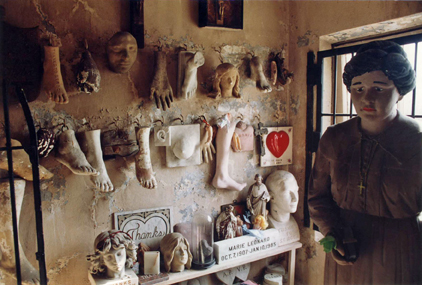
Stepping into St. Roch Chapel in New Orleans feels like entering a shrine that isn’t quite real, like a movie set for the nineteenth-century yellow fever epidemic or a recreation of a voodoo shrine at an anthropological museum. I like to imagine that maybe it’s a place that is kept intact as a tourist attraction. I mean, does anyone still hang replicas of body parts on the wall of the chapel in gratitude to St. Roch for a miraculous healing? Or is it like the surreal gray moss dripping from crepe myrtle trees: something you suspect was hung there for the benefit of the tourists?

At places like this in New Orleans, it’s easy to feel as though you’ve crossed some invisible line and stepped into one of those parallel universes that string theorists talk about. The pennies and cockroach carcasses on the floor paved with bricks inscribed with “THANKS TO ST. ROCH” were sprinkled there by a movie director in the eighth dimension or a tour guide in the eleventh, to make the the place more convincingly reproduce the “authentic” dimension.

But no, it’s as real (or unreal) as the old ladies in Baton Rouge that I used to see praying to the statue of Huey P. Long on the grounds of the state capitol. And that reality is suspended in liminal space, trapped in a time capsule that seems as though it will always bear a close resemblance to whatever age in which its seal is broken.

I imagine sometimes that I feel nostalgic about living in New Orleans, especially when I rummage through my photographs, but really it’s mostly sadness that I feel, not a yearning to be there. St. Roch Chapel got about five feet of water. My neighbourhood was lucky. The area of Carrollton where I lived got only about two feet. I know many people whose homes were destroyed or heavily damaged.

But I didn’t leave New Orleans because of Katrina. Katrina only delayed my move to Toronto. There was a sickness at the heart of the city that caused me seriously to re-think living there. I could walk down my street and point to places where serious crimes had occurred: murder, rape, car-jacking, armed robbery. The racial tension was thick. Poverty, endemic. Public schools and other services, chronically underfunded.

I could easily turn this into a rant about the problems of New Orleans, pre- or post-Katrina. But I started off talking about the chapel. The tradition of placing a replica of one’s healed body part in a shrine or temple is at least as old as the ancient Greeks. There must be a lineage, a thread of tradition, that could be traced from those times all the way to St. Roch Chapel. Across the ages, the appeal to deities to be healed is ubiquitous. I suspect no one will ever put a replica of the city in the chapel, thanking god or saint for healing it. It’s a city whose inertia–whatever the cause–renders it in a state of constant deferral, steeped in nostalgia for what it perhaps never even was. When I think of the song “Do You Know What It Means to Miss New Orleans?” I can imagine it sung only in New Orleans. It’s when I was living there that I missed it.


Camille Martin
http://www.camillemartin.ca
Zydeco Gallery Four


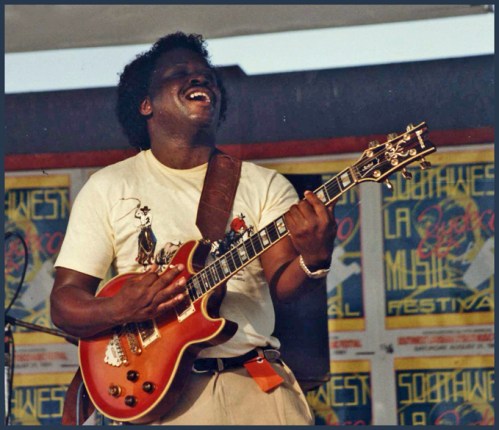
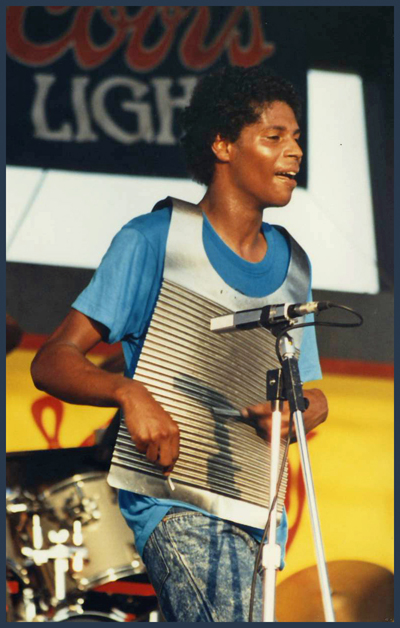
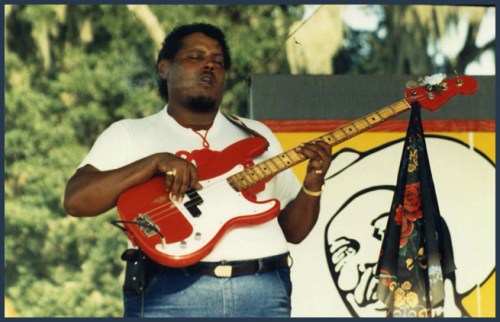
Here’s the last gallery of photographs from the Zydeco Festival of 1989.


(Photo: Camille Martin)

(Photo: Camille Martin)


(Photo: Camille Martin)

(Photo: Camille Martin)


(Photo: Camille Martin)

(Photo: Camille Martin)


For more information about the Zydeco Festival, see the official Zydeco Festival website:


Camille Martin
http://www.camillemartin.ca
black asterisk


(Photo: Camille Martin)

(Photo: Camille Martin)


                black asterisk in a black alphabet.
                a question of the love of larvae. lovely
                birth of larvae in yellow silk or yellow
                brass. milky decorum or exo-skeleton
                in the metropole. celestial urns and baskets, many
                baskets mocking purple robins. why? paper cut
                willow blues, willow socket shocks. motifs
                appear. again, motifs and a coccyx twin.
                sheepish angels in a starry slipcase mingle stone
                or stones and blurry angels. a sudden folding,
                a sodden book, abruptly sullen. is it signed
                by paper prophets? is it numbered? acorns
                are new. eels cascade. acorns are sadly news.
                o bittersweet, bittersweet black sheep!


“black asterisk” was first published by experiment-o


Camille Martin
http://www.camillemartin.ca
the sword’s brayer

(Photo: Camille Martin)

(Photo: Camille Martin)


the sword’s brayer


thy needle
who creep in function,
stagnant be thy plumb.
thy blackout scald,
thy prong be swarmed
on skull as it is in blemish.
rack us this jab our civic dram.
and implode us our harnesses,
as we implode those
who harness above us.
and yank us not into harmonics,
but discover us from knuckle.
for thine is the fracas,
and the syntax,
and the coffin.
hurrah.

Camille Martin
http://www.camillemartin.ca
Tom Clark: Sometimes children get lost . . .

Atchafalaya Basin (Photo: Camille Martin)

Atchafalaya Basin (Photo: Camille Martin)


“Als Kind verliert sich eins im stilln . . .”

Sometimes children get lost in silence
under the hood of the big bell
we get lost where it is cold and dark
and the escaping bird
breaks its wings against the bell wall
the great rim cracks
a thread of light slips through
we are lost our breath
falters in silence a memorized note and
one day it sings of death
no longer guilty as the rain
we will come back
to the loved earth like flies clothed in snow


Tom Clark, Easter Sunday


Camille Martin
http://www.camillemartin.ca
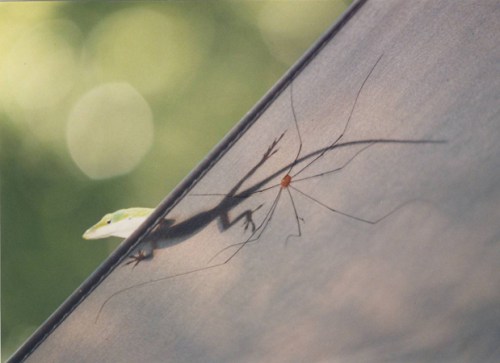
“you drift over enormous buildings”

Photo: Camille Martin

Photo: Camille Martin


from “Woman with Dust in Black Box”


you drift over enormous buildings and meander
into your office logon i.d.   alien mardi gras’
and pre-cambrian love letters practice their singspeil
on rickety ladders until they fade into the clock
above the door.   wrong time.    whatever embarrasses
blackboards is truly yours, but they will make you tinker
with the inner workings of grammar you do not
possess by using, not buddhistical chalk dust, but
superhuman reflexes and angle rotations.


Camille Martin
http://www.camillemartin.ca
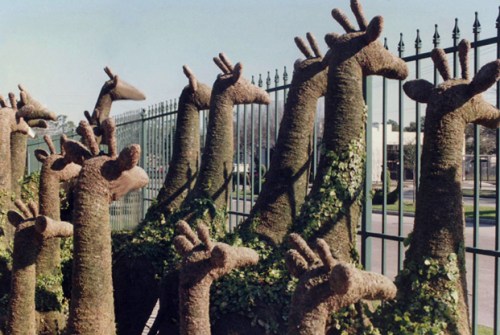
Adam Zagajewski, “Fire”

(Photo: Camille Martin)

Pic St-Loup, Montpellier, France
(Photo: Camille Martin)


Fire

                   Probably I am an ordinary middle-class
                   believer in individual rights, the word
                   “freedom” is simple to me, it doesn’t mean
                   the freedom of any class in particular.
                   Politically naive, with an average
                   education (brief moments of clear vision
                   are its main nourishment), I remember
                   the blazing appeal of that fire which parches
                   the lips of the thirsty crowd and burns
                   books and chars the skin of cities. I used to sing
                   those songs and I know how great it is
                   to run with others; later, by myself,
                   with the taste of ashes in my mouth, I heard
                   the lie’s ironic voice and the choir screaming
                   and when I touched my head I could feel
                   the arched skull of my country, its hard edge.


Adam Zagajewski, from Tremor: Selected Poems
(translated by Renata Gorczynski)


Camille Martin
http://www.camillemartin.ca
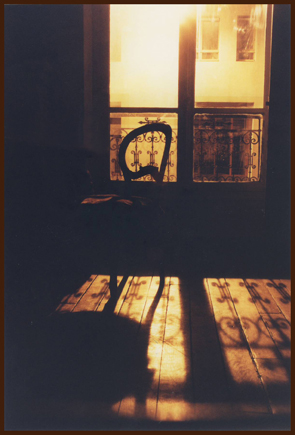
sixpence


(Photo: Camille Martin)

(Photo: Camille Martin)


sixpence to feed the flocks
sixpence to drown the rocks
sixpence to crack the eaves
sixpence to climb the stairs
until they end
sixpence to fell the leaves
sixpence to weave a blanket
without a thread
sixpence to dry the wells
sixpence to burn the hearts
in their lairs
sixpence to rock the bells
and hear them knell
until they stop


first published in Hamilton Stone Review


Camille Martin