I’m delighted to announce that I’m one of two poets featured in Of Poets & Poetry (Sept/Oct 2023). The spread is generous – 47 pages – and includes an interview with Al Rocheleau, a sample of poems from six books, as well as a selection of collages and photographs. I’m honoured to be included in the issue with Ukrainian poet Ihor Pavlyuk. Much gratitude to Al Rocheleau and Mark Terry! The issue is available in pdf as well as in print (on Amazon.com)
I hope you’ve enjoyed my NOLA Series. This is the last post, but maybe more to come when I return to the city in December. Meanwhile, hurricane watch . . .
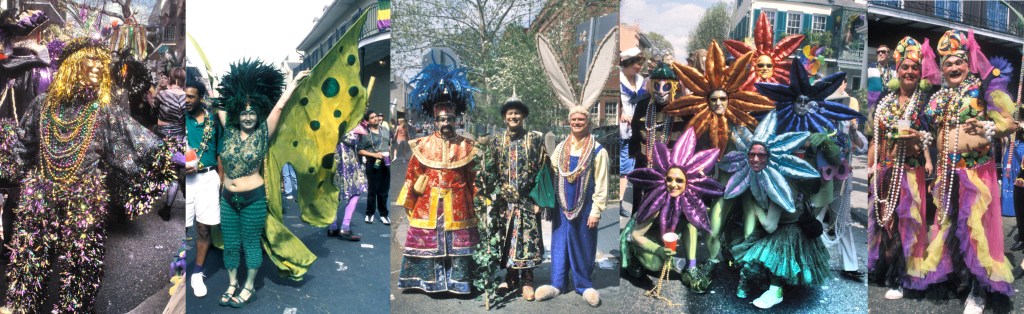
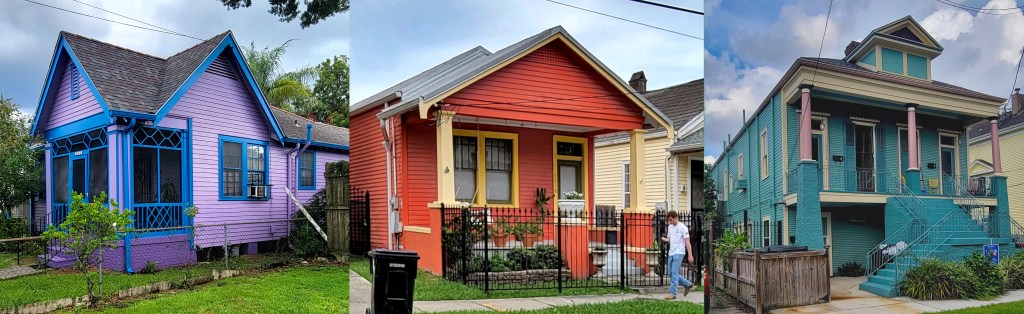
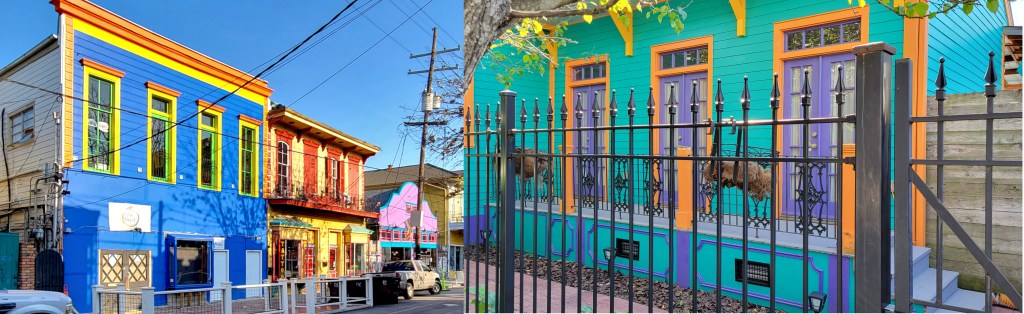
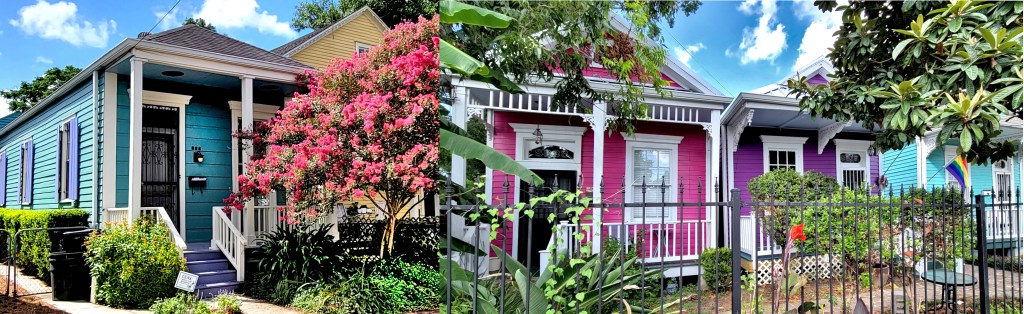
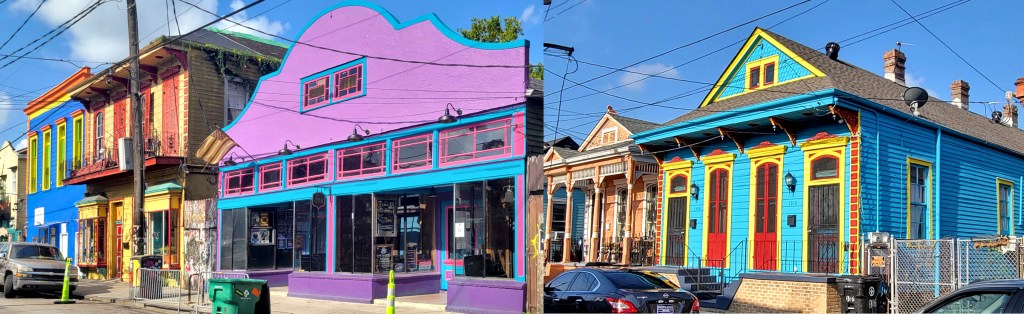
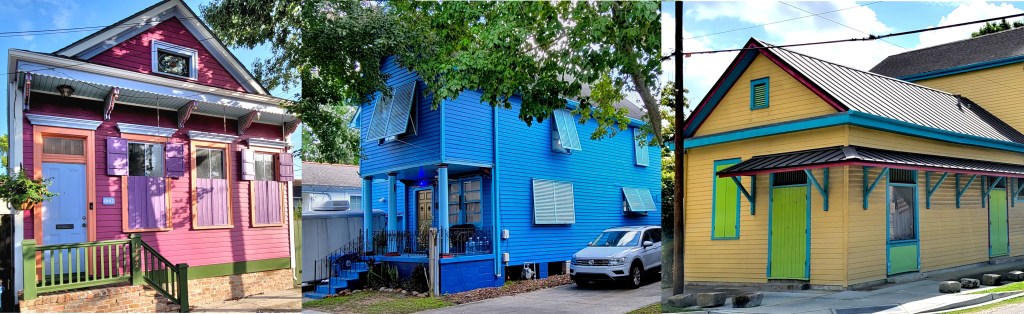
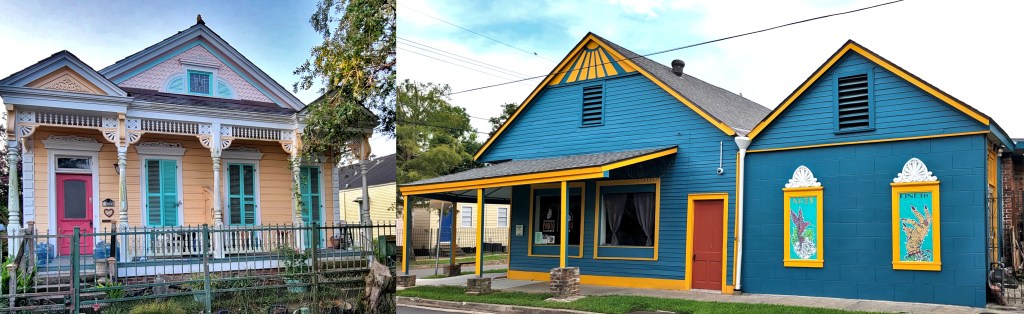
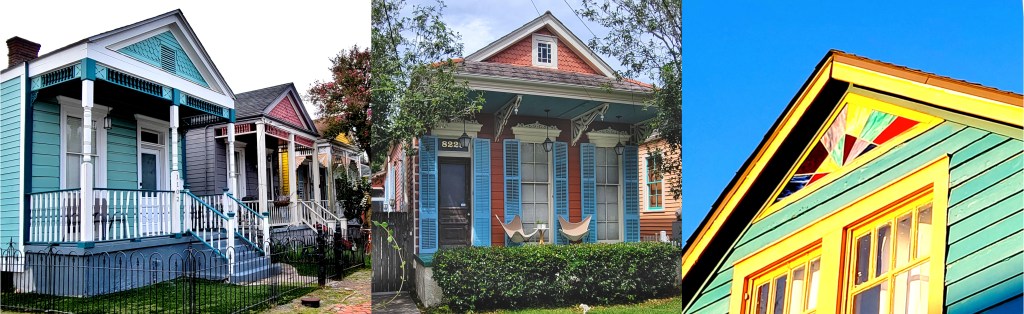
Below: a montage of Mardi Gras photos I took of the St. Ann walking parade in the French Quarter. It’s not hard to see the influence of costumes and beads on the city’s houses . . .
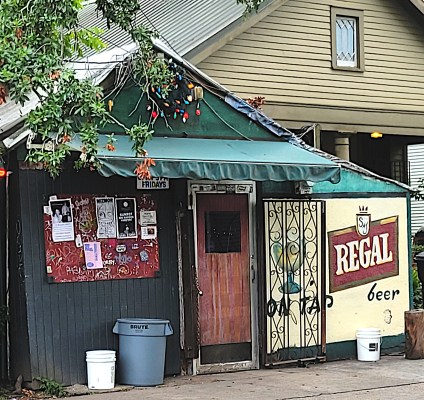
Local hangout in the Lower Carrollton neighborhood
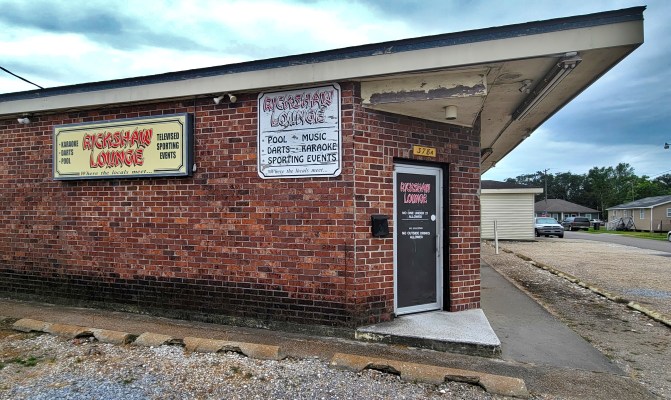
Rickshaw Lounge in Harahan, Jefferson Parish
The Carousel Bar at the Monteleone Hotel in the French Quarter. Haunted by Ernest Hemingway, Eudora Welty, William Faulkner, Tennessee Williams, Truman Capote . . .
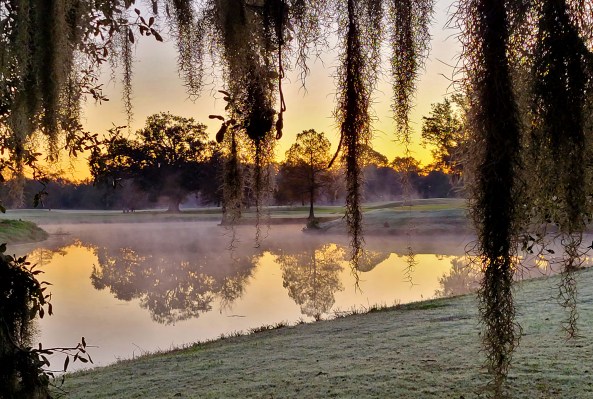
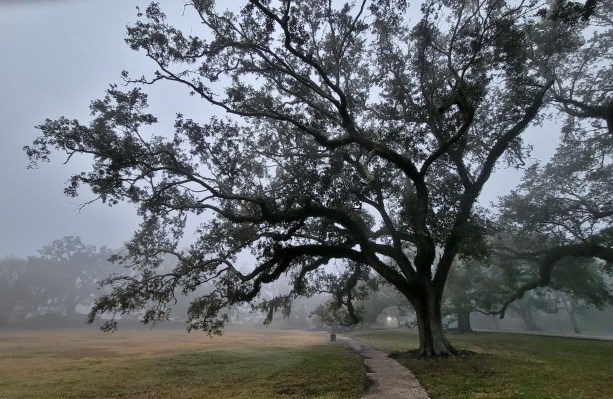
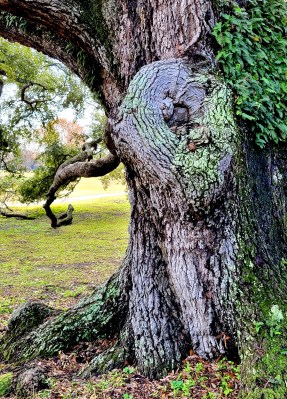
The title of this post is from Walt Whitman’s description of the monumental live oak trees of the South in his poem “I Saw in Louisiana A Live-Oak Growing.” Below, the tree’s impossibly long and heavy branches reach upward, only to bifurcate and stretch even higher.
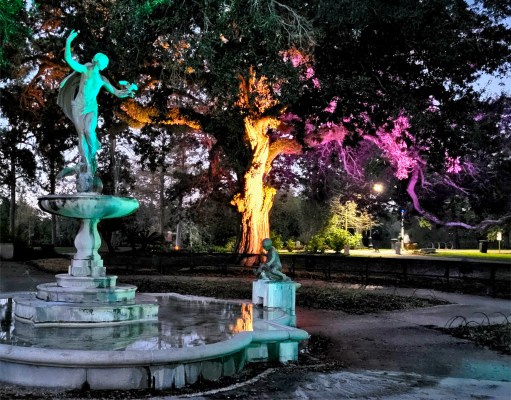
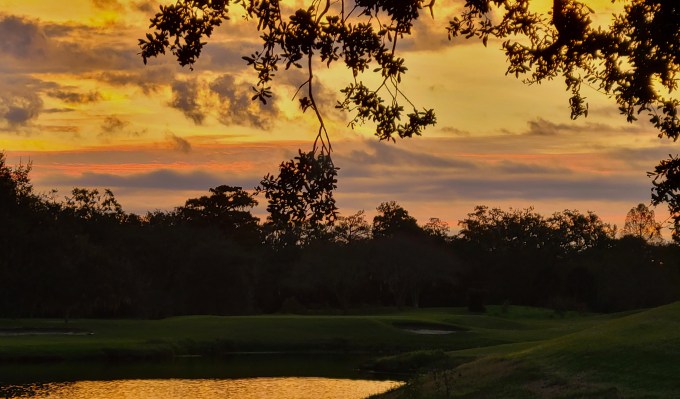
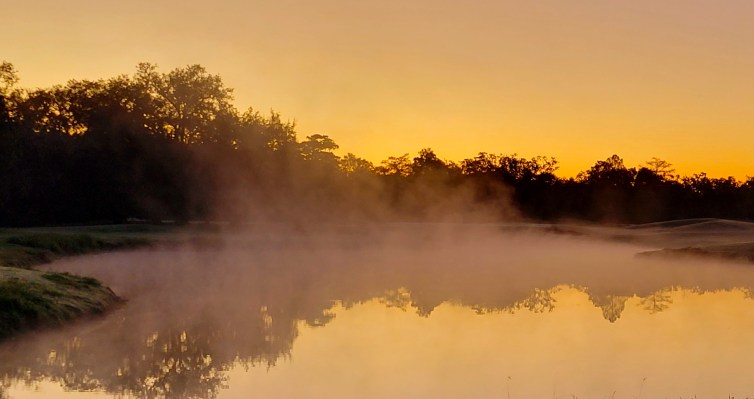
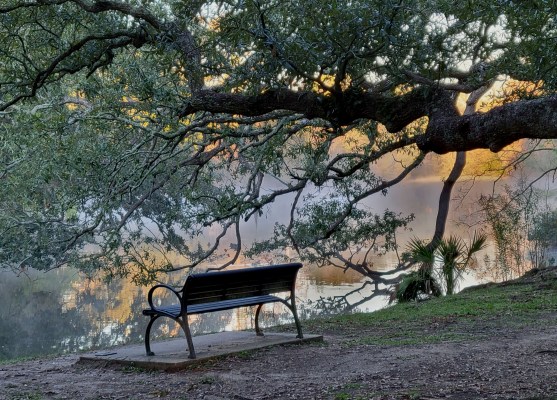
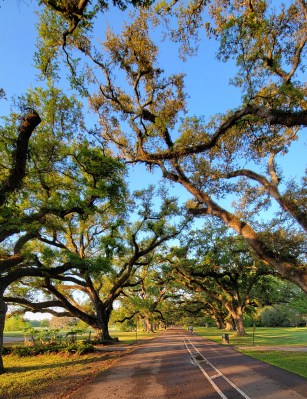
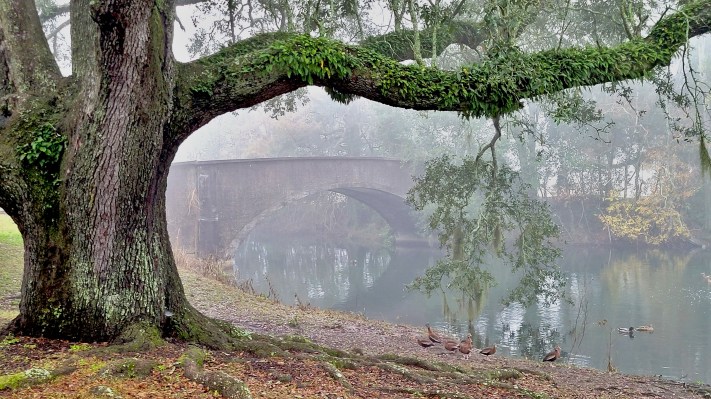
I took all the photographs in this post in idyllic Audubon Park, across from Tulane and Loyola universities. The jogging and cycling track around the perimeter of the park is lined with live oaks. Inside the perimeter is a golf course.
.
.
.
.
.
.
.
.
.
.
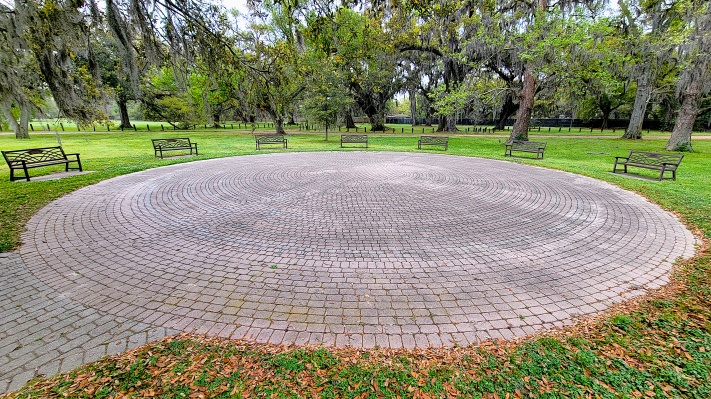
Below, a brick labyrinth in Audubon Park, intended to symbolize healing following the devastation unleashed on New Orleans by Hurricane Katrina in late summer, 2005.
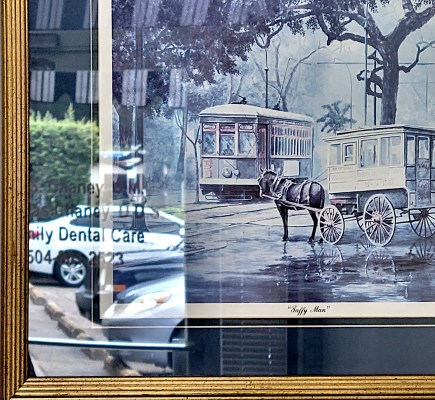
A mule-drawn wagon has sold “Roman Candy gourmet taffy” along the streets of New Orleans since 1915. A print of the iconic “Taffy Man” decorates a dental waiting room with ironic levity, a NOLA specialty . . .
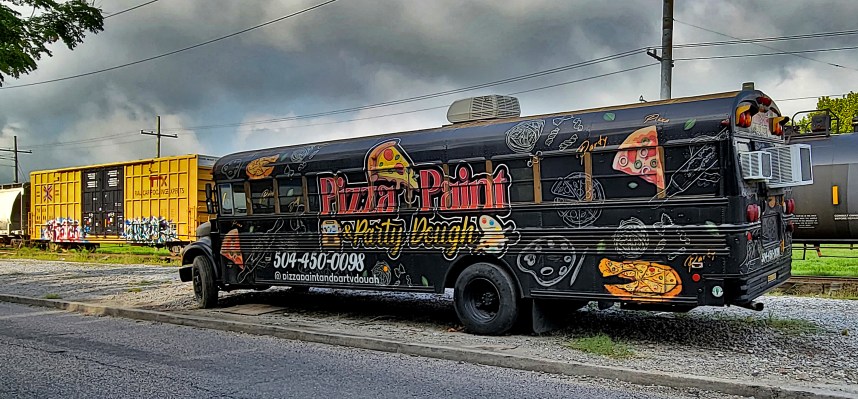
Party bus at the train tracks
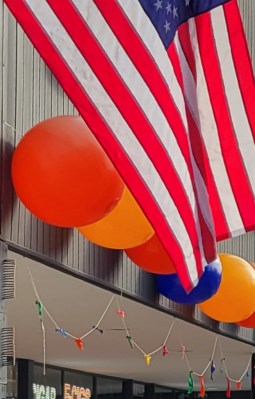
Garland of popped balloons at a new manicure shop on Carrollton Avenue
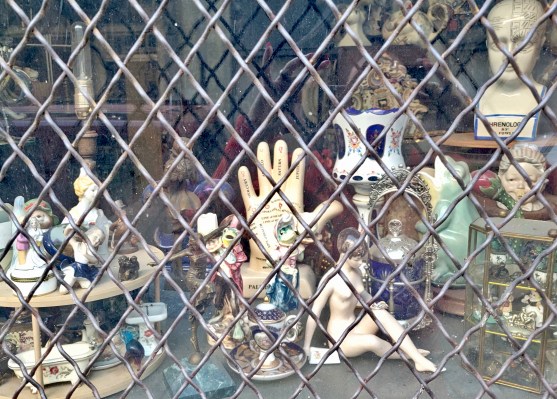
Tchotchkes, French Quarter antique shop
Behind the scenes at the French Market
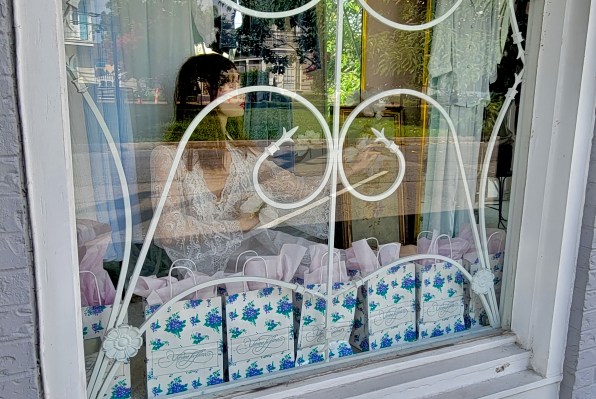
Riverbend lingerie shop
Second-hand shop to benefit the New Orleans Symphony Orchestra
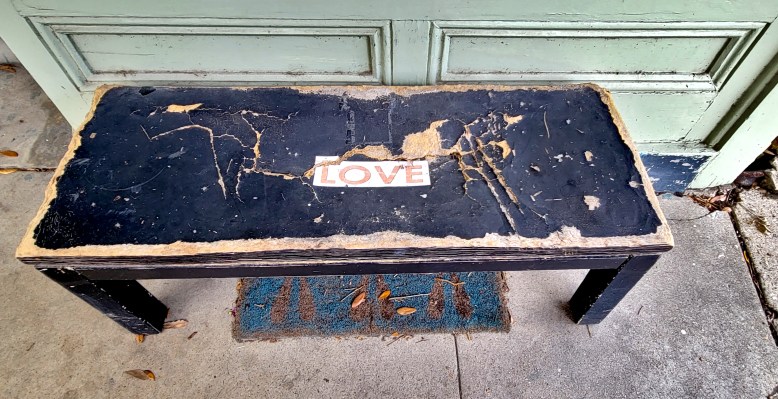
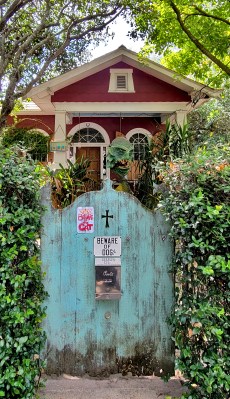
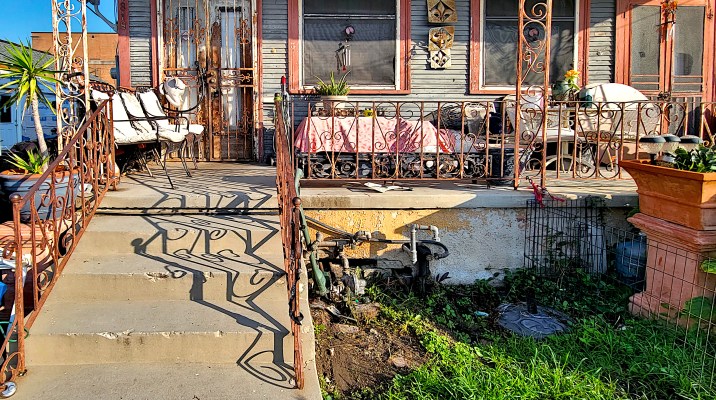
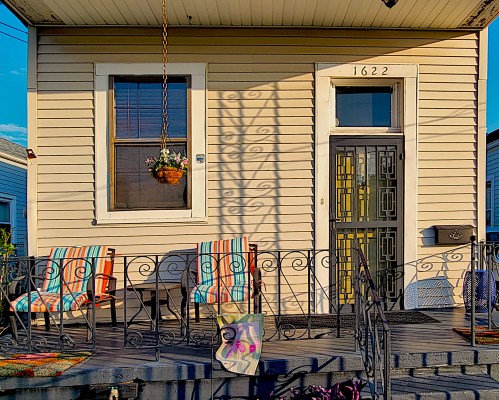
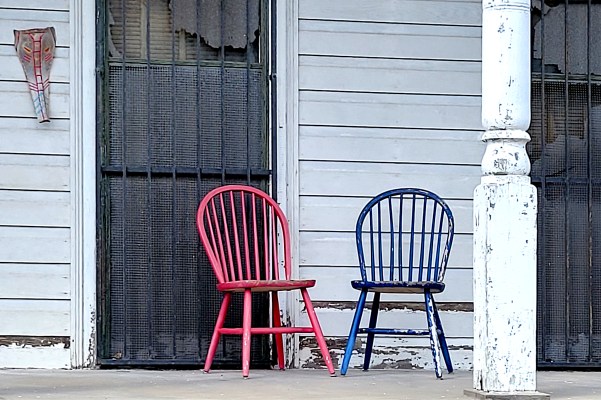
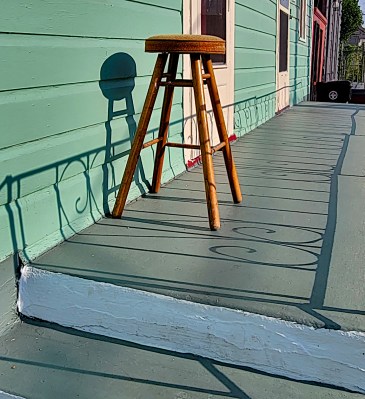
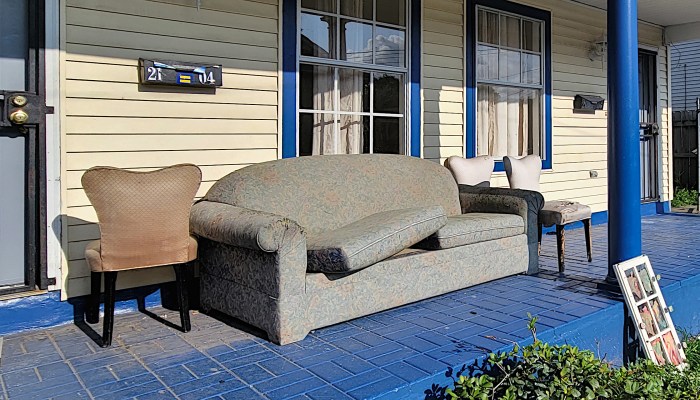
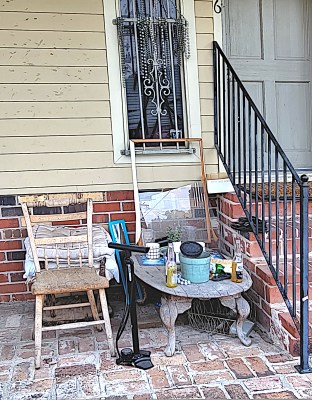
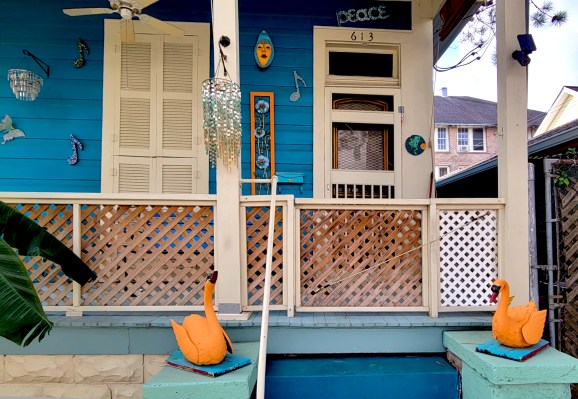
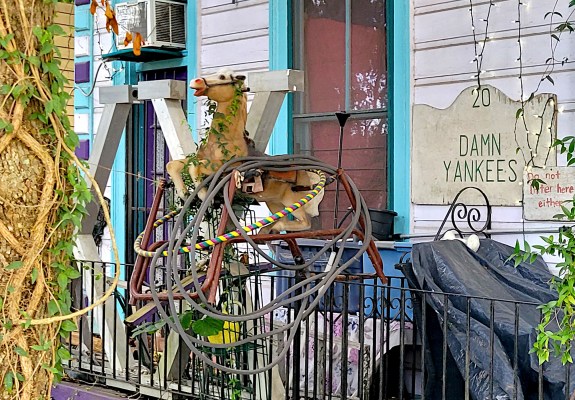
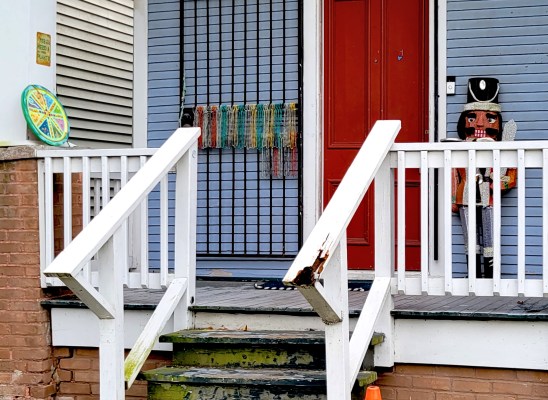
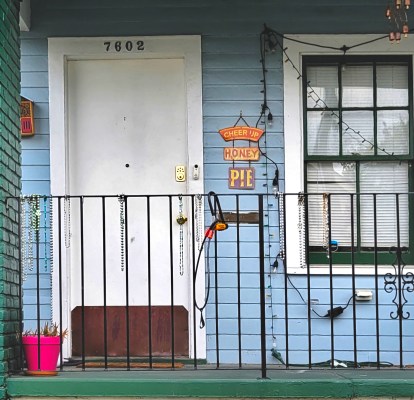
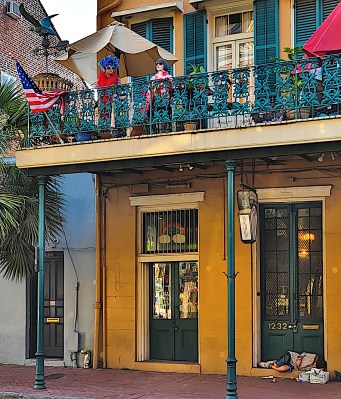
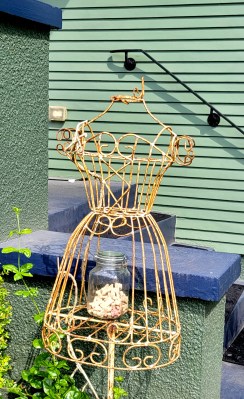
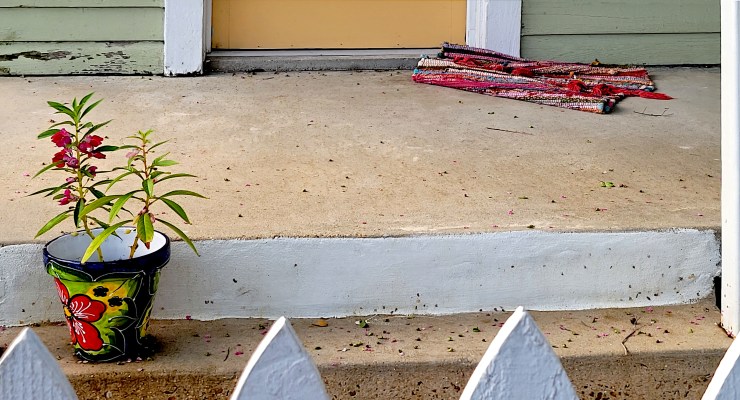
The porches, balconies, and stoops of New Orleans are both private and public spaces. The dweller fashions an al fresco room—spartan or florid, but always personal—and invites the neighborhood to share in the spectacle.
Form follows function—except during a hard freeze . . .
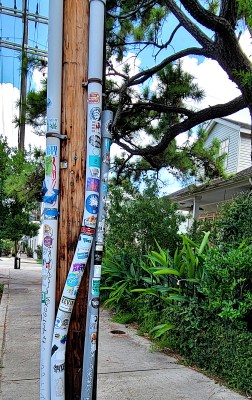
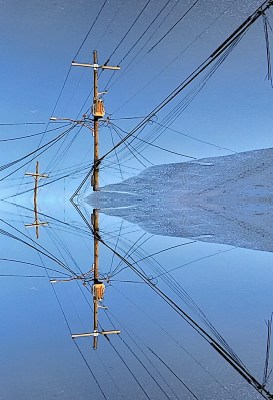
New Orleanians are always hoping that a natural disaster like Hurricane Katrina will provide the city an opportunity to bury the utility lines that clutter the streets. Blame it on lack of money (a perennial excuse), corruption (ditto), as well as the difficulty of making repairs in a flood-prone city with a high water table.
Somewhere in Jefferson Parish:
R. Crumb once drew a series in which he charts the “progress” of a Gold Rush town that over the decades becomes visually marred with crisscrossing utility lines. He traveled to such places to sketch the tangle, saying, “You can’t make this stuff up.”
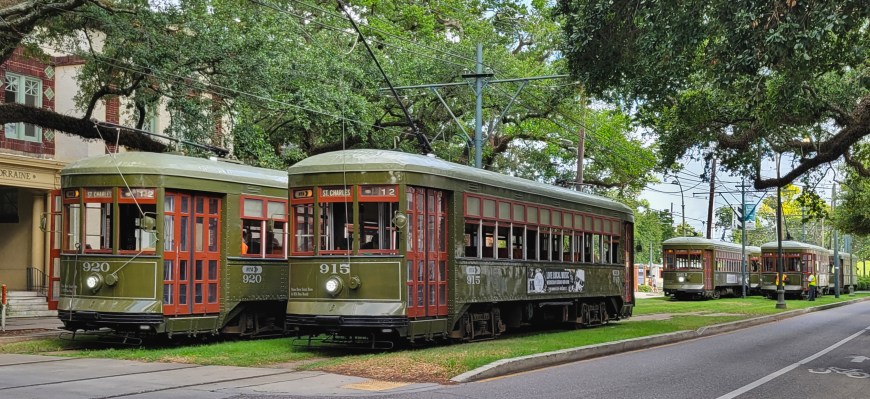
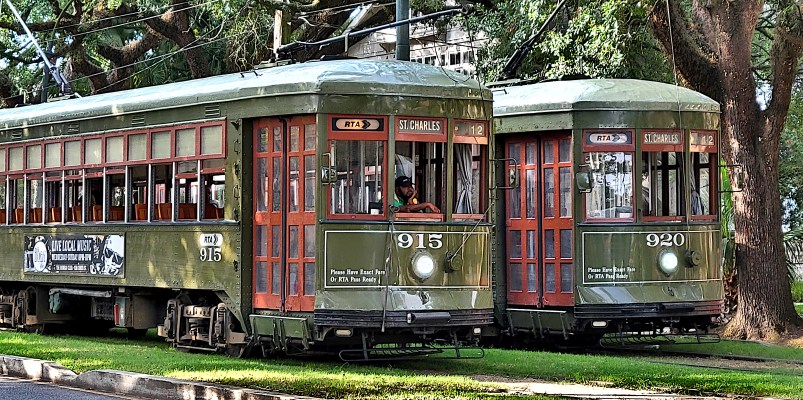
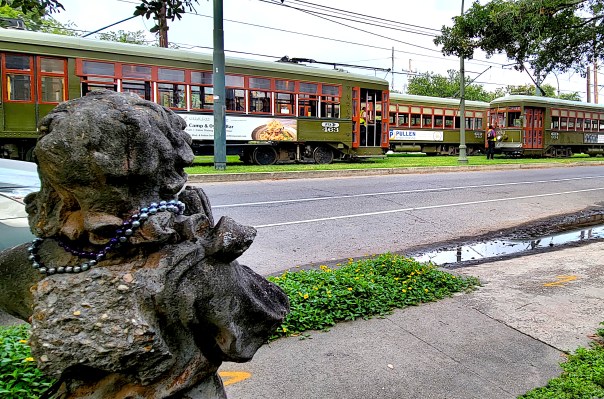
One early morning I set out for Riverbend, where streetcars turn from St. Charles Avenue onto Carrollton Avenue. I was amazed to see a pileup of six streetcars stopped in their tracks on St. Charles.
I started photographing and saw an official with reflective vest heading in my direction. He muttered, “Nobody communicates with nobody!” I asked him why the streetcars had stopped, and he replied, “Workers were supposed to trim the trees on Carrollton, but they forgot to tell us they hadn’t done it yet!” He shook his head in frustration.
Weary conductor awaits solution to traffic jam
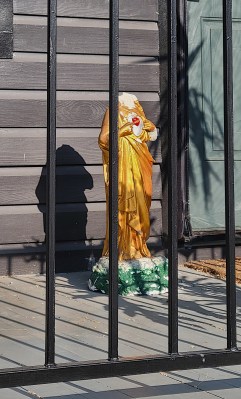
Concrete angel with Mardi Gras beads prays for solution to traffic jam
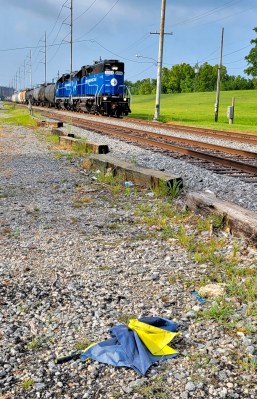
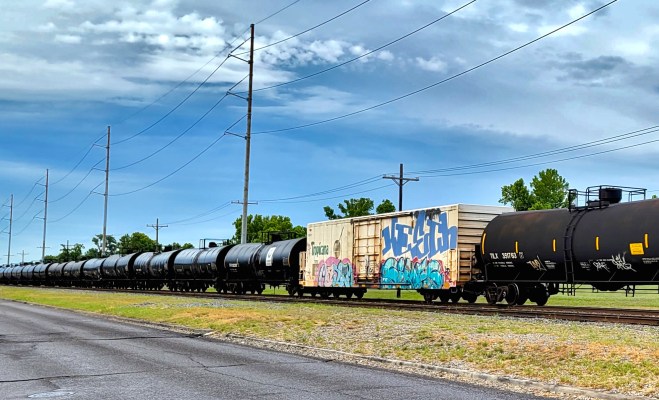
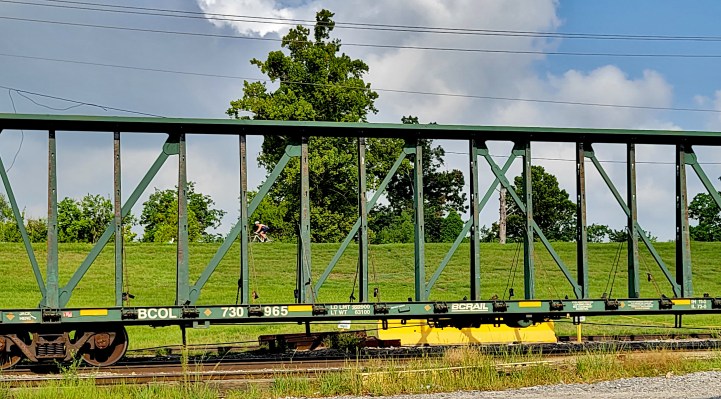
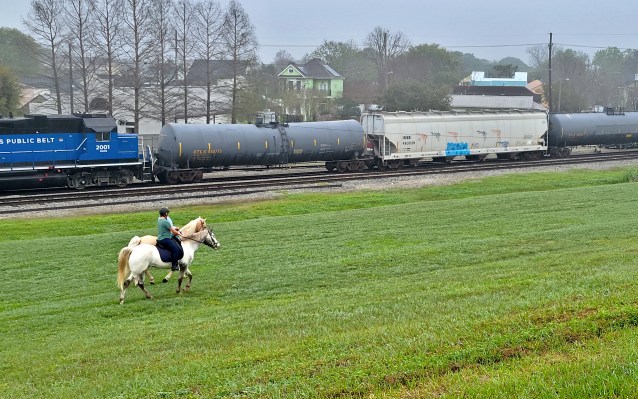
Freight trains glide through the Crescent City along the Mississippi River, wailing their bluesy chords day and night, spreading the lonesome.
Boxcar lounge . . .
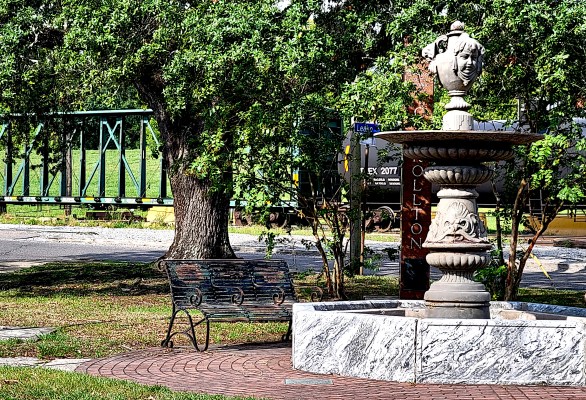
Dublin Park at Riverbend. The fountain was dry, the park vacant. Maybe it was just too darned hot.
Locomoting the locomotives
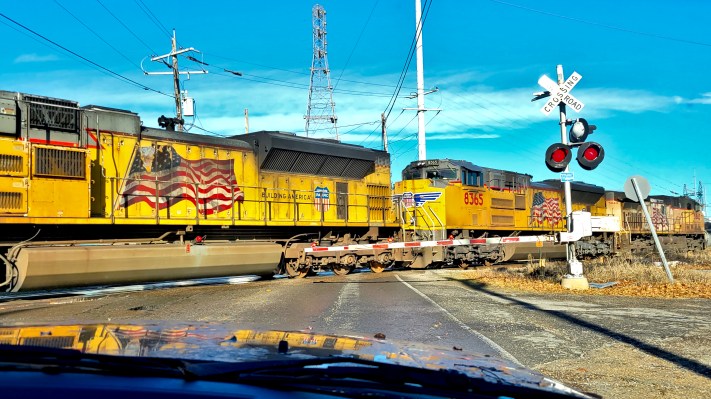
A fleet of Union Pacific locomotives hitches a ride along the NOPB railroad, perhaps heading to pasture or overhaul. (Backstory below)
Twenty years ago, Union Pacific graphically redesigned its locomotives to honor the victims of 9/11. Note the design flaw above: engine heat has damaged and discolored the oversized and ill-placed American flags.
In the new design, a more modest size and position of the flag proves a better strategy. In life as in patriotism.
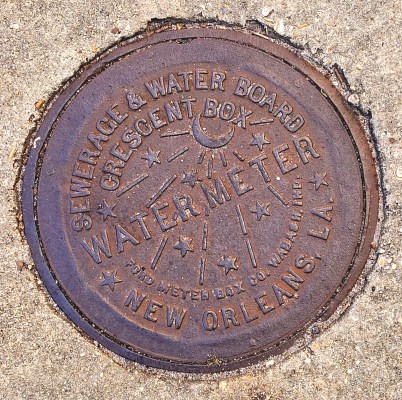
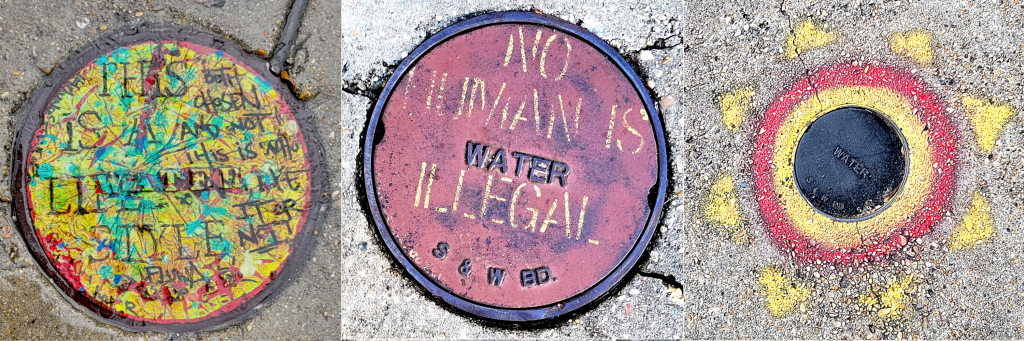
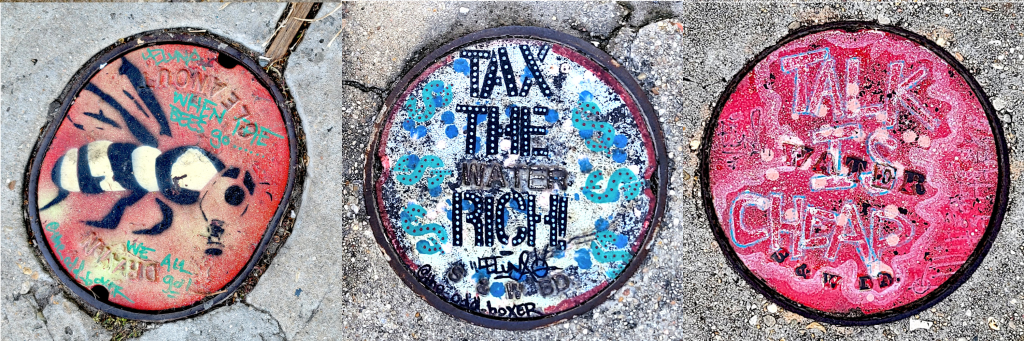
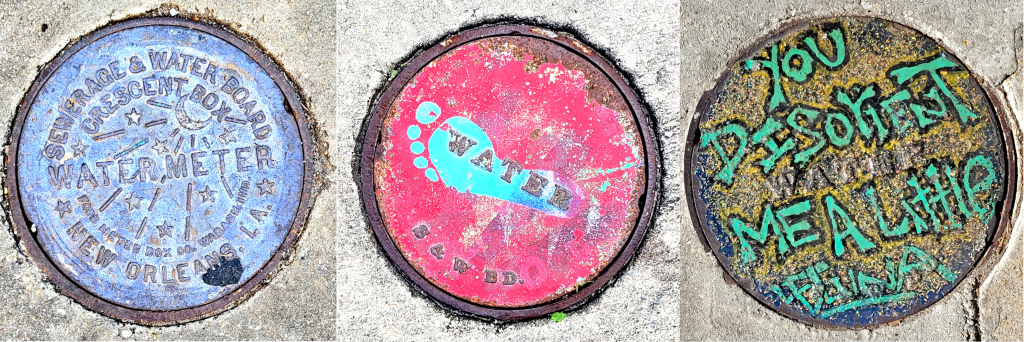
Feeling warm and fuzzy about a water meter gives new meaning to Satchmo’s “Do You Know What It Means to Miss New Orleans?”
The iconic version, beloved by locals:
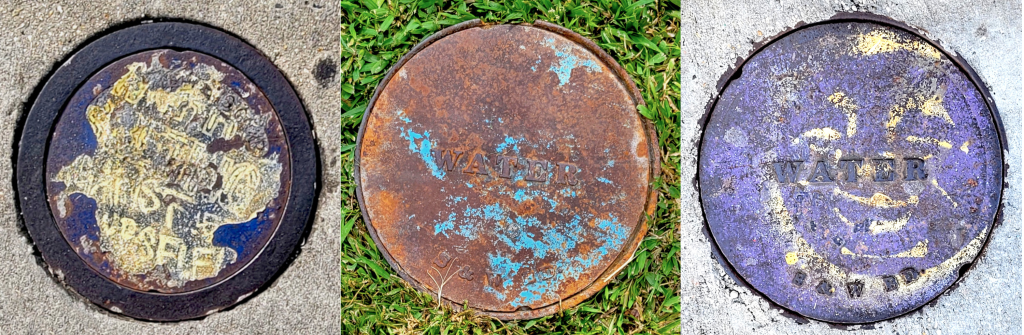
An artist called LeLuna has decorated hundreds of water meters across New Orleans, some with political messages, others with haiku-like enigmas. He and others decorated the ones below, except for the accidental beauty of the yellow gas meter scattered with crepe myrtle blossoms.
Such adornment evokes a fresh muse for nostalgia . . .
Click here for an article in The Gambit about LeLuna’s water meter art.
Oak Street is the commercial heart of the Leonidas neighborhood of New Orleans. It harbors great restaurants, an indie bookstore, funky art galleries, and a legendary bar/music hall with a poetry reading series. For starters. It’s my daily haunt when I visit the city.
Gotta love the hyperbolically negative motto of Jacques-Imo’s, one of the best restaurants in New Orleans: “Warm beer, lousy food, poor service.”
The utility wires below constitute visual pollution at its finest, and I was drawn to their effect in this photo of a chimera on Oak Street.
At an eccentric antique shop on Oak Street, two spooky pre-pubescent mannequins (one levitating) dwarf a cloth Santa Claus and porcelain Christian figurines.
At the same antique shop, a crocheted doll reclines in a wooden salad bowl, covered by a tattered plastic Times-Picayune newspaper bag. The window display has remained exactly the same for months.
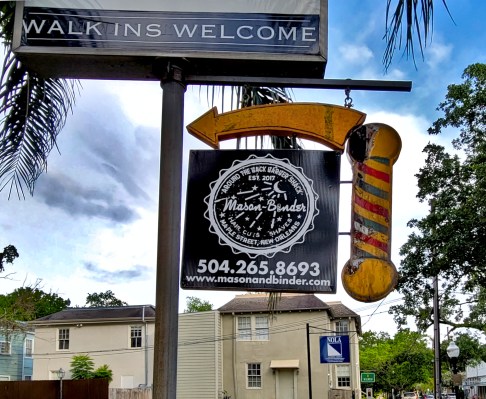
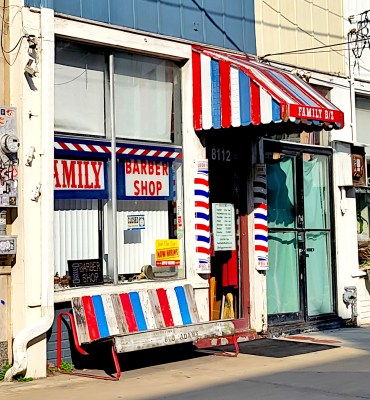
If I had hair, this is where I’d get it cut.
If I subscribed to acupuncture . . .
Rue de la Course is one of the coffeehouse greats, located in a historic old bank. The next tenant was a Kinko’s, which predictably sliced the spaciousness in half with dropped ceilings.
Restored to its mellow splendor: light streaming from the generous skylight and windows suffuses the warm stone interior. Classical music and caffeine quicken the soul.
The tutelary deities of the coffeehouse: pink horned owls, and bat-demons poring over tomes.
Gallery of “Frenchy,” official artist of the 2015 New Orleans Jazz & Heritage Festival Poster. Bragging rights plus.
Gallery space under renovation
Fortuitous reflection of Castellon Pharmacy from the window of an art gallery . . .
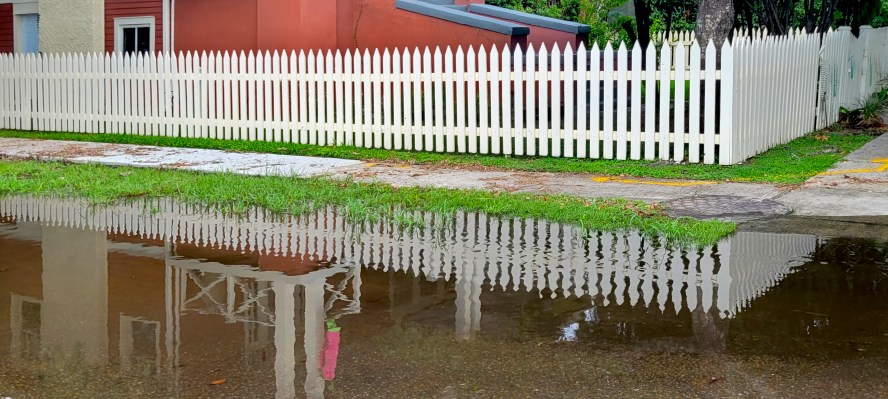
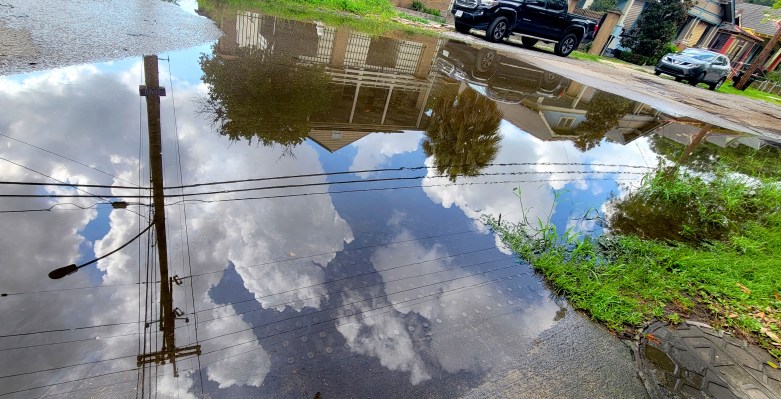
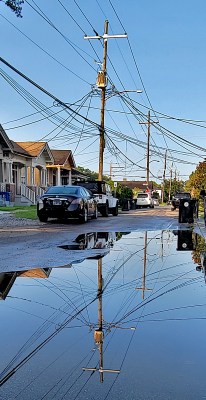
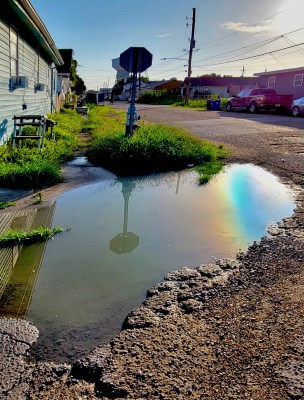
New Orleans is on average 6 feet below sea level. Moreover, the city is sinking up to 2 inches per year. It’s often described as a bowl: once water gets in, it’s hard to get it out.
In Daoist philosophy, water, like goodness, humbly seeks the lowest place. In New Orleans, that principle of physics has no virtue.
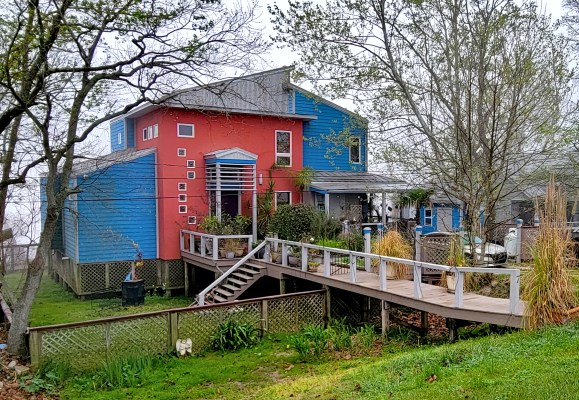
A unique community of people live on the Batture, a short strip of land along the banks of the Mississippi River, unprotected by the levee.
At the turn of the twentieth century, a much more extensive Batture was occupied by hundreds of makeshift homes of people working in the fishing and shipping industries. Eventually, the government tore down most of these homes.
Today, the Batture consists of only twelve dwellings on stilts, ranging from more-or-less improvised huts to tony cottages. It’s remarkable that these structures exist at all in the slim, precarious margin between levee and river.
With droll humor, hundreds of driftwood sticks adorn this Batture home like subtropical icicles.
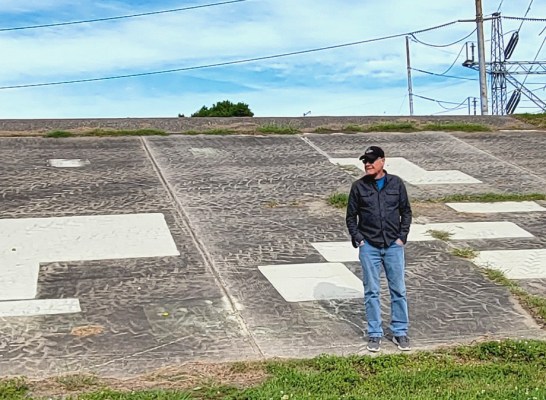
During recent visits to New Orleans, my partner and I enjoyed walking along the levee of the Mississippi River. Across a railroad track and up the levee is a paved track for cyclists and pedestrians.
Equestrians from nearby Riverbend Stables
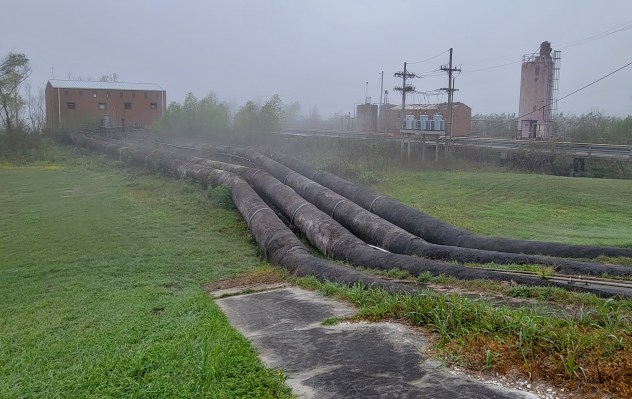
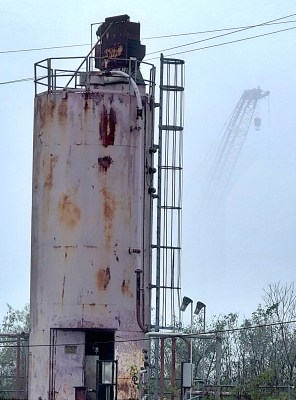
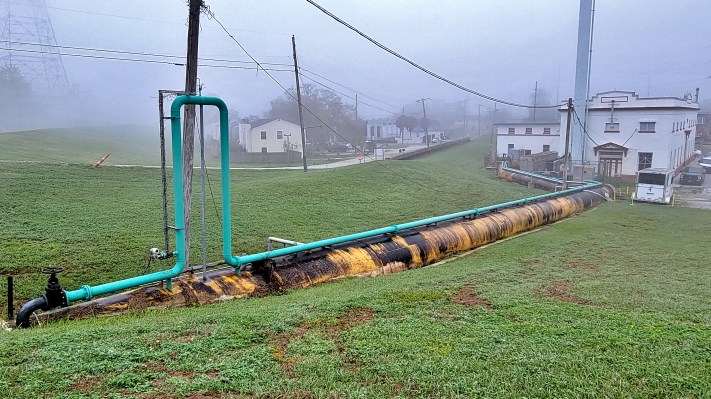
I’m intrigued by the forms of transmission towers and other industrial structures on the levee. Decay also fascinates me, and these otherwise eyesores don’t disappoint.
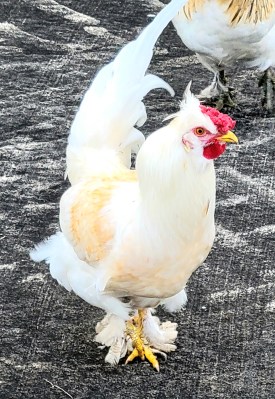
Some unexpected birds inhabit the levee. It’s not unusual to encounter Bantam chickens like the ones below, strolling about the concrete reinforcement.
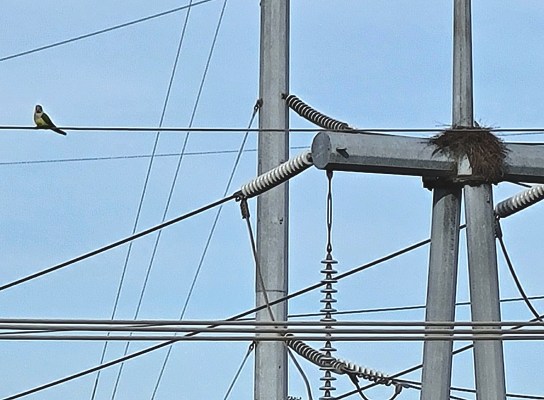
Monk parakeets have thrived in New Orleans since the 1960s, when some escaped their domestic cages. They build nests on the steel beams of the power plant on River Road and can be seen flitting back and forth to visit relatives in the transmission towers on the levee.
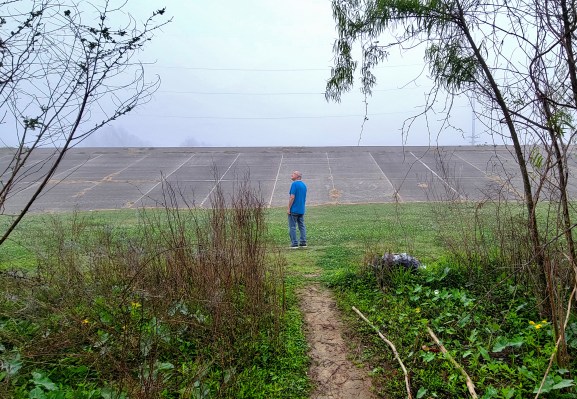
Walk down the concrete-reinforced levee and make your way through brambles . . .
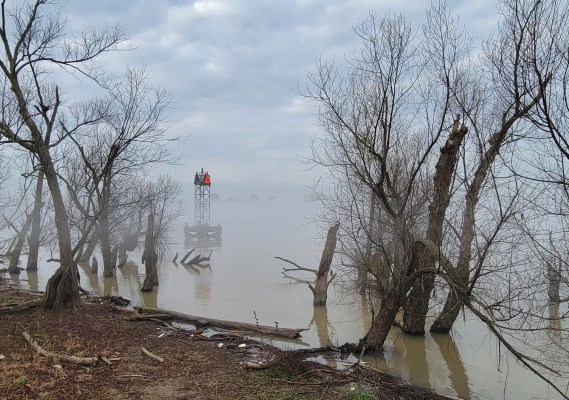
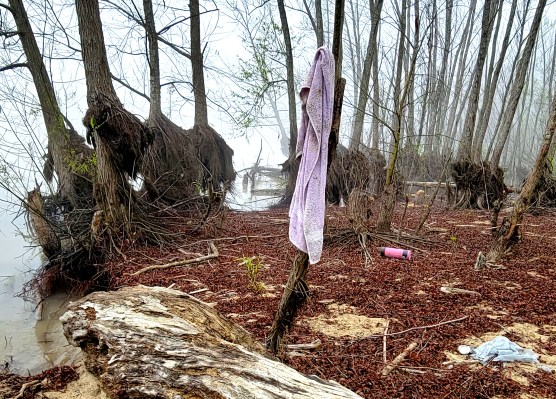
. . . and the raw bank of the Mississippi River reveals a netherworld of trees whose eerie forms survive on land as well as water.
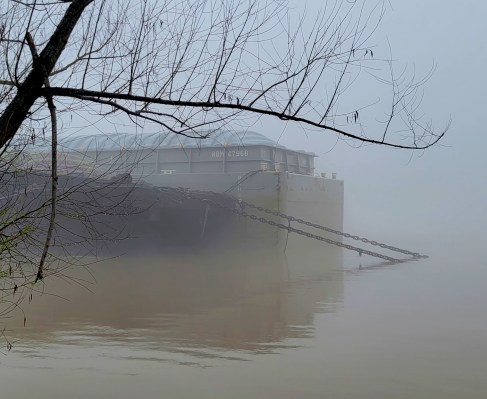
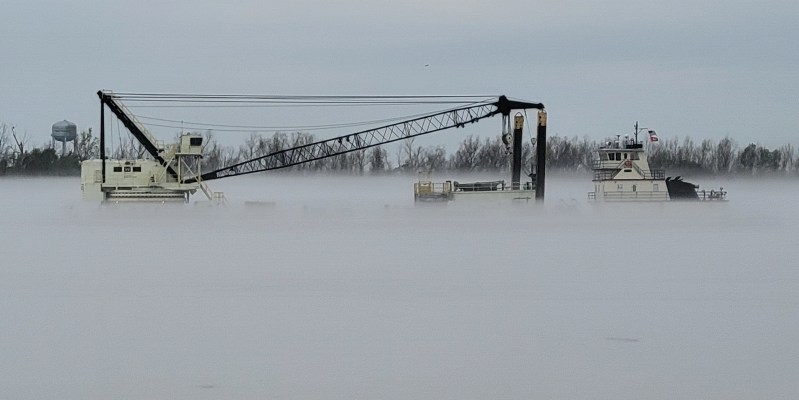
Morning fog blanketing the muddy river
A tugboat muscles its load upstream.
Pelicans gliding through the mist
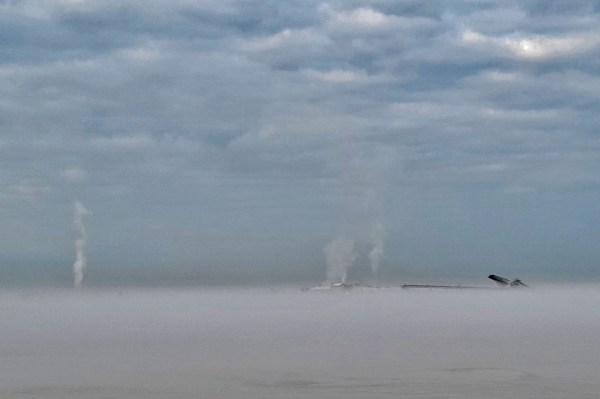
Industrial smokestacks on the West Bank
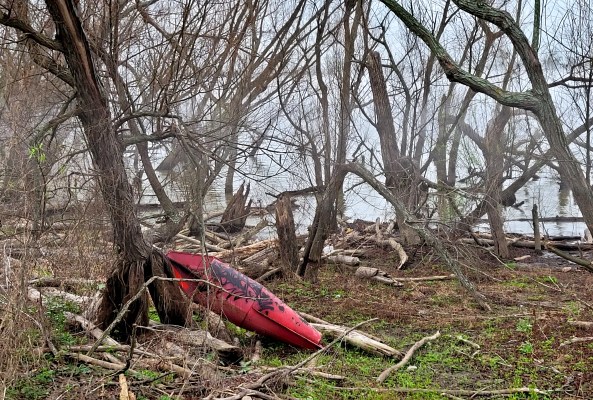
A red buoy washed ashore after outliving its purpose of marking the river’s navigable channel.










































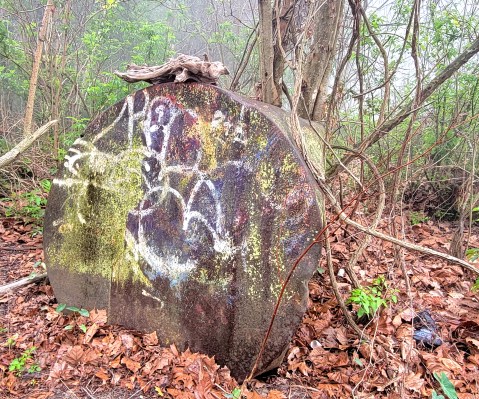
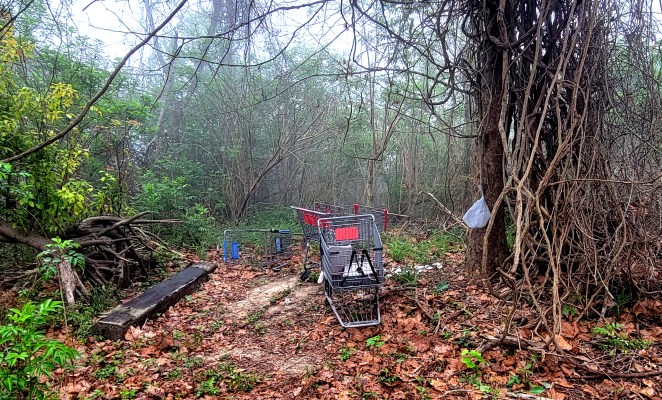

 Rogue Embryo